Published 10/29/2025 1:36 pm | Edited 10/29/2025 1:53 pm
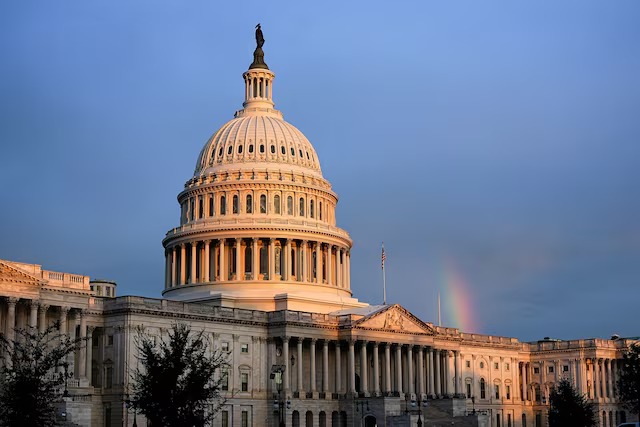
The United States Senate approved on Tuesday night (28) a bipartisan resolution that considers the tariffs imposed by Donald Trump on Brazil illegal and determines the revocation of the state of emergency used to justify them.
The vote ended 52 to 48, with the support of five Republican senators — Susan Collins, Lisa Murkowski, Rand Paul, Thom Tillis and Mitch McConnell — and all Democrats.
The proposal, authored by Senator Tim Kaine (Democratic Party, Virginia), challenges the use of the International Emergency Economic Powers Act (IEEPA), an instrument created for exceptional security situations, but used by Trump to apply tariffs of up to 50% on Brazilian products such as oil, coffee and orange juice.
The text maintains that the North American government exceeded its constitutional prerogatives by adopting political retaliation measures disguised as economic protection.
Despite approval, the resolution is not expected to come into force. The Republican-controlled House of Representatives passed a rule that blocks any vote to challenge Trump’s tariffs until March 2026.
Still, the Senate’s gesture was interpreted in Washington as a rebuke of the Republican’s trade policy and a rare sign of internal discomfort in the Republican Party.
The vote also reinforces Trump’s political isolation amid trade negotiations with Brazil, reopened days before his meeting with President Luiz Inácio Lula da Silva, in Malaysia.
Senators from both parties stated that there is no national emergency that justifies the application of tariffs to Brazil. Tim Kaine declared that Trump’s statement was motivated by “Brazil’s decision to prosecute his personal friend”, in reference to former president Jair Bolsonaro.
“If this is an emergency, then anything could be an emergency — and any president could invent any reason, call it an emergency, and use immense powers to impose or circumvent regulations,” he said.
Republican Thom Tillis, joining Democrats, called the tariffs the result of “a disagreement with a judicial process” with no legitimate basis for economic intervention.
“I don’t think this is a solid basis for using the commercial instrument,” the senator told the Punchbowl News agency.
The Democratic leader in the Senate, Chuck Schumer, called the measures against Brazil “childish” and highlighted that they end up penalizing the North American consumer himself.
To Folha de S.Paulo, senator Bernie Sanders stated that Trump “does not have the unilateral right to increase or reduce tariffs on his own” and that “it is no secret that he is going after Brazil because the Brazilian government is holding its former president responsible”.
For Sanders, Brazil’s internal politics “is a matter for the Brazilian people” and cannot serve as a pretext for trade measures. “Trump is acting illegally in doing this,” he concluded.
The Republican president justified the additional 40% tariffs applied in July by claiming that the Federal Supreme Court was censoring American companies and citizens and persecuting Bolsonaro.
Parliamentarians and market analysts, however, claim that the argument lacks factual basis and reflects the abusive use of emergency legislation for political purposes. The Senate resolution seeks to nullify this maneuver and reestablish Congress’s control over tariff policy.
Meeting between Lula and Trump marks a new round of negotiations
The vote coincided with the beginning of a new phase in relations between Brasília and Washington. Lula and Trump met on Sunday (26), in Kuala Lumpur, on the sidelines of the ASEAN summit, in a 45-minute meeting described by diplomats as cordial and pragmatic.
“What matters in a negotiation is looking to the future. We don’t want confusion, we want results,” said Lula. Trump responded that the meeting “went very well”, but that “this does not guarantee an immediate agreement — Brazil is still paying around 50% in tariffs”.
The following day, Chancellor Mauro Vieira, vice-president and minister of Development, Industry, Commerce and Services (MDIC), Geraldo Alckmin, MDIC executive secretary Márcio Rosa and ambassador Audo Faleiro participated in the first technical meeting of the bilateral trade group.
Brazil presented data showing that the United States accumulated a surplus of US$410 billion in the bilateral trade balance over the last 15 years, and proposed the temporary suspension of tariffs during negotiations.
Conversations are expected to continue in the coming weeks, with a focus on the energy, agribusiness and industrialized products sectors.
The National Confederation of Industry (CNI) and the Brazil-USA Chamber of Commerce (Amcham) classified the dialogue as “concrete progress” and expressed the expectation that a trade agreement could be reached this year.
The conciliatory tone of the meeting contrasted with the previous rhetorical escalation, marked by accusations from the North American government. Brazilian diplomacy is now seeking to transform the support obtained in the North American Senate into a political argument to speed up negotiations and reinforce the legitimacy of its position against unilateral sanctions.
Trump’s isolation and the strengthening of Brazil
The approved resolution exposed divisions in the Republican Party and the growing erosion of economic isolationism defended by Trump. The Congressional Budget Office (CBO) estimated that the tariffs imposed by the president should increase inflation and unemployment, in addition to reducing American economic growth this year.
Economists and business leaders assess that tariff policy, by punishing strategic allies such as Brazil, increases uncertainty and disorganizes production chains that depend on bilateral trade.
On a political level, the vote was interpreted as an institutional repudiation of the use of the economy as an instrument of political retaliation.
Trump’s stance, according to analysts, has brought Brazil closer to other trading partners, such as China, which goes against Washington’s geostrategic interests. The Senate’s own resolution warns that “disrupting trade between the two countries harms the economies and brings Brazil closer to China”.
In Brasília, Itamaraty received the result as a positive sign. Advisors close to President Lula claim that the Senate’s gesture “recognizes the political nature of the sanctions” and strengthens the country in negotiations with the USA.
“There are no prohibited topics for negotiation,” said Lula after the meeting with Trump, in an opening tone. The Brazilian government defends that dialogue progresses without impositions and based on the principle of reciprocity.
The legislative outcome is still uncertain, but the symbolic defeat imposed on Trump in the Senate and the resumption of diplomatic dialogue with Lula represent, together, the first concrete step towards reversing the so-called “tariff” — a measure that, in less than six months, altered the trade balance and provoked reactions from businesspeople, parliamentarians and governments in both countries.
Source: vermelho.org.br