Published 10/21/2025 12:36 | Edited 10/21/2025 12:58
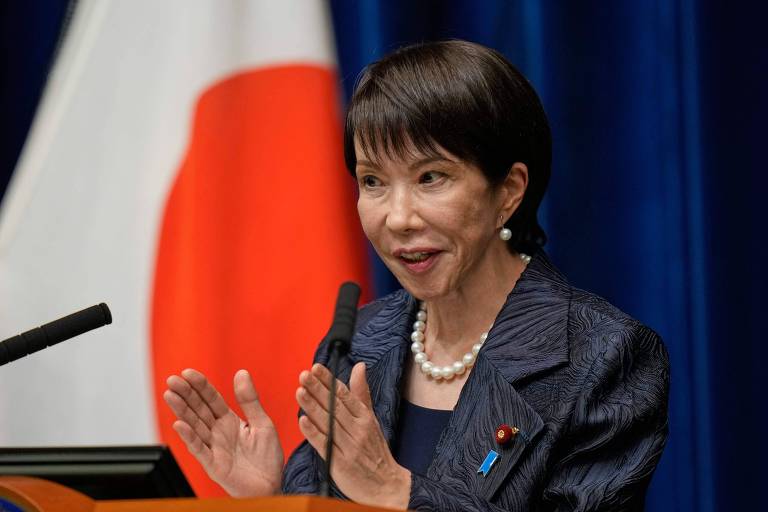
Former drummer and hard-liner of the Liberal Democratic Party (PLD) Sanae Takaichi was elected this Tuesday (21) the first woman to govern Japan. The new prime minister openly declares herself inspired by former British Prime Minister Margaret Thatcher, the “Iron Lady”, who plunged the United Kingdom into neoliberalism.
At 64 years old, Takaichi, former Minister of Economic Security, took office after forging a last-minute alliance with the Japan Innovation Party (Nippon Ishin), which returned to the right a parliamentary majority lost in recent weeks.
The agreement ends a period of instability that began with the resignation of former prime minister Shigeru Ishiba and confirms the PLD’s almost uninterrupted stay in power since 1945.
Takaichi’s historic feat — the first woman in charge of the country — does not represent a feminist advance, but the consolidation of a new conservative cycle, anchored in nationalist rhetoric and a militarist agenda.
The alliance that brought her to power was born from a precise political calculation. After the defeat of the PLD in the upper and lower houses, Tokyo plunged into an impasse that threatened to bring forward the elections.
Nippon Ishin, a liberal-nationalist party based in Osaka, offered support in exchange for concessions: pension reform, suspension of excise tax on food, ban on corporate donations and the recognition of Osaka as an administrative capital in emergency situations.
The pact, signed this Monday (20), isolated the progressive camp and paved the way for this Tuesday’s parliamentary vote, which formalized Takaichi’s choice.
The maneuver, however, caused a split in Komeito — a historical ally for 26 years and supported by the Buddhist organization Soka Gakkai —, which classified the new prime minister’s positions as “aggressive” and denounced the PLD’s involvement in financing scandals and the cost of living crisis that is wearing down the party.
Takaichi cultivates the image of a “strong woman” inspired by Thatcher, a symbol of British neoliberalism and trade union repression in the 1980s.
He says he admires in the “Iron Lady” the combination of “firm character and feminine warmth”, a speech he has repeated since he met her in person in 2013. The new prime minister is part of the most rigid wing of the PLD, heir to former prime minister Shinzo Abe, assassinated in 2022, and defends the same ideological tripod: nationalism, state stimulus and social control.
Drummer in a university heavy metal band, he built a reputation for discipline and an explosive temper.
In programmatic terms, it opposes same-sex marriage, rejects the revision of the 19th century law that forces couples to share the same surname and proposes rewriting the pacifist Constitution of 1947 to officially recognize the Self-Defense Forces.
Foreign policy is central to his platform. A sharp critic of China, Takaichi announced that he will seek to “make Japan’s economy stronger” and “reshape the country for future generations”, with an emphasis on military strengthening and alignment with Washington.
In April, he visited Taiwan and stated that it was “crucial to reinforce joint security” with Taipei, a statement that raised tension with Beijing.
She also frequents the Yasukuni Shrine, which honors 2.5 million dead and 14 war criminals, considered by Asian neighbors a symbol of Japanese militarism.
His first international mission will be the Apec Summit in South Korea, alongside North American President Donald Trump, with whom he is expected to discuss new trade and defense guidelines.
Takaichi’s rise is also supported by a discourse of internal security that echoes the identitarian populism of the new right.
The prime minister promised “zero tolerance” towards foreigners who “violate Japanese laws”, justifying the tightening of migration rules with anecdotal examples, such as tourists who “kicked deer” in her hometown, Nara.
The rhetoric, which links immigration to moral disorder, mobilizes nationalist voters and competes for space with the Sanseito party, an expanding far-right party.
Human rights organizations warn that this agenda threatens to set back policies for the integration and residence of foreign workers — a contradiction in a country with an aging population and a growing shortage of labor.
In the economic field, Takaichi defends the resumption of “Abenomics”, a stimulus policy launched by Shinzo Abe — with increased public spending, tax cuts and direct state interference in the Bank of Japan.
Unlike Thatcher, a symbol of fiscal austerity, the Japanese woman proposes an expansionist shift in spending.
Its program combines productive nationalism, protection of industrial conglomerates and centralization of financial decisions, a model that brings it closer to the experiences of economic populism observed in other conservative governments in Asia.
Although he promises “Nordic levels of gender balance” in his cabinet, Takaichi comes to power in a country that ranks 118th out of 148 in the World Economic Forum’s gender inequality ranking.
Experts point out that its presence at the top of the political hierarchy serves more as a symbolic showcase than as a real commitment to the emancipation of women.
“She showed little willingness to challenge patriarchal norms,” said professor emeritus at the University of Tokyo Sadafumi Kawato to AFP.
Sanae Takaichi’s inauguration represents a historic milestone for Japan, but also a sign of social and political regression.
Under the discourse of strength and order, the new prime minister projects a government aligned with the North American strategy in Asia and hostile to minorities and immigrants.
Inspired by Thatcher, Takaichi brings to the 21st century the ideal of moral discipline and national rearmament as a response to the economic crisis and the loss of global influence — a path that deepens inequalities and places the country facing a dilemma between modernization and authoritarianism.
Source: vermelho.org.br