Published 20/10/2025 19:03 | Edited 10/20/2025 19:22
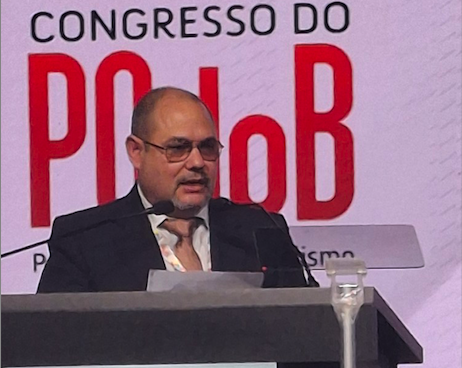
In an interview with Red Portal, during the 16th National Congress of the PCdoB, Cuban leader Rolando Yero Travieso analyzes the effects of the US blockade policy, the new government program and Fidel Castro’s legacy. Travieso is Head of the Department of Attention to the Social Sector of the Central Committee of the Communist Party of Cuba. In the face of external aggression and economic challenges, he states that “unity, truth and popular participation continue to be the fundamental weapons of the Revolution.”
Red – The United States prevented Cuba from participating in the meeting of the Board of Directors of the Pan American Health Organization (PAHO), in Washington. Cuba was also excluded – alongside Venezuela and Nicaragua – from the Summit of the Americas, scheduled for December, in the Dominican Republic. At the same time, the United States’ military buildup in the Caribbean is growing, while Cuba remains unfairly included on the list of countries sponsoring terrorism. Why have these attacks intensified?
Rolando Yero Naughty – There is a clear precedent: Donald Trump’s government, during his first term, imposed 243 coercive measures against Cuba, with a devastating impact on the economy, social development and the well-being of the population. These measures were particularly cruel because they were adopted during the Covid-19 pandemic, making it difficult for the island to access basic supplies for human survival.
This is the old North American policy of stifling the Cuban Revolution to try to restore capitalism and eliminate the example that Cuba represents for the continent. The Trump government, with its ultra-conservative characteristics and fascist traits, also articulated internally with figures in North American politics associated with sectors hostile to Cuba. Therefore, it should not be surprising that one of the objectives of this administration was to encourage and intensify all efforts to mutilate the Cuban Revolution.
Red – Recently, the Cuban government presented a new program to face economic challenges. The Minister of Economy, Joaquín Alonso Vázquez, stated that, in addition to resisting the crisis, “it is necessary to innovate – with creativity, fiscal discipline and social justice”. What are the main goals of the Government Program?
Mischievous – The main goals of the Cuban government program are to confront the current economic crisis with broad popular participation, incorporating new elements and drawing on the historical experience of the Revolution — especially the Special Period, when the country lost almost all of its international commercial and financial relations.
Today, Cuba is experiencing a similar situation, and that is why the program seeks to increase internal revenues, expanding access to freely convertible currency through services provided inside and outside the country, even in the face of external actions that attempt to limit Cuban operations abroad, such as in the area of services and the production of medicines.
Another central axis is the increase in national production, with a special focus on food. The goal is to produce as much as possible with internal resources, ensuring food security for the population. Cuba has a Food Sovereignty Law and is in dialogue with the productive bases to meet needs with available means. It also seeks to manufacture domestic items locally, even if simple, to meet the population’s needs.
The program also includes the reorganization of the socialist state company, which continues to be the fundamental element of the Cuban economy. This reorganization aims to strengthen the relationship between the state and non-state sectors, as provided for in the Constitution and the Party’s guiding documents, with the aim of gradually recovering companies’ productivity and consolidating them as the basis of the economy and employment.
Furthermore, there is a strong emphasis on the strategic management of territorial development. Each municipality and popular council must have its own development strategy, respecting local conditions — cultural, human, natural and financial. The program supports the strengthening of local production, the generation of jobs and the supply of consumer goods and services, in parallel with the maintenance of national programs, such as health, which continue to operate despite the challenges.
Social policy is also a fundamental part, with actions aimed at protecting people, families and communities in vulnerable situations. In a context of economic difficulties, it is essential to protect the most fragile and recover previous achievements that were lost.
The program also recognizes the existence of internal distortions and errors, proposing their continuous correction with popular participation. The people must contribute their vision of what needs to be transformed, and the program will be evaluated in bodies such as the Party Congress and the National Assembly.
Finally, the Cuban socialist experience showed that resistance depends on three fundamental pillars: unity — driven by the Party and democratic participation in decisions —, truth — as a weapon of struggle and popular conscience —, and political and ideological clarity — especially in the face of the imperialist offensive of the United States. These elements keep the spirit of the Revolution alive and the people’s willingness to face the necessary sacrifices.
Red – The socialist experience in Cuba can be divided into two major periods: the first, from the 1959 Revolution until the collapse of the Soviet Union in 1991, and the second, beginning with the Special Period, which continues to this day. Over these 34 years, Cuba not only survived the crisis of socialism but also renewed its socialist character and preserved its social pact. What were the main instruments of resistance used to face this second phase, marked by much more adverse conditions?
Mischievous – Fidel Castro’s legacy teaches us that unity is the main weapon of the Cuban Revolution. Maintaining national cohesion in the face of adversity is essential to resist any attempt at fragmentation.
Another fundamental element is truth — explaining to the people the causes of each problem, ensuring transparent communication and strengthening collective awareness of the national and international context.
And, finally, identify the common enemy — political, economic and ideological — that manifests itself through the imperialist policy of the United States. Keeping critical consciousness and the revolutionary spirit alive is essential for the people to continue defending socialism with conviction.
Red – The economic blockade imposed by the United States causes serious material shortages. How does the government deal with popular dissatisfaction in the face of this reality?
Mischievous – Firstly, with real democratic participation. The Cuban political system is based on the election of representatives from neighborhoods and communities, without party intermediation. About half of the deputies of the National Assembly are local delegates who live in the same conditions as the people and know their problems firsthand.
Government laws and decisions undergo broad consultations, which guarantees a direct link between the State and the population. Even in the face of the enormous difficulties created by the blockade, we keep hospitals open, doctors attending, schools functioning and social protection guaranteed to the most vulnerable. Resisting without renouncing the principles of the Revolution is our greatest daily challenge — and also our greatest victory.
Red – Cuba began celebrating Fidel Castro’s centenary in August. What is the commander’s most important legacy?
Mischievous – Fidel’s fundamental legacy is summarized in the concept of Revolution that he formulated: “Revolution is changing everything that must be changed.” This expresses the essence of our process — a living work, in permanent transformation, that adapts to historical circumstances without losing its ethical and popular principles.
Fidel taught us that the Revolution is not a finished event, but a continuous process that must respond to the needs and context of each historical moment, always based on popular support, ethics and permanent concern for the people.
His legacy is also manifested in the monumental work built in the areas of education, health, sport, culture and universal access to basic services — such as water, food, culture and leisure — with special attention to those most in need.
Furthermore, solidarity internationalism is one of the pillars that shape the identity of the Cuban Revolution and the Cuban people. Humanism and social justice remain the moral foundations that guide our society.
Celebrating its centenary means renewing our commitment to socialism, to the defense of revolutionary values and to the future of the nation — towards its second centenary.
Source: vermelho.org.br