Published 10/09/2025 12:40 | Edited 10/09/2025 13:08
Israel and Hamas signed this Thursday (9) a ceasefire agreement that ends two years of bombings and famine in the Gaza Strip, with more than 67,000 Palestinian deaths.
The pact, mediated by Qatar, Egypt, Turkey and the United States, provides for the release of Israeli hostages in exchange for around two thousand Palestinian prisoners, in addition to the immediate entry of convoys with food and medicine.
The signing took place in Sharm el-Sheikh, Egypt, after weeks of indirect negotiations.
According to the text, Israeli forces must begin a partial withdrawal from the territory and suspend military operations while Hamas releases the hostages that remain in captivity since the October 2023 attacks.
According to authorities involved in the negotiations, the truce will be effective after ratification by the Israeli cabinet, scheduled for this Thursday (9).
In Gaza, residents celebrated the end of bombings and the promise that humanitarian aid trucks will finally cross the borders; in Tel Aviv, families of the hostages gathered in the so-called Hostage Square, amid tears and relief, after two years of mobilizations.
“Thank God for the end of the bloodshed,” said a resident of Khan Younis, in the south of the enclave. “The entire Gaza Strip is happy.”
There are still, however, uncertainties. The list of Palestinian prisoners to be released has not been completed, and the fate of dozens of hostages remains undecided.
There is also no consensus on the political future of Gaza nor on the role of Hamas in administering the territory. The agreement, for now, represents only the first step in a fragile negotiation dependent on international guarantees.
Trump seeks political capital, but US is part of the tragedy
The announcement of the ceasefire was presented by Donald Trump as a personal victory and a “great day for the world”, but the outcome in Gaza is far from redeeming the role of the United States in the conflict.
Since the beginning of the war, Washington has provided weapons, diplomatic cover and a systematic veto of UN resolutions demanding an end to attacks and the protection of civilians.
Even after the escalation that destroyed entire neighborhoods and killed thousands of children, the US government maintained military assistance to Israel, transforming the country into Benjamin Netanyahu’s main political guarantor.
Under the justification of combating “terrorism”, Washington legitimized an offensive recognized by international organizations as genocide and blocked investigation initiatives at the International Criminal Court.
Trump is now trying to convert the ceasefire into political capital, projecting himself as a peace mediator in a conflict that his own government has fueled.
The agreement, which provides for the release of hostages and prisoners, comes two years and one day after the attacks on October 7, 2023 — the date used by Trump as a symbol of his return to the international arena.
Still, no amount of pacifying rhetoric erases the fact that the United States financed the weapons, protected Israeli impunity, and isolated Palestine in multilateral fora.
While presenting himself as a “peacemaker”, Trump carries the contradiction of having punished ICC judges and prosecutors who investigated war crimes committed in Gaza. This policy of hostility towards international institutions made possible the prolongation of the conflict and the worsening of the humanitarian catastrophe that it is now trying to capitalize on politically.
Agreement is humanitarian relief, not absolution
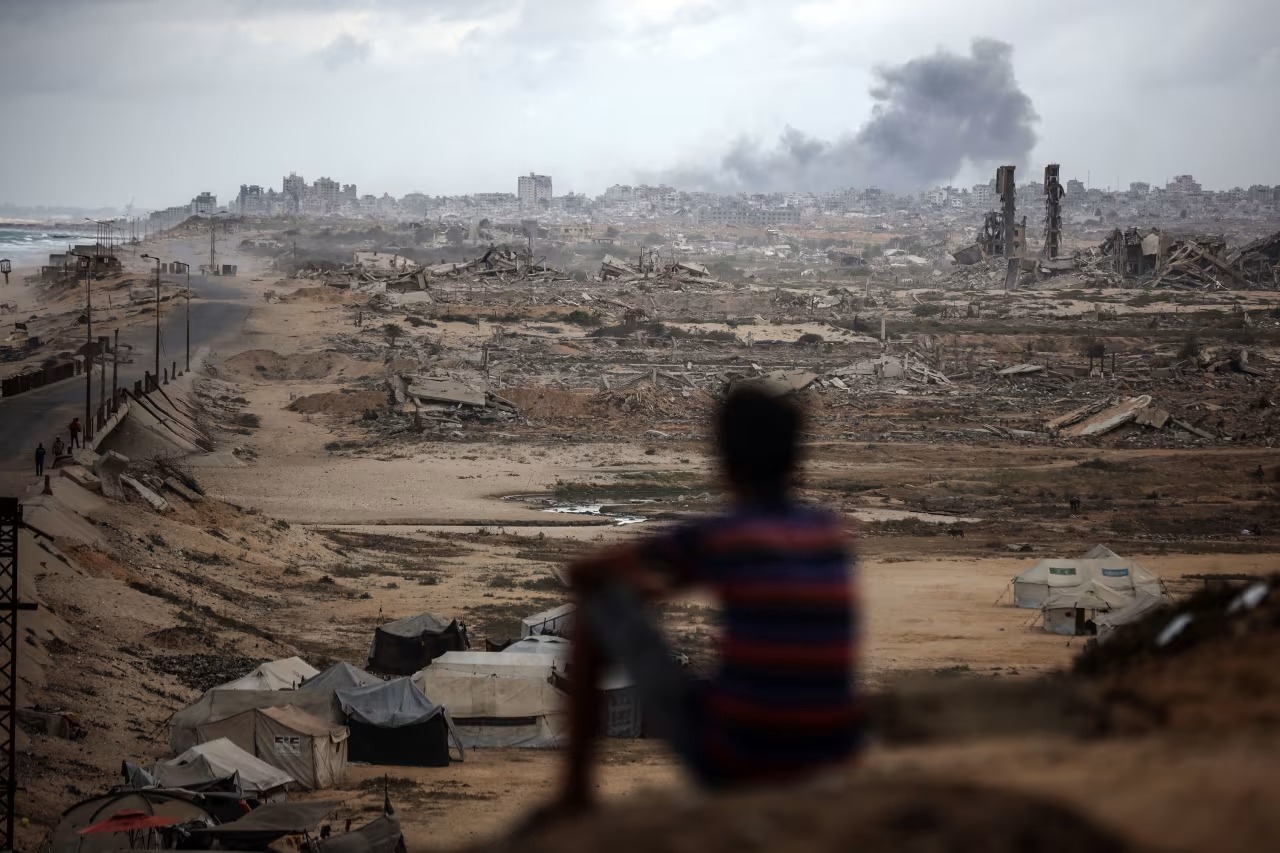
The ceasefire represents immediate relief for a population devastated by two years of attacks, famine and forced displacement.
Thousands of families living in tents await the arrival of trucks with food and medical supplies. The text of the agreement provides that the flow of aid will be monitored by mediating countries and that Israeli troops will retreat to a previously agreed line, which should open space for the reconstruction of Gaza and the resumption of basic services.
The release of Israeli hostages and Palestinian prisoners is a central part of the truce, but the pact does not end the structural causes of the conflict.
Gaza remains under blockade, and Israel retains military and economic control of the territory. Reconstruction will depend on the effective action of humanitarian organizations and the commitment of the international community to prevent further violations.
Source: vermelho.org.br