Published 03/20/2026 14:43 | Edited 03/20/2026 15:39
The war of aggression led by the United States and Israel against Iran has entered a new phase in recent days by directly affecting the energy sector, causing a spike in oil prices and increasing the risk of a global supply shock.
After attacks by the United States and Israel on strategic infrastructure and the Iranian response against gas complexes and maritime routes in Qatar and other Gulf countries, the price of a barrel has already exceeded US$115 and could reach US$180 in the coming weeks, amid the blockage of the Strait of Hormuz and the interruption of flows that concentrate around a fifth of the world’s energy.
The escalation comes after Washington bet on a quick resolution operation, an assessment that was not confirmed given the Iranian response capacity, prolonging the fighting for around three weeks and without any immediate prospect of an end.
The war of aggression led by the United States and Israel against Iran has entered a new phase in recent days by directly affecting the energy sector, causing a spike in oil prices and increasing the risk of a global supply shock.
After attacks by the United States and Israel on strategic infrastructure and the Iranian response against gas complexes and maritime routes in Qatar and other Gulf countries, the price of a barrel has already exceeded US$115 and could reach US$180 in the coming weeks, amid the blockage of the Strait of Hormuz and the interruption of flows that concentrate around a fifth of the world’s energy.
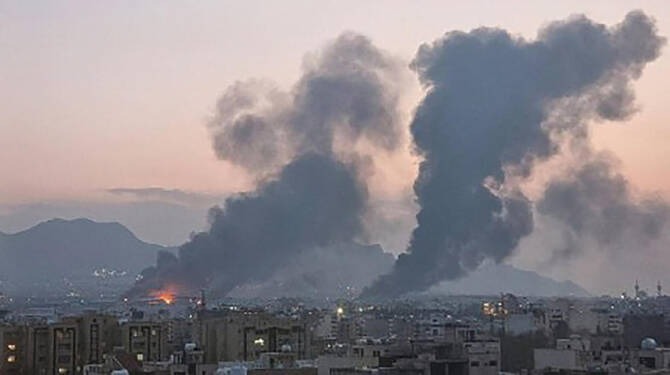
On Wednesday (18), Israel struck the South Pars natural gas field, Iran’s main reserve, and, in response, Tehran launched attacks against the Ras Laffan industrial complex in Qatar — responsible for around a fifth of global liquefied natural gas production — in addition to hitting Saudi energy installations in Yanbu, a strategic flow point that skirts the Strait of Hormuz.
At the same time, between Wednesday (18) and Thursday (19), Iran intensified actions against vessels in the Gulf, expanding a sequence of attacks that drastically reduced traffic in the strait, through which approximately 20% of the world’s oil flows.
The pressure on maritime routes, added to the bombings against installations, started to directly compromise the flow of energy in the Middle East, with immediate effects on international markets.
The most recent attacks hit structures critical to global supply, forcing oil and gas fields to shut down and raising the risk of prolonged outages.
Throughout the week, airlines and maritime transport companies began preparing for fuel shortages, while governments and market agents monitored the possibility of new attacks on energy hubs, in a scenario that tends to deepen instability in the region.
The scale of the crisis led the International Energy Agency (IEA) to classify it as “the biggest energy shock in history”, with a direct impact on around a fifth of the global supply of oil and gas.
According to the entity’s director, Fatih Birol, the volume of gas interrupted already exceeds twice that recorded in the European crisis of 2022, at the beginning of the war in Ukraine, while the loss of oil is greater than in the shocks of the 1970s, which triggered recessions and rationing on a global scale.
Birol also warned that, even with the interruption of attacks, the recovery of energy infrastructure will not be immediate.
“It will take six months for some [campos] to return to operation, others much more”, he stated, adding that the continued blockage in the Strait of Hormuz keeps “vital arteries” of the global energy system paralyzed.
In the markets, the escalation is already translating into a rapid deterioration in supply conditions.
Oil has risen by around 50% since the start of the war, when a barrel was around US$70, with projections indicating a continued upward trajectory in the coming weeks.
Saudi authorities and market operators are working with scenarios ranging from US$138 to US$150 in the short term, reaching US$165 and even US$180 if the interruptions persist, while analysts consider that values close to US$200 are “not out of the question” in 2026.
At the same time, concerns are growing about a physical shortage of energy, as supplies are consumed and fields remain closed or damaged.
“The most important action is the resumption of transit through the Strait of Hormuz,” said Birol, highlighting that there is no immediate replacement for oil and gas coming from the Gulf.
The effects are already spreading across the global economy. The price of natural gas in Europe has more than doubled since the start of the war, while aviation fuel has seen similar increases, putting direct pressure on sectors such as transport and logistics.
Executives at major airlines in the United States reported an increase of around US$400 million in costs in March alone, and companies have already begun to reduce operations in the face of rising fuel prices.
The increase in energy prices also increases inflationary pressure and reignites fears of recession.
Central banks have signaled caution regarding the scenario, and the president of the Federal Reserve, Jerome Powell, of the United States, stated that higher energy costs tend to “raise inflation” and “reduce growth”.
In parallel, governments adopt emergency measures, such as fuel tax cuts and even rationing in some countries.
In everyday life, the impact is already noticeable. In the United States, the average price of gasoline is close to US$4 per gallon, while diesel exceeds US$5, making the transport of goods more expensive and putting pressure on the cost of living.
Source: vermelho.org.br