Published 06/07/2025 15:15 | Edited 06/07/2025 15:48
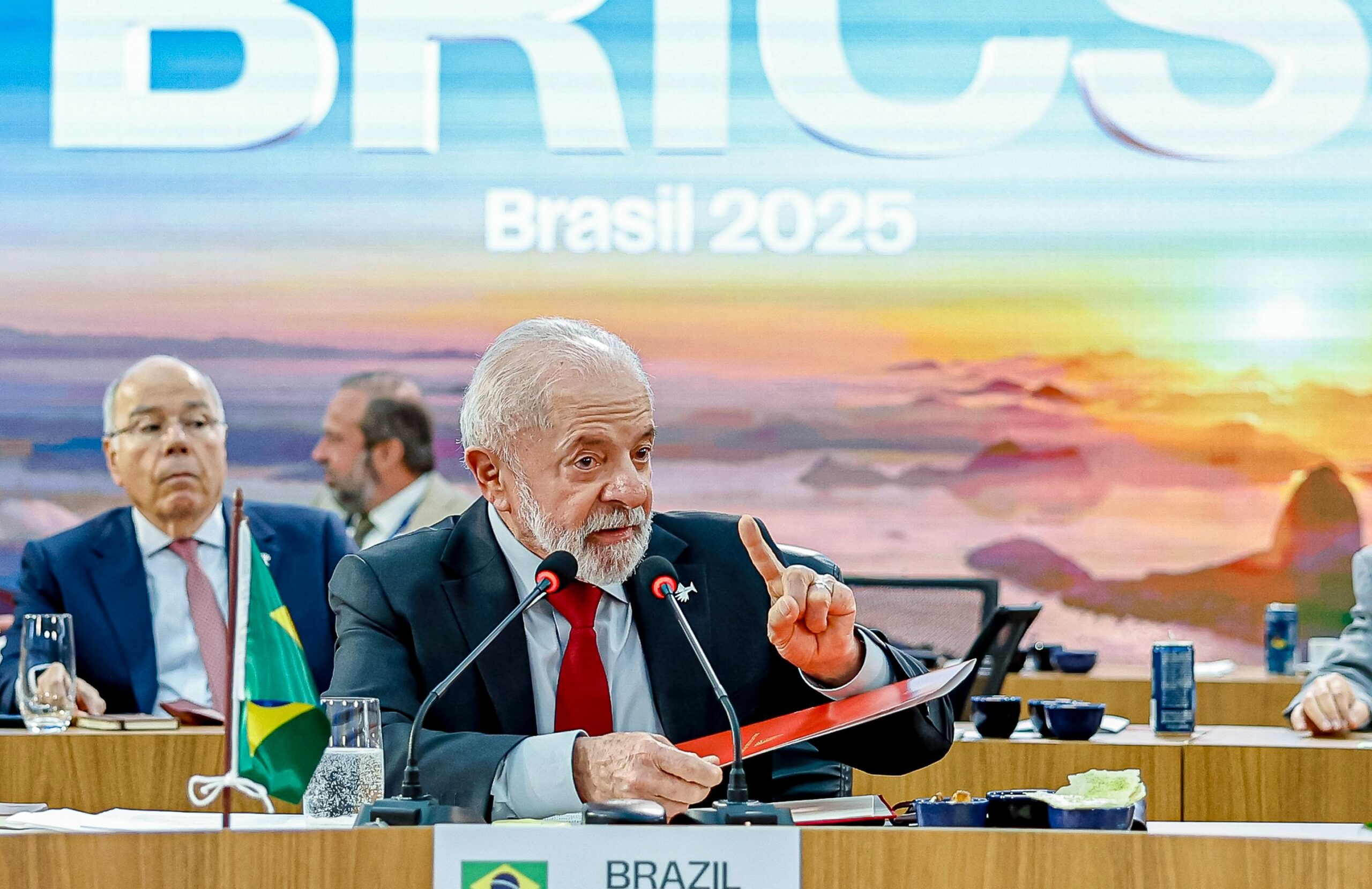
“BRICS is heir to the non-cooled movement,” said President Luiz Inacio Lula da Silva, at the opening of the 17th Brics State Chefs Summit, held this Saturday (6), in Brazil. Faced with leaders of an expanded block – which already represents more than half of the world’s population and almost 40% of global GDP – Lula has drawn a critical overview of current international governance and proposed a new, more fair, representative and effective multilateral architecture.
Also read: BRICS NO RIO: Declaration of the Summit Moths New Architecture of Global Governance
The dome, which marks the 80th anniversary of the UN and the fourth time Brazil hosts the meeting, occurs in a scenario of erosion of multilateralism, aggravated by wars, unilateral sanctions, instrumentalization of international organizations and setbacks in global commitments. The speech of the Brazilian president was, at the same time, a denunciation of the faults of the current system and a call to the renewal of global governance, with BRICS as a vector of transformation.
Multilateralism in collapse: “easier to finance the war than peace”
At the beginning of his speech, Lula denounced what he called “without parallel collapse of multilateralism”, especially the UN Security Council, which, he said, lost credibility by becoming unable to prevent conflicts and hostage to selective geopolitical interests. The president highlighted the arms climb promoted by NATO countries, contrasting with the breach of funding goals for sustainable development.
Also read: BRICS closes pacts in AI, climate and health with Brazilian leadership
“It is easier to allocate 5% of GDP for military spending than allocating the 0.7% promised for official development assistance.”
He also cited the rendering of international law, pointing out the successive failures of western interventions in Afghanistan, Iraq, Libya and Syria. According to Lula, the emptiness left by these actions fed terrorism and radicalization, especially in North Africa and the Middle East.
Palestine, Ukraine, Iran and Haiti: The global south requires coherence
The most striking part of the speech dealt with the ongoing conflicts. Lula condemned Hamas attacks, but did not hesitate to denounce the “genocide practiced by Israel in Gaza” and the use of hunger as a weapon of war. He defended the creation of a sovereign Palestinian state at the 1967 borders as the only way to a lasting solution.
Also read: Banco do Brics: Dilma defends sustainable and inclusive development
About the war in Ukraine, the president defended direct dialogue between the parties, with mediation from the group of “Friends for Peace”, led by Brazil and China. He also reiterated the condemnation of territorial violations against Iran and defended the UN more commitment to stabilization of Haiti.
“Hate ideology cannot be associated with any religion or nationality,” he said in criticism of increasing xenophobia in the Western powers.
The reform of the Security Council: justice or irrelevance
The central proposal of Lula’s speech was the renovation of the UN Security Council, including new permanent members of Latin America, Africa and Asia. For the president, this is not just a matter of historical justice, but condition for the organization’s own survival.
“Each day we spend with an archaic and exclusionary international structure is a lost day to solve the crises that plague humanity.”
Also read: BRICS Summit reinforces Brazil’s prominent role on the world scenario
Lula also cited the Brazilian initiative in the G20, “Action for the Reform of Global Governance,” as an attempt to articulate the global southern forces around a new model of international management.
BRICS as transformative force: heir to Bandung and Peace Vector
Throughout his speech, the Brazilian president evoked the historical legacy of BRICS as heir to the Bandung Conference (1955) and the non-aligned movement, reiterating that the group has sufficient legitimacy and diversity to act as a conflict mediator and consensus articulator.
“We can launch the foundations of a invigorated governance,” said Lula, highlighting BRICS responsibility for building a new multipolar order.
The meeting takes place at a moment of renewed protagonism of the bloc, with the recent adherence of countries such as Argentina, Egypt, Ethiopia, Iran and Indonesia, expanding their geographical and geopolitical diversity.
The challenge of a new world
Lula’s discourse was a political manifesto against the unipolar order led by Western powers and an appeal to the refounding of international institutions under the criteria of equity, legitimacy and justice. Faced with UN paralysis and the selective use of international law, the Brazilian president proposes that the BRICS assume the protagonism of a new era of international cooperation, centered on peace, development and respect for sovereignty.
Also read: Billionaires in Mira: Haddad wants to tax fortunes that challenge logic
If the UN has been founded to prevent a new world war, Lula concludes, it is time to reform it to prevent permanent instability from becoming the new standard.
Source: vermelho.org.br