Published 06/01/2026 17:19 | Edited 07/01/2026 16:15
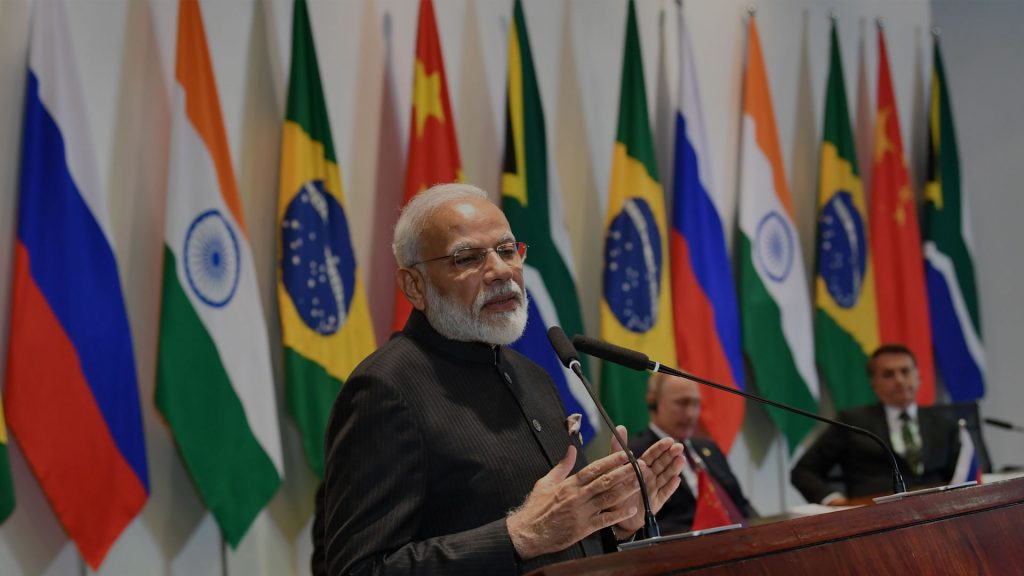
India officially assumes the rotating presidency of BRICS, succeeding Brazil in a moment of consolidation of the group now expanded to ten members. The Indian administration inherits the commitment to deepen mutual cooperation and reform global institutions, central agendas for the Lula government in 2025.
For professor Euzébio Jorge Silveira de Sousa, from the UFRJ Institute of Economics, Indian leadership is emblematic of the country’s ability to act as an integration bridge without bowing to external pressure. Analyzing New Delhi’s stance in the face of international crises, the professor highlights that India played a fundamental role in being a country that, after the attacks during the Ukraine war, “did not capitulate [se rendeu] to the commitments and efforts of the United States and Europe to isolate Russia”, he states.
This strategic autonomy had direct economic consequences. According to Euzébio Sousa, the country even promoted “the processing of oil that came from Russia and that continued to enter Europe and the West, in countries that sanctioned Russia”, revealing a geopolitical navigation ability that strengthens the bloc’s position.
Demographic power and technological model
In addition to the diplomatic balance, India reaches the presidency supported by impressive numbers. Currently, the most populous country in the world has a young population and high aggregate demand.
In the field of innovation, India presents itself as an unquestionable power in biotechnology and the aerospace sector. But even though it has cutting-edge technology, it is still a very poor country, although the government has encouraged, for example, the “production of ethanol from sugar cane to keep people in the field and to distribute income”. Professor Euzébio considers that this development model coexists with a “very consolidated relationship of inequality and state relations that hinder” full social progress.
Read more: The US plan to contain Brics and save the dollar
India’s greatest asset for the bloc in 2026 lies in information technology. Euzébio highlights that the country is a giant in “providing communication and information technology services, providing services via outsourcing and outsourcing mechanisms in the world”. By having English as its official language, the country integrates naturally into global markets, making its economy a central pillar for what the bloc can develop.
Continuity of Brazil’s efforts
The Indian presidency takes place under the shadow of recent threats from Donald Trump’s government, which has signaled to raise tariffs on Indian products if New Delhi does not stop purchasing Russian oil. This pressure reaffirms the urgency of the bloc’s countries to seek protection against unilateral sanctions and strengthen economic sovereignty.
The journalist and president of the Brazilian Center for Solidarity with People and the Fight for Peace, José Reinaldo Carvalho, analyzes that although there is no absolute clarity on the horizon regarding Narendra Modi’s next steps, the tendency is towards resilience, as, in principle, “India would have no reason to carry out a radical change of position”, maintaining the strategic position of balance between global powers and the interests of the Global South.
New Delhi must continue Brazilian efforts. The Brazilian Foreign Ministry and President Lula have already expressed confidence that issues such as food security and the creation of alternative financial mechanisms to the dollar will gain technical traction with India’s experience in digital infrastructure.
For professor Euzébio Souza, India’s relevance is “unquestionable for the role that the bloc will be able to develop and pursue in 2026”. The 18th BRICS Summit, scheduled for the second half of the year in New Delhi, will be the stage where this power will try to consolidate the group as the main driver of a new multipolar world order.
Source: vermelho.org.br