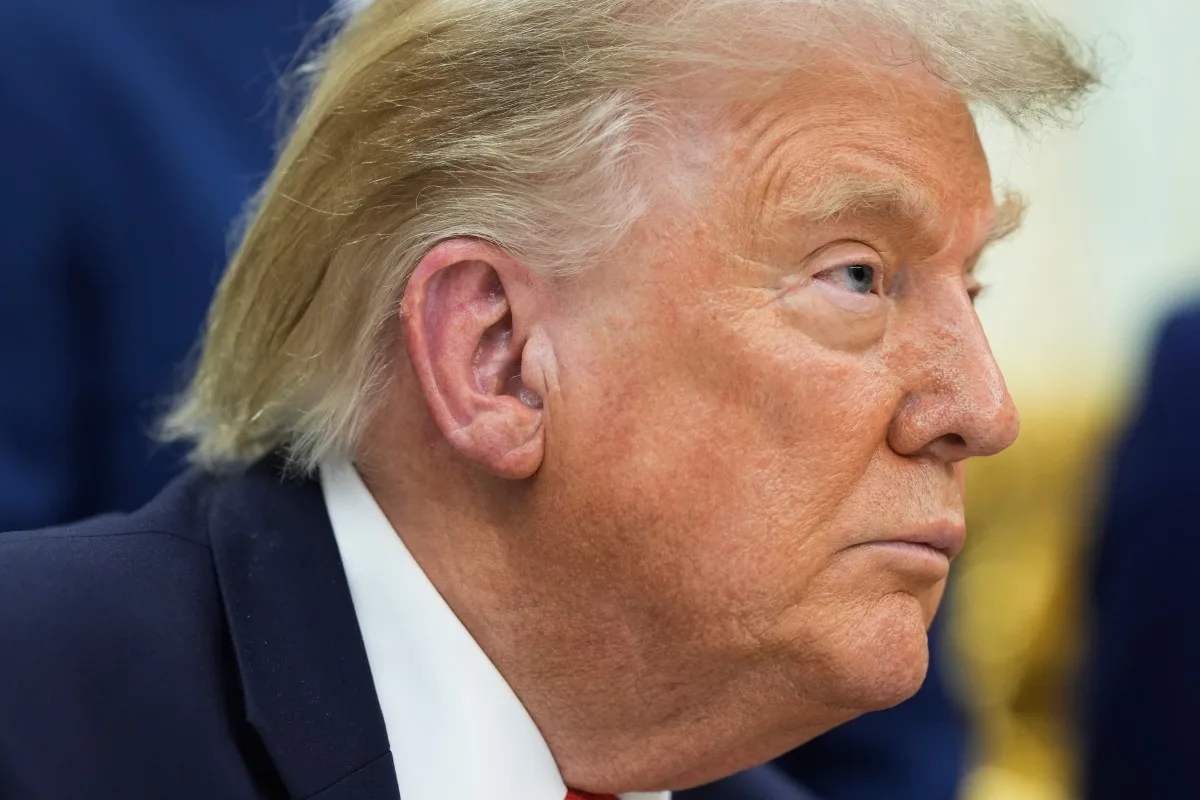
“Fascism in the United States can only be stopped by the American people.” The assessment comes from the Cuban consul general in São Paulo, Benigno Pérez, who classified the current Donald Trump government as the “most dangerous moment for Cuba and the world” since the triumph of the Cuban Revolution in 1959.
In an interview promoted by the Centro de Estudos da Mídia Alternativa Barão de Itararé, with the participation of independent media outlets, including Brazil in factPérez stated that the US government had resumed an expansionist policy and linked the offensive against Cuba to this scenario.
“There is fascism in the United States. I have no doubt, there is fascism, a fascist government in the United States,” he stated. For the diplomat, unlike other historical moments, an external reaction would not be able to contain this process. “Fascism in the United States must be stopped by the American people. This task falls to the American people”, he added.
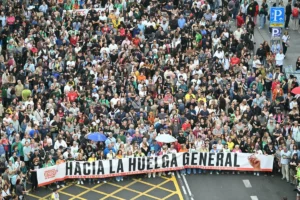
Pérez cited the “No Kings” demonstrations as a sign of internal resistance and said he believed in a defeat for Trump in the mid-term elections in November. For him, confronting the extreme right requires a broad political front.
“In the fight against fascism, we have to have breadth. Not just the left. Decent people, even if they are right-wing and willing to fight against fascism, we have to bring them into this battle”, he argued.
The consul also classified the possibility of military aggression against Cuba as real, although he highlighted that the Cuban government seeks to avoid a conflict and is willing to talk. According to Pérez, sovereignty and independence, however, are not up for negotiation.
Cuba expects support against blockade at the UN
The blockade exercised by the United States on Cuba will again reach the United Nations General Assembly. According to Pérez, on October 27th and 28th the resolution presented annually against the economic, commercial and financial blockade imposed by the United States on the island will be debated. The vote is scheduled, according to the consul, for the 28th.
“As always, we aspire to have overwhelming support from the international community for this resolution,” he declared.
Pérez accused the US government of putting pressure on other countries to change the result of the vote. “The United States government, for two months now, has been pressuring governments across the planet not to vote against them at the United Nations,” he said.
Despite the expectation of support in the General Assembly, the diplomat said that Cuba expected a more forceful reaction from governments in the face of the tightening of measures adopted by the USA. Pérez accuses the United States of trying to deepen the island’s economic difficulties until it produces a humanitarian crisis that could serve as justification for intervention.
Blackouts reach 22 hours
The lack of oil is today one of the most visible expressions of the blockade on the Cuban population. Pérez stated that Cuba experiences blackouts lasting up to 20 or 22 hours in some locations and linked the situation to restrictions imposed by the Trump administration on the sale of fuel to the island.
According to the consul, Cuba needs approximately 3,200 to 3,300 MW of electricity. Production from oil extracted in the country itself would guarantee between 1,000 and 1,200 MW.
“As we don’t have oil, because no one sells us oil for fear of the United States, the blackouts last 20 hours, 22 hours and, in some places, even longer. This affects the entire Cuban economy, the economy and the lives of Cubans,” he said.
One of the Cuban government’s bets to reduce dependence on imports is solar energy. Pérez said that around 600 MW of capacity was installed between 2025 and 2026, with Chinese participation in supplying equipment.
“Cuba cannot continue importing oil if we have energy from the sun, but we need time,” he said. According to him, the change in the energy matrix is underway, but it is still not enough to meet the country’s demand.
Source: www.brasildefato.com.br