Published 02/25/2026 11:55 | Edited 02/25/2026 18:51
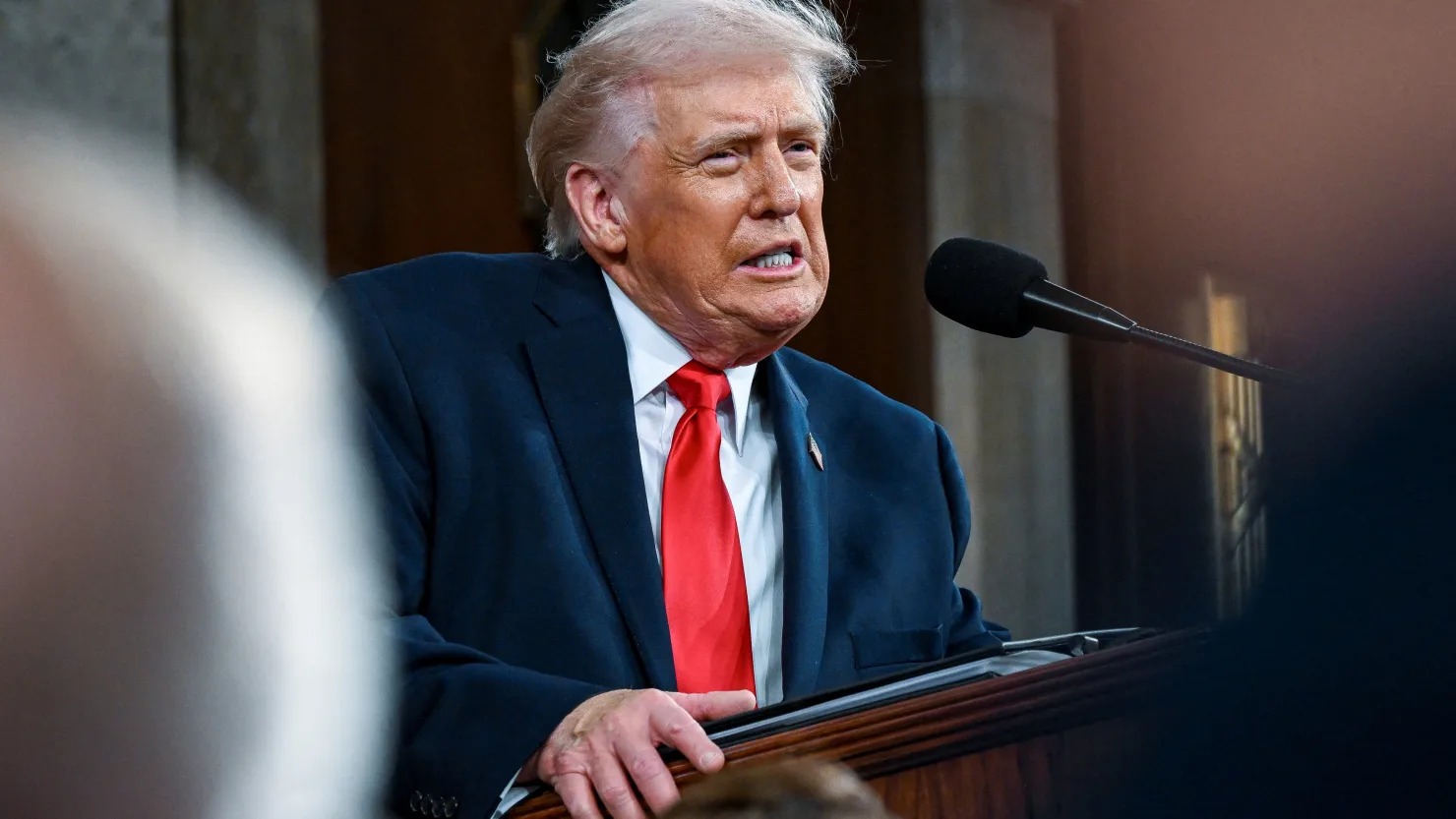
Cornered by the drop in popularity and the limits recently imposed by the Supreme Court, Donald Trump transformed the annual “State of the Union” address, this Tuesday (24), into an explicit attempt to reposition his leadership and reverse the political wear and tear of his second term.
Faced with a divided Congress and less than nine months before the midterm elections, the president took to the pulpit with a clear objective: to sustain the image of a strong government at a time when his authority is questioned both in polls and in institutions.
The speech, longest in the history of the ceremony, functioned less as an accounting and more as a piece of political affirmation.
“We have achieved a transformation like never before,” he stated, before declaring that the United States is experiencing “the golden age of America.” The words were accompanied by applause from the Republican base, while the Democratic bench remained silent, as a sign of rejection.
Recent research indicates that government wear and tear is concentrated precisely in the economic area, the central axis of the Trumpist narrative since the campaign.
Growth lost momentum at the end of 2025, the cost of living remains among the electorate’s main concerns and the promise of widespread prosperity has not turned into daily relief for a large part of the population.
Days earlier, the Supreme Court struck down the main mechanism used by the government to support its tariff policy, directly limiting the scope of its economic agenda.
In the plenary, the president avoided openly confronting the judges, but classified the decision as “very unfortunate” and indicated that he will look for alternatives to overcome the setback.
In one of the most tense moments of the speech, Trump asked lawmakers to stand up in support of the phrase that the government must protect “American citizens, not illegal immigrants.” Democrats remained seated. The president reacted by accusing them of “being ashamed of themselves” and used the episode to reinforce polarization in the plenary.
In foreign policy, Trump celebrated the bombings against nuclear facilities in Iran, praised the military operation that resulted in the kidnapping of Venezuelan President Nicolás Maduro and reaffirmed the role of the United States as a dominant force in the so-called “Western Hemisphere”.
“I will never allow the biggest sponsor of terrorism in the world to obtain a nuclear weapon,” he said, referring to Iran, while reinforcing the largest military budget in the country’s history.
When dealing with Venezuela, Trump described the operation that led to the kidnapping of Nicolás Maduro as “a colossal victory for the security of the United States” and said that the action marks “a new and bright beginning for the people of Venezuela”.
The president, however, avoided sensitive topics. He did not address the tension with NATO allies, was silent on the pressure exerted on Denmark over Greenland and barely mentioned China, the central target of his tariff policy and the global strategic dispute.
The omission was noted by North American analysts as a sign of political calculation at a time of delicate negotiations.
In Washington, parallel events organized by Democratic parliamentarians and social movements denounced the contrast between the official narrative and the reality experienced by the population.
“Trump’s State of the Union looks nothing like what’s really happening in this country,” summarized one protester to the North American press.
Source: vermelho.org.br