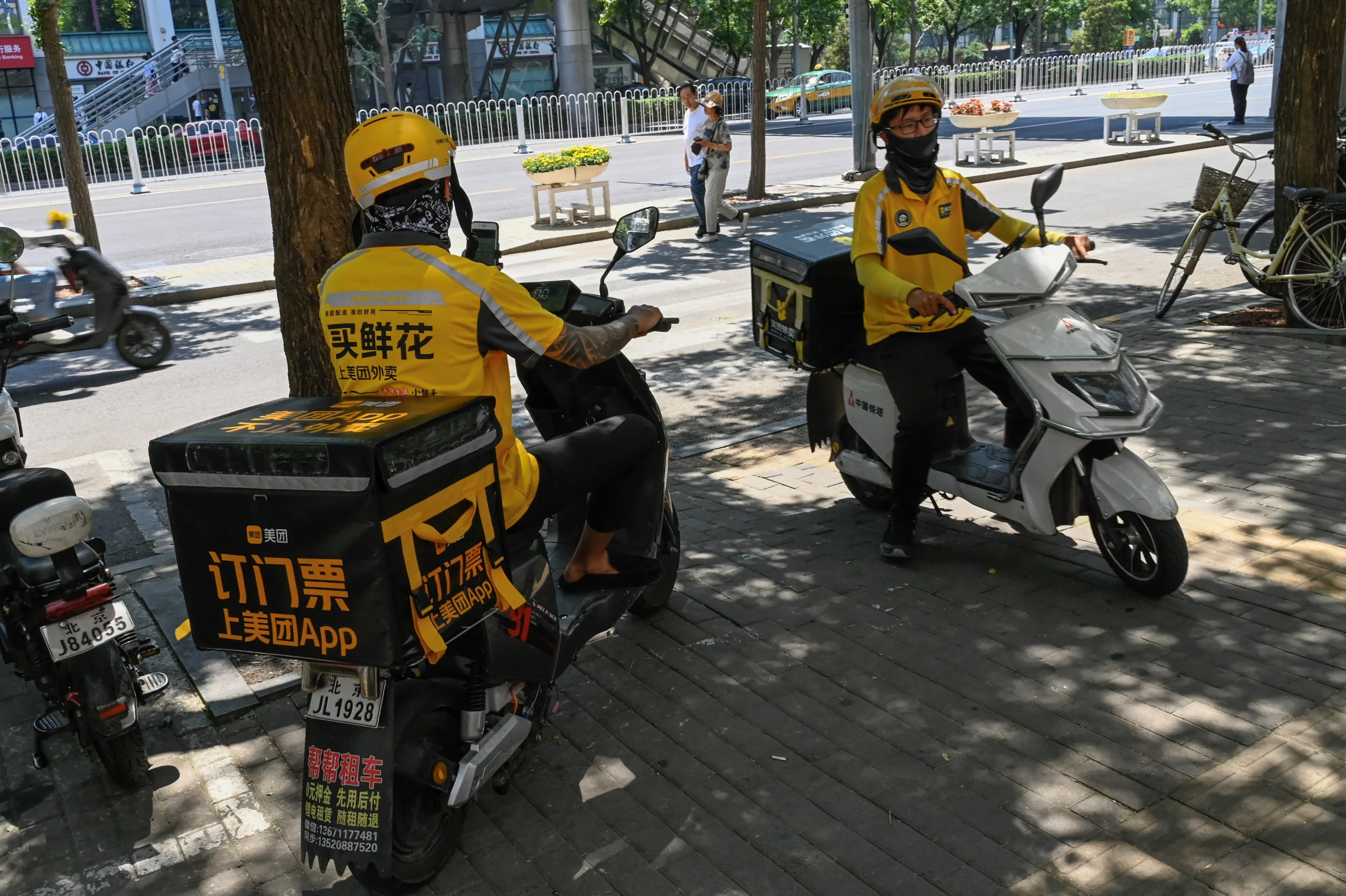
Digital platforms should cover part of the health insurance of delivery people, app drivers and on-demand service providers, a category with more than 200 million workers in China. The guideline was released in the Universal Health Coverage Five-Year Plan for 2026–2030, by the National Health Insurance Administration of China, this Wednesday (19).
Currently, workers in these categories who want the insurance of formal employees, with reimbursement of around 80% of hospital expenses, need to pay 100% of the contribution on their own, without any participation from the contracting platform. Most of these workers today use resident health insurance, with reimbursement of about 70%.
According to a report by the State Council presented to the National People’s Assembly (ANP) in December 2025, only 66.16 million of the more than 200 million workers in this category had employment-linked health insurance by the end of 2024.
The 14th Five-Year Plan (2021–2025) had taken an initial step by removing the requirement that app workers could only sign up for insurance in the city where they have household registration, the so-called hukoua system that links social rights to their place of origin and has historically prevented migrants from accessing services in the cities where they work. The financial barrier, however, remained: without the obligation to contribute to the platforms, the worker continued to pay the part that would fall to the employer.
By the end of last year, China’s Basic Medical Insurance System covered 1.33 billion people, 95% of the population, with revenue of 3.59 trillion yuan (about R$2.9 trillion) and expenses of 3 trillion yuan (more than R$2.4 trillion), including maternity insurance, according to the Xinhua. Unlike the Brazilian SUS, financed by taxes and free of charge, the Chinese system is contributory: workers and employers pay monthly into the fund, which then reimburses part of the hospital expenses.
With the new plan, births in the hospital will be fully covered by maternity insurance, at no cost to the woman. Anesthesia during childbirth and assisted reproduction procedures are also covered.
Medicines at state prices
The large-scale purchasing system, in which the government negotiates directly with laboratories to obtain discounts in exchange for guaranteed volume, will grow and become a permanent rule. The measure has already significantly reduced the price of expensive items, such as prostheses, intraocular lenses and heart stents, reports the Xinhua. The goal is to ensure that 90% of medicines and 80% of high-cost materials in public hospitals are purchased through regional platforms.
An application will also be created so that the general population can compare medicine prices close to home, check stock in real time and receive alerts against abusive charges.
The plan also provides for a continuous monitoring mechanism for those who have very high health expenses, issuing alerts to prevent medical expenses from pushing families into poverty.
Long-term care
With more than 323 million people over the age of 60 (23% of the population) and the projection of exceeding 400 million by 2035, China will expand Long-Term Care Insurance, known as the country’s “sixth social insurance”. Today, 308 million people contribute to the fund; The benefit, intended for those who are severely dependent on basic tasks, serves 1.93 million people.
The program, currently in the testing phase in 92 cities, will be rolled out across the country by 2030. The project also provides for unified rules at a national level to assess the degree of dependence of the elderly and the use of auxiliary robots to help those with mobility difficulties.
Source: www.brasildefato.com.br