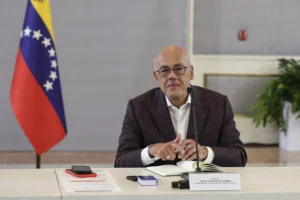
Senator Iván Cepeda recognized, this Wednesday (24), the victory of Abelardo de la Espriella in the presidential race in Colombia. In a speech, Cepeda stressed that he would accept the result “in the name of democratic coexistence”, aiming to preserve institutional stability.
“Less than 1% of the votes separates the candidates who participated in this election. This is the best electoral result ever achieved by progressive sectors and social movements in Colombia,” said Cepeda.
Last Sunday (21), the preliminary count showed that Espriella received 49.66% of the votes, against 48.70% for the senator supported by President Gustavo Petro. The defeated group did not recognize the immediate result, preferring to wait for the vote to be counted — a mechanism of the Colombian electoral system.
In his speech, Cepeda defended the exercise of a “democratic, vigilant and constructive opposition, but also resolute and unshakable in defending the people”. He called for the mobilization of opposition forces to the future Espriella government, highlighting the social achievements of the Petro government.
“Throughout our republican history, progressive forces have led the expansion of rights, strengthened public freedoms and defended democracy when it was threatened. We have always been on the side of popular participation, the Constitution and popular sovereignty”, he stated.
Cepeda also denounced what he defined as “open and undue foreign interference in Colombia’s internal affairs, particularly the interventions carried out by the United States government […] and by President Donald Trump to candidacy Abelardo de la Espriella”.
The senator also accused Espriella’s campaign of promoting a “massive vote buying operation” through the use of Artificial Intelligence (AI) tools, without giving further details.
Axes of resistance
Still regarding the opposition guidelines that the Historic Pact party must follow, Cepeda highlighted “resistance and peaceful civil disobedience”.
“We will be together with the communities, in the territories, in the popular neighborhoods, in the countryside and in the cities. We will follow the social struggles, the causes of youth, women, workers, ethnic peoples, peasants and the middle classes”, he stressed.
“To De la Espriella and the new government, we say very clearly: no fiscal adjustment policy can include the destruction of the achievements achieved by the Colombian people, nor of the living wage [cálculo que supera o salário mínimo na Colômbia]nor agrarian reform, nor pensions, nor ‘zero enrollment’ for students at public universities,” he stated.
Future of Colombia
Abelardo de la Espriella, criminal lawyer and businessman, is expected to assume the Colombian presidency next August for a four-year term, without re-election. He promises a government based on encouraging the reduction of the State structure.
Another axis of the winning candidate’s political platform concerns the issue of violence. De la Espriella has already committed to building mega-prisons in the country, going so far as to say that he may end negotiations with armed groups.
To be able to govern, however, De la Espriella will have to negotiate with progressive and centrist forces. In the Colombian Senate, made up of 108 legislators, the elected president will only have three senators from the National Salvation Party. On the other hand, the expectation is that he will have the support of part of the 17 members of the Democratic Center. The Historic Pact continues to have the largest bench, with 25 senators.
The direction of the political pendulum in the Colombian Senate will be defined by the movements of the Liberal, Conservative, Cambio Radical and La U parties.
Source: www.brasildefato.com.br