As a World Cup debutant, Cape Verde transformed the team’s campaign into a moment of national affirmation. The African country formed by an archipelago in the Atlantic Ocean is competing in the main football tournament for the first time and reaches the round of 16 stage to face Argentina this Friday (3). For President José Maria Neves, the trajectory of the Blue Tubarões reinforces the identity of a nation that seeks to expand its presence on the international stage.
Before the match, Neves stated that participating in the World Cup represents an opportunity for the world to get to know Cape Verde better. According to the president, the selection symbolizes the country’s ability to overcome challenges and can strengthen the image of a nation marked by peace, development and the diaspora.
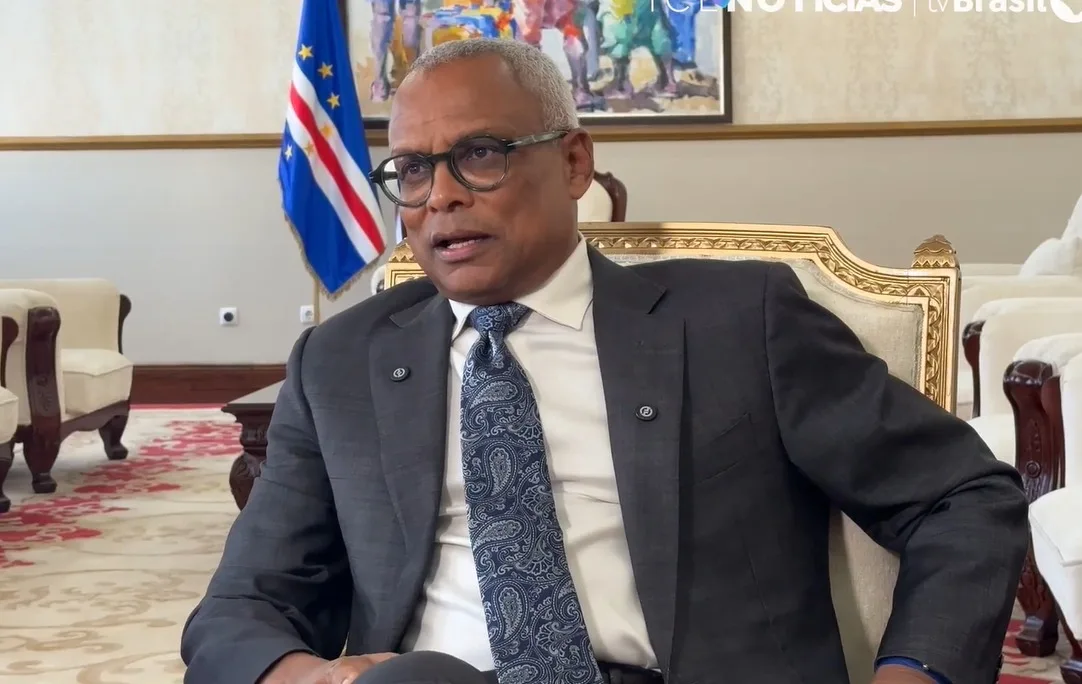
“We are an oceanic State, a great oceanic State, and the fact that we are the Blue Sharks ends up giving new meaning to the Cape Verdean nation. And this presence shows the greatness of the country, but, above all, the character, the resilience, the ability to overcome all limits, and will open up new possibilities and new paths in the construction of this great Cape Verde”, he said in an interview produced in partnership between the teleSUR ea TV Brasil.
Neves also said that the majority of the population of Cape Verde, before the debut of the country’s team, used to support the Brazilian team in World Cups and highlighted the historical and cultural ties between the two countries. “We discovered Brazil a long time ago, and it’s good that this World Cup makes Brazil rediscover Cape Verde. But, more than that, that the world rediscovers Cape Verde”, he stated.
When commenting on the team’s campaign, the president said that he experienced the team’s debut differently than any other football match. After the draw with Spain, Neves went to the dressing room to greet the players and coaching staff and found a calm and confident group. For Neves, this stance explains Cape Verde’s ability to make history in its first participation in the World Cup.
Check out the full interview
TeleSur: How important is this team and how is your country experiencing at the moment with such a beautiful participation by the Blue Tubarões, from the Cape Verde team, in the World Cup?
José Maria Neves: This selection is the rediscovery of Cape Verde. In fact, we are an oceanic state, a great oceanic state, and the fact that we are the Blue Sharks ends up giving new meaning to the Cape Verdean nation. And this presence shows the greatness of the country, but, above all, its character, resilience, the ability to overcome all limits, and will open up new possibilities and new paths in the construction of this great firm cape.
You are watching the game; what is going through your head? Do you watch calmly or are you one of those more nervous watching football?
I always, until today, watched the games calmly. All the games of my favorite teams or the national team. I saw the team qualify for the World Cup. But now I went to Atlanta to see the opening game, I was heartbroken, extremely nervous, and I had never had a feeling of this greatness; it was simply transcendental.
You, who followed these giant boys who are making history, how are they behind the scenes? How are they feeling there?
When the game in Atlanta ended, the first game, after the draw with Spain, I went down to the dressing room to greet the coaching staff and the players. I was still holding my heart, extremely excited, and when I arrived, Bubista, the coach, greeted me at the door with serenity, tranquility, and a smile.
The players were also very calm, very serene, playing, and I realized that the Blue Sharks were very well prepared and with very strong leadership to participate in this great world football competition.
How important is this team, this game and this World Cup for the world to get to know Cape Verde?
Do you know something? Cape Verdeans are very friendly with Brazil. Most Cape Verdeans I think support Brazil in the World Cup. And this time we have our own selection. We discovered Brazil a long time ago, and it’s good that this World Cup will make Brazil rediscover Cape Verde. But, more than that, may the world rediscover Cape Verde as a country where there is humanity, where there is peace, where there is friendship and there is no violence.
In our region, Cape Verde is the country where there has never been a coup d’état. It is a country where there is a huge desire for development, but a country where we do our work from home. And Cape Verde grew, asserted itself, developed. Let’s say that Cape Verde is the positive Africa, the Africa that wants to assert itself, and it’s good for the world to know that Africa is not just war, it’s not just evil, it’s not just disease. Africa is also development and another humanity. So, I think this discovery is very important for us, Cape Verdeans, for Africa and for the world.
President, still talking about Brazil and Cape Verde, you studied in Brazil. How important is the relationship between our countries, beyond the political relationship in general, but this closer relationship of cooperation?
She is extraordinary. We, in Brazil, feel at home. And there is a lot in common between Cape Verde and Brazil: music, the way of being, of being. There is a Cape Verdean poet, Jorge Barbosa, who compares Cape Verde and Brazil, a beautiful poem in which he says that, after all, we are the same. And there is a song that says that Cape Verde is a little Brazil, which Cesária sings.
In fact, President Lula came here and I told the president that Brazil was a great Cape Verde, because there are so many things in common. I, when I arrived in São Paulo, a big city completely different from a civic and physical point of view, when we go out on the streets, come to a samba, you realize that there is a great identity. It is a great communion between Cape Verde and Brazil.
When you hear Brazilian music, you immediately identify with it. I identify with the apostles of Brazilian music: Caetano, Djavan, Chico Buarque, Gilberto Gil, Gal, Bethânia, Elba Ramalho, etc. So, there is this great musicality that “hermanates us”. But also, when I read “Vidas Secas”, by Graciliano Ramos, and read “Chuva Brava”, by Manuel Lopes, there is a great similarity between the writings and the themes that are debated. Or when I read Manuel Bandeira and read Jorge Barbosa. There are so many things in common, and if I see José de Alencar or Machado de Assis, I also identify with several of those subjects, the themes that are addressed.
There are so many things in common, it’s not just football, it’s not just music, it’s not just literature, it’s also the way of being and being. And therefore, I can say that the best times of my life were when I studied in Brazil and did my training.
One thing we heard a lot here was the word “morabeza”. What is morabeza?
A Brazilian, who was trying to decipher what morabeza is, said that it is love in turn. It is this feeling of reception, friendship, of deep identification with the other, of communion. It is this simplicity that identifies someone who is tolerant, who accepts others and who considers that difference cannot fragment, but creates spaces of union. The idea is this Cape Verdean humanism, which is expressed in the word morabeza.
You compared the selection with the issue of independence here. Portuguese is the official language here, public acts are carried out in it, but everyday life is in Creole. How important is this language to your people?
Creole is a landmark of Cape Verdean identity. It is a people who created a language to be able to communicate and assert themselves. Here, when the Portuguese arrived, there was no one. The islands were deserted and Europeans came, slaves from the west African coast, migrants, and gave rise to Cape Verdean, and they had to create their own language. So, we are a Creole nation.
In this first moment of the birth of Cape Verde and Cape Verdeans as a nation, there were painful moments, with a lot of violence, with a lot of suffering. But the most important thing is that we managed to overcome and reinvent a society.
And violence is not just human. Cape Verde is also marked by a very harsh nature. We had famines, we had droughts, we had deaths and we had to go around the world in search of better living conditions. And, soon, we, who are emigrants before being Cape Verdeans, after our condition as Cape Verdeans, also set out for the world.
So, the Cape Verdean nation, this Creole, African, Atlantic nation, results from these painful moments, of suffering, but also of overcoming, of reinvention. And our language is proof of our ability to overcome, to reinvent a society for us to live in. And, more than that, our society is also, because of this, made up of very strong, very resilient people, who accept others, who are open to dialogue, discussion and the joint search for paths to the future.
Source: www.brasildefato.com.br