The Brazilian government has formalized its intention to issue sovereign debt bonds in the Chinese market, also called “Panda Bonds”. The interest charged will be below half of what the National Treasury currently pays in dollars.
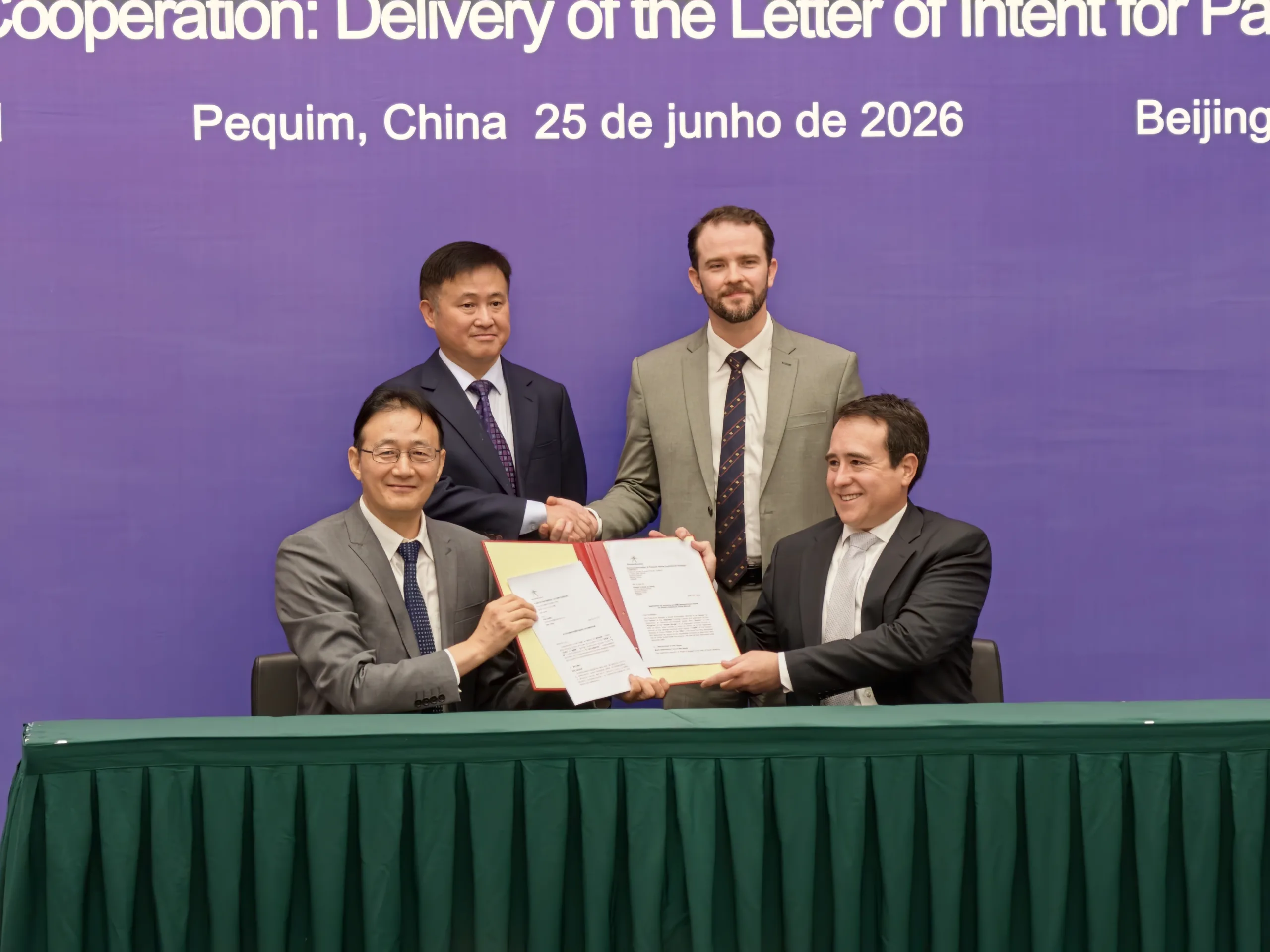
The Minister of Finance, Dario Durigan, delivered the letter of intent to the president of the People’s Bank of China (BPC), Pan Gongsheng, in a ceremony at the institution’s headquarters in Beijing this Thursday (25). Brazil is the first country in Latin America to formalize this type of issuance.
Panda bonds are debt securities issued by foreign entities in the Chinese market in renminbi (the official name of the Chinese currency, recorded in yuan). China’s bond market is the second largest in the world, with a volume of more than 200 trillion yuan (more than R$150 trillion).
Bonds can have maturities of one to ten years and include formats such as straight bonds, floating rate bonds, and green or sustainability bonds. The funds raised can be used in China or remitted abroad.
The renminbi is the world’s second-largest trade finance currency, according to SWIFT, a global interbank financial messaging network. The data only refers to transactions made within the network itself and excludes those carried out in the Chinese cross-border payment system in renminbi (CIPS), which in 2024 alone handled 175 trillion yuan (around R$136 trillion). Thus, the weight of the Chinese currency in global trade is even greater.
Why issue debt in the Chinese market
The issuance of public bonds consists of a strategy to raise funds and finance projects of the Republic. One of the main advantages of carrying out this activity in the Chinese market is the cost. In recent panda bond issues, interest rates were between 1.70% and 2.05% per year.
For comparison purposes, the Asian Infrastructure Investment Bank (AIIB) paid 1.70% in interest when issuing three-year bonds; the American private bank Morgan Stanley, 1.98% in five years; and the British Barclays, 1.95% in three years, according to Xinhua Financeira and the Bank of China. In this way, the BAII rate was “significantly below” that practiced on securities with equivalent terms in dollars or euros, according to Xinhua.
In the case of Brazilian public debt, the National Treasury issued five-year dollar bonds at 5.2% and thirty-year bonds at 7.5% in 2025.
In contact between the private sector and the Chinese market, the Brazilian cellulose multinational Suzano has already raised funds in panda bonds with interest rates of 2.55% to 2.90% per year. As sovereign bonds have a better risk rating than those of a private company, the government can obtain even lower rates.
In addition to the lower cost, issuing in renminbi means diversifying currencies and making the financial system less dependent on the dollar.
An advance in Sino-Brazilian relations
Speaking at the agreement ceremony were the president of the People’s Bank of China, Pan Gongsheng, the Minister of Finance, Dario Durigan, the president of the Industrial and Commercial Bank of China (ICBC), Liao Lin, and the vice president of the Bank of China (BaC), Liu Chenggang. The two banks must act as underwriters for the issue.
Pan stated that bilateral financial cooperation, under the strategic leadership of President Xi Jinping and President Lula, has achieved “a series of practical results in local currency cooperation, interconnection of financial infrastructure and cooperation in financial markets.” The president of the BPC said that China “encourages more qualified Brazilian institutions to enter the Chinese financial market”.
“We support the Brazilian Ministry of Finance in the official issuance of panda bonds, so that Brazil becomes the first Latin American country to issue them,” said Pan. “Panda bonds have the potential to become an important bridge of financial cooperation between the two countries.”
Durigan said he spoke with President Lula on the way to the ceremony. “President Lula was very happy and said he was going to call President Xi to welcome this important moment, this step forward that we are taking together,” he stated.
The minister presented economic indicators of the current government: the lowest inflation rate in history for a Brazilian presidential term, combined with the lowest unemployment rate, something he classified as “very rare in Brazilian economic history”.
Durigan highlighted that family income reached the highest level ever recorded. According to IBGE, the average monthly income from all sources reached R$3,367 in 2025, the usual income from work reached R$3,560 and the per capita household income reached R$2,264, all records for the historical series started in 2012.
“Everything we do in the economy would mean nothing if real people in Brazil and China didn’t benefit from these advances,” said the minister.
Dario Durigan described the issuance as a “sign of confidence” and stated that “there are no two countries better than Brazil and China that can show that they can co-lead the world and the economy, working together, building better lives for their citizens”.
The Brazilian government plans to issue up to 5 billion yuan (around R$4 billion), according to Durigan, in an interview with Reuters.
The ceremony is the latest step in a process that has accelerated in recent weeks. On June 9, the fourth meeting of the China-Brazil Strategic Financial Cooperation Working Group, co-chaired by Pan Gongsheng and the president of the Central Bank of Brazil, Gabriel Galípolo, reached consensus on the expansion of local currency swaps, direct renminbi-real trading and the pilot of a bilateral “Bond Connect”, according to the BPC.
In May 2025, during President Lula’s visit to China, Pan and Galípolo participated in the seminar “Deepen Financial Openness, Create Together a New Chapter of China-Latin America Cooperation”, in which the president of the BPC declared that “China invites more Latin American countries to issue panda bonds”.
In addition to the letter of intent, Durigan announced the launch, in partnership with a Chinese company, of a portal on the Brazilian capital market, which moves more than R$50 trillion, aimed at Chinese investors. The minister also confirmed the opening of an IRS office in Beijing and an ETF connection partnership with the Chinese government. “It’s my first visit to China, and I hope it’s the first of many,” he said.
Sovereign strategy
Speaking to journalists after the ceremony, Durigan contextualized the broadcast as a result of accumulated work. “To issue these bonds, whether in Europe or the panda bond, work that lasts years is necessary, of maturation, of adaptation of the National Treasury”, he stated, citing the presence of the Secretary of the National Treasury, Daniel Cardoso Leal, in the delegation.
“We have a national strategy and that national strategy will be executed independently of foreign forces,” Durigan declared. “Different from what some want in Brazil, whoever leads a sovereign country like Brazil must execute its sovereign strategy, regardless of constraints from abroad.”
Source: www.brasildefato.com.br