Published 06/12/2026 14:21 | Edited 06/12/2026 14:45
The accelerated advancement of generative artificial intelligence in the audiovisual industry has raised a global warning signal, uniting production hubs in China and Hollywood in concern. In the Asian nation, the increasing use of actors generated by technology and digital replicas causes strong pressure behind the scenes, with professionals who do not agree to authorize the use of their facial data for software training.
The employment instability scenario coincides with an economic restructuring of the Chinese film and television sector, which uses technology to lower production costs. Data released by Diário do Povo Online on Tuesday (9) reveals the size of the financial impact that drives this market transition. A short drama generated entirely by AI systems costs between 100,000 and 200,000 yuan (equivalent to 14,000 and 28,000 dollars), while a conventional production with a human cast requires an average investment of 1 million yuan (about 140,000 dollars). The economic difference of almost ten times explains why dramatic shorts created by robots jumped from 7% of the audience in 2025 to 38% of the most watched productions at the beginning of this year.
Faced with the advancement of virtual tools, Chinese authorities and jurists are looking for ways of containment through existing regulations on personality rights and privacy standards. Although local courts have expanded legal protections for individual voices and images, the industry still lacks clarity about the ethical limits of using performance styles to feed algorithms. Technology suppliers profit from new distribution windows, but the replacement of human labor strains labor relations and traditional concepts of artistic creation.
In the West, resistance took on the form of an ethical and philosophical manifesto led by big names in cinema. In a recent interview with North American public radio NPR, Mexican director Guillermo del Toro vehemently rejected any possibility of joining the global automation trend. At 61 years old, the filmmaker compared the developers of digital platforms to the classic figure of Victor Frankenstein, pointing out a corporate blindness that ignores the social consequences of their creations. For Del Toro, the real current danger does not lie in artificial intelligence, but in the natural stupidity that drives the worst actions in the world. The director repeated the protest at the Cannes Festival, using explicit expressions to reject automated tools.
The defense of the human essence in art also guides director Steven Spielberg’s position. The filmmaker expressed deep fear about the possibility of machines taking control from an individual artistic point of view, highlighting that the human soul is ineffable and will never be replicated by algorithmic programming lines. Spielberg reinforced his position by declaring that he does not accept replacing real creativity with mechanical systems, denying the existence of any artificial consciousness that can intervene in scripts, dialogues or the visual design of a film. For the director, the computer must function strictly as a technical support tool, never as a creative decision maker in place of the screenwriters.
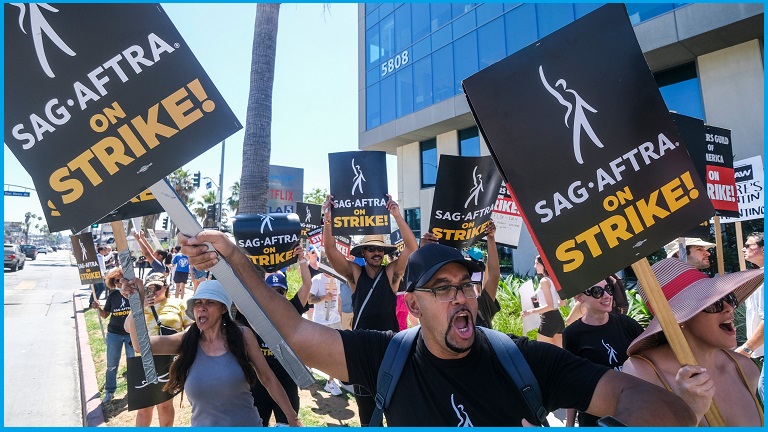
To contain deregulation, Western unions are betting on collective contractual mediation. The Hollywood actors’ union, SAG-AFTRA, ratified on Friday (5) a new agreement with the major studios to expand shielding mechanisms against technological abuse. The document establishes strict safeguards for salaries and benefits, in addition to prohibiting the indiscriminate use of digital replicas and synthetic avatars. The new contract establishes limits on the use of characters created by artificial intelligence. Under the new rules stipulated in the convention, North American producers will only be able to use synthetic actors in exceptional situations, as long as they bring significant additional value that justifies the absence of real professionals on the recording set.
Source: vermelho.org.br