Published 02/22/2026 14:13 | Edited 02/22/2026 15:38
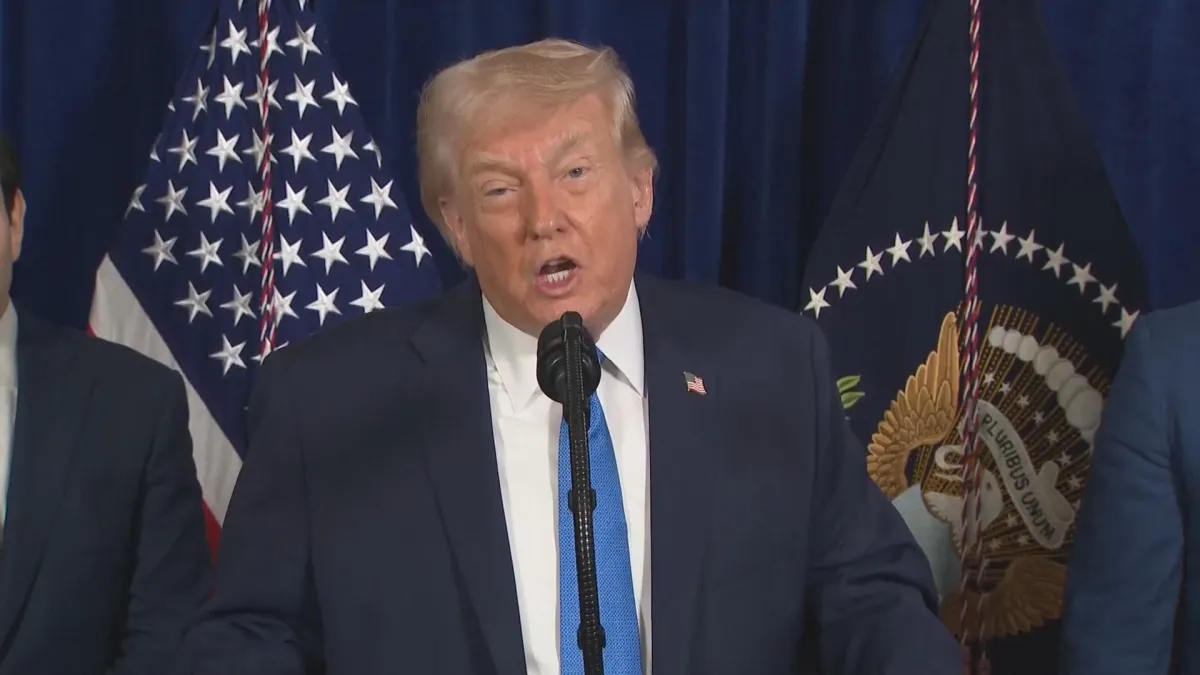
The President of the United States, Donald Trump, announced this Saturday (21) that he will increase the temporary global tariff on imports from all countries from 10% to 15%, in direct reaction to the Supreme Court decision that overturned his government’s tariff imposed based on an economic emergency law.
The new tariff was announced less than 24 hours after the United States Supreme Court ruled 6-3 that the president did not have the legal authority to impose broad tariffs under the International Emergency Economic Powers Act (IEEPA), passed in 1977.
For the majority of ministers, the rule does not delegate to the Executive the power to create taxes or tariffs, an attribution that the North American Constitution reserves to Congress.
In light of the decision, Donald Trump initially announced the adoption of a 10% global tariff on all imports, presented as a replacement for the surcharges annulled by the court.
However, on Saturday (21), the president informed that he would increase the percentage to 15%, stating that this is the “fully permitted and legally tested level” under the alternative legislation used by his government.
The new measure is based on Section 122 of the Trade Act of 1974, which authorizes the president to impose temporary restrictions on imports in situations of imbalance in the balance of payments.
This device allows the adoption of tariffs for up to 150 days without prior approval from Congress, during which time the government must seek legislative support to keep the measures in force.
In a publication on the Truth Social network, Trump stated that he decided to raise the tariff after analyzing the Supreme Court judgment, which he classified as “ridiculous, poorly written and extraordinarily anti-American”.
According to him, the surcharge will hit countries that, in his words, “robbed the United States for decades”, reiterating the use of tariffs as a central axis of their economic policy.
Despite recognizing that the new tariff is temporary, the president indicated that he intends to work, over the next few months, on formulating new tariffs that are “legally admissible”, admitting that alternatives to the use of emergency laws are “more complicated”, but insisting that the Executive has other instruments to impose trade barriers.
The Supreme Court’s decision does not, in theory, affect tariffs adopted based on other legislation, such as those justified for reasons of national security, such as those applied to the steel and aluminum sectors, which remain in force.
There is also no definition, to date, on the possible return of amounts already collected from canceled tariffs, an issue that is likely to generate new legal disputes.
Source: vermelho.org.br