In another context, it would be days of festivities in Haiti, with hundreds of peasants from all over the country, men and women, young people and veterans, coming together to celebrate the struggle and reaffirm their commitment. But, this September 2026, there will be no major event to celebrate the 40 years of existence and resistance of Tèt Kole Ti Peyizan Ayisyen, a nationwide peasant organization.
With the country’s roads blocked by gangs and a particularly tense climate in the capital region, the current situation in the country does not allow for the celebrations that the date deserves. That doesn’t mean the milestone will go unnoticed. In place of the party, dozens of local assemblies will be held over the next few months, promoting moments of reflection, criticism and self-criticism together with the base.
Tèt Kole has worked in this way since its creation, in September 1986. As a peasant protest movement, it promotes popular organization, grassroots formation and the defense of the rights of the rural population against the yoke of imperialism and the country’s elites.
“Our concrete objective is to reach a society without favors. A society in which people can live as people. A society in which those who work are those who eat. (…) We haven’t reached that yet. But, precisely for this reason, we cannot be discouraged, nor give up”, summarizes Jean-Jacques Henrilus, one of the founders of the organization, member of the National Coordination.
At the same time that he encourages us to look ahead, he emphasizes that it would be unfair to minimize the arduous achievements of the past four decades: “Today, we have the ability to mobilize people in the country’s 10 departments. That’s a first point. Second, we managed to encourage peasants to sit together, work together, eat together, be in solidarity with each other to face disease, death or exploitation by the State.”
Member of the Executive Board, Pierre-Mary Louis agrees and adds: “If today peasants have rights, they can speak freely, mobilize, say what they want and don’t want, Tèt Kole has contributed a lot to this, through the training we do and continuous monitoring in all corners of the country.”
The beginning before officialization
It was during the dictatorship of François and Jean-Claude Duvallier (from 1956 to 1986) that Tèt Kole was created, long before its formal birth. At the time, peasants were the first victims of repression carried out by local authorities, along with militias and paramilitaries known as “Tonton Makoute”.
“They arrested peasants for any reason, beat them, imprisoned them and forced them to sell their land, their animals, their pigs, to be released”, remembers Jean-Jacques Henrilus.
In the 1970s, the first meetings began to take place in Cáritas’ base communities in a clandestine manner, as there were restrictions on freedoms of association and expression. “We had to use the farm itself as a space to build the movement. We held joint efforts, weeded, planted and, after that, at lunchtime, in the shade of a tree, we held the meeting. Because it was impossible to do this in another location”, says Henrilus.
As the movement grew, the strategies multiplied, with meetings lasting several days, camped in the bush or in the sugarcane fields, or even in Port-au-Prince. Meetings took place in low voices, without singing or commotion. Each participant had a specific time to arrive and leave, in order to avoid crowds on the street.
With the fall of the Duvallier regime, Tèt Kole was finally able to organize its first national meeting on September 6, 1986 and make its name official. But, even with the return of democracy, marginalization and systemic violence against the peasant population continued.
Systemic violence
Haiti, which freed itself from colonization with a revolution that put an end to slavery, never managed to carry out an agrarian reform with proper redistribution of land. To this day, the largest portions are in the hands of landowners, churches or the State, keeping peasants in a rental situation or as precarious workers.
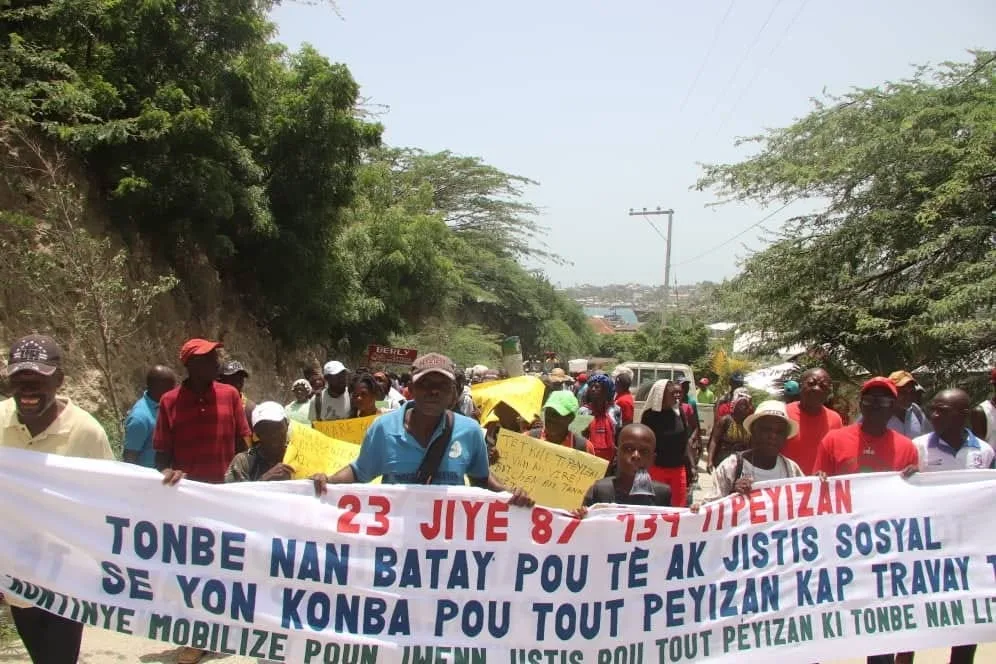
When the people organize, repression does not take long. This was the case of the Jean Rabel massacre, on July 23, 1987, when 139 peasants were murdered, at the behest of local elites, for claiming a piece of land. The Tèt Kole movement had not even had a year of formal existence. Far from letting himself be discouraged, he continued to side with the families in confronting the State. Today, that region is an example of achievements in terms of the struggle for land and popular organization.
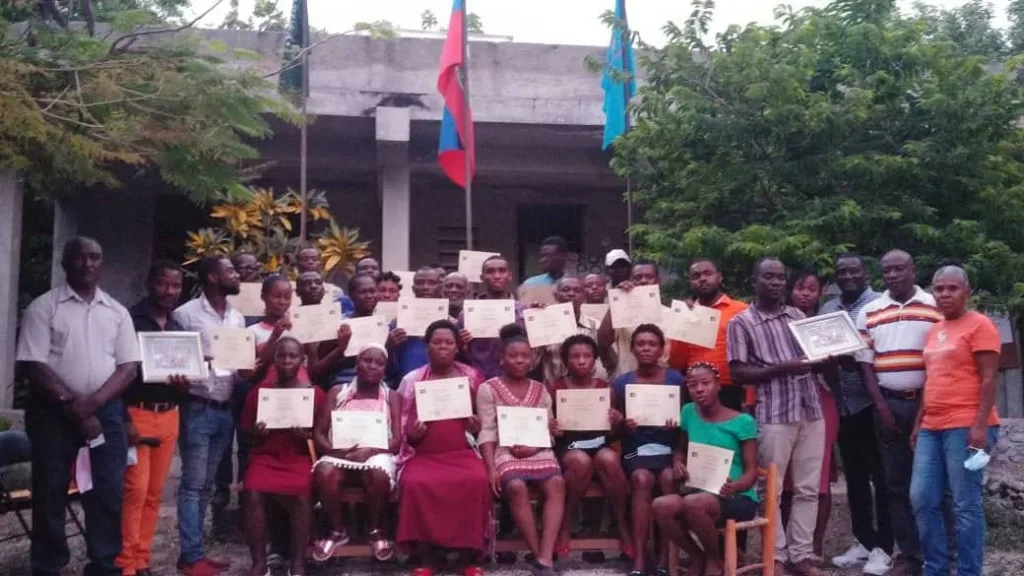
Tèt Kole’s work fronts are many, from local to international. They begin with the search for fundamental rights (such as access to identity documents and basic services, often denied to populations living in more remote areas) and go on to promote agroecology, food sovereignty, popular education, environmental preservation, social and solidarity economy, gender equality, in addition to the unconditional defense of the sovereignty of the country and its people against all forms of imperialist interference.
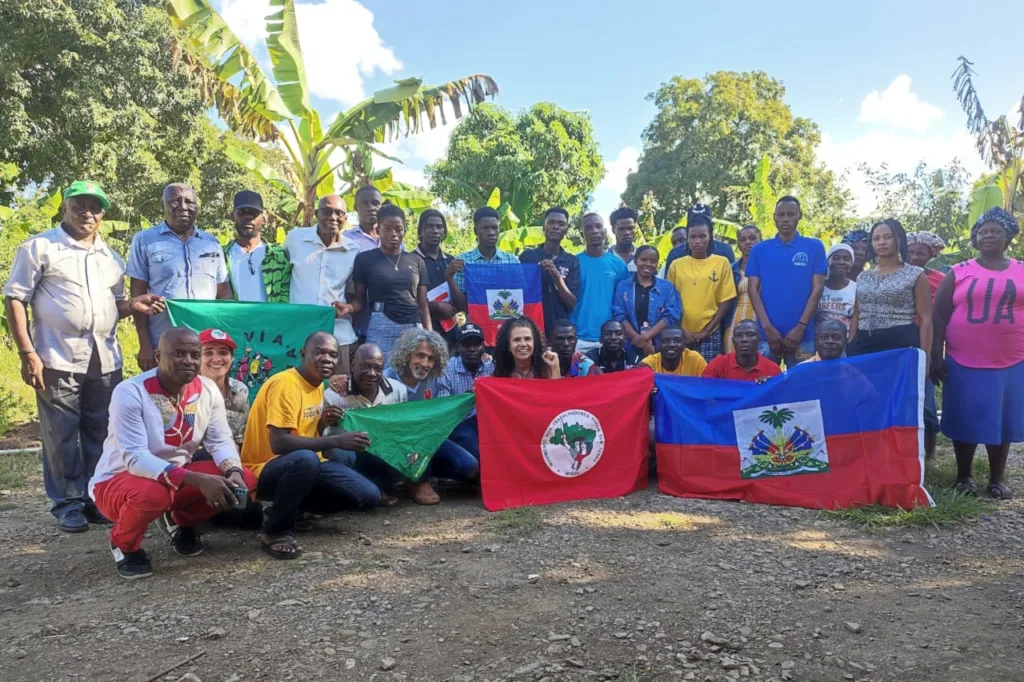
At an international level, Tèt Kole is articulated within organizations such as CLOC-Via Campesina, Alba Movimentos and the International Assembly of Peoples (AIP), which share the same strategic objectives against a common enemy. He also maintains a special bond with the Landless Workers Movement (MST) in Brazil, which, since 2009, has maintained a permanent brigade of militants in Haiti.
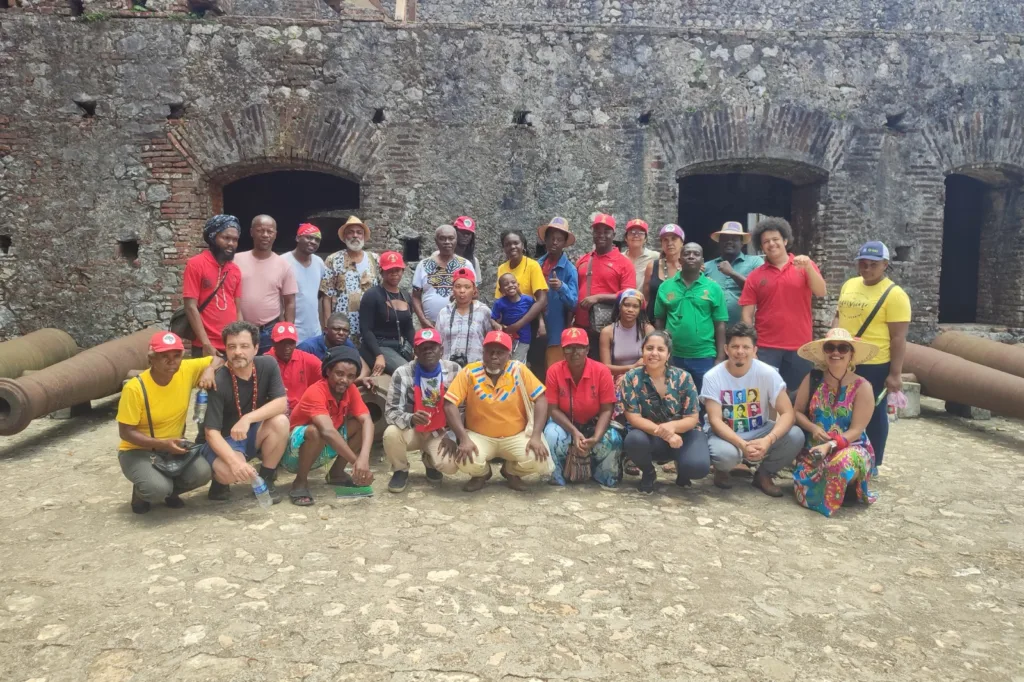
“Our partnership is not based on projects or financial support. It is a relationship of brotherhood. A relationship of struggle, exchange, solidarity”, reports Pierre-Mary Louis. “And this is proof that, in this dynamic of globalization of our struggle, any organization from any country can take [a outro país] its essence, its ideas and its solidarity, the way the MST does it.”
From bad to worse
Paradoxically, after so many advances and so many struggles, it seems that the country’s situation has never been so dramatic. The security crisis and, in particular, the almost impossibility of traveling within the island have resulted in the widespread impoverishment of small farming families. “Peasants need to take their production to the local or national market, where they exchange or sell their products to buy what they lack at home. However, this relationship has been practically severed for five years”, explains Louis.
Movement organization activities are also directly affected by this situation, which makes it impossible, for example, to hold general assemblies or large mobilizations at national level. Instability prevents any planning, as does the absurd cost of air tickets to travel from North to South.
Even more serious is the situation at the National Center of Montrouis, which the movement has been building over 15 years, in a region today dominated by armed gangs. The site was Tèt Kole’s main training center, built on an area of 14 hectares dedicated to agroecology. In 2024, it was invaded and looted, and today it is absolutely inaccessible to members of the organization.
Of this multifaceted crisis, the movement’s leadership carries out an in-depth and historical analysis, rejecting hasty or superficial responses. Violence, according to them, is not the work of a few local bandits who can be defeated with foreign intervention, by American mercenaries or by a false change of government. It is part of a global and geopolitical project to recolonize Haiti, exploit its people and its natural assets – a project implemented by those who now intend to bring solutions.
“The gangs were created according to this logic, by national and international mafia sectors that needed to exercise domination over the Haitian people, especially over the masses in popular neighborhoods, over peasants in rural areas, creating a situation of poverty, misery, confinement, to keep them under imperialist domination”, explains Jean-Jacques Henrilus.
Therefore, critics of holding elections in such an undemocratic context consider that the solution lies in a structural change in society, in the construction of a new State in which power is truly in the hands and at the service of the people. “Tèt Kole is engaged in a dynamic that aims for a change of State. A radical change, that is, not just changing the people who are there, but building a popular State, a socialist State capable of assuming its responsibilities for the benefit of the country and all people”, says Pierre-Mary Louis.
Henrilus adds that this creation of a new State, of a new, truly sovereign nation, can only come from popular organization, the only possible way “to demand, to demand, to confront, to battle against this system of oppression. Because, if we don’t unite to put an end to it, to uproot it, (…) the nation is lost, the homeland is lost, and we are lost as a people.”
Source: www.brasildefato.com.br