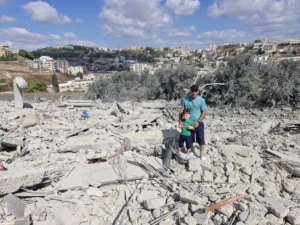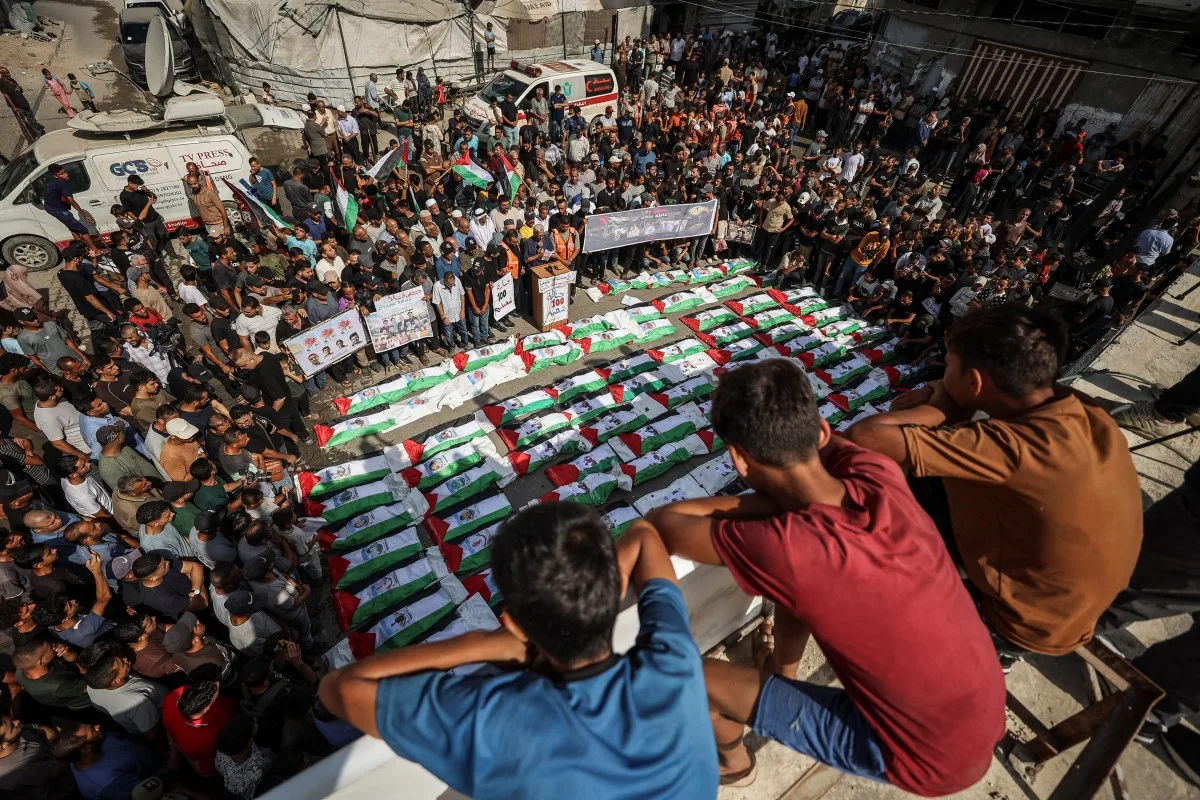
This Sunday (6), Palestinians are holding a mass wake for 100 people in Gaza, including 62 children. The bodies were recently found amid the rubble due to recent Israeli attacks. More than 73,000 people have been killed since October 2023, when Israel’s attacks on Palestine became more intense.
That same day, Israeli Prime Minister Benjamin Netanyahu announced the withdrawal of Israeli settlements that the country itself considers irregular in the West Bank, but did not set a deadline for this to happen. The statement comes one day after the United States ambassador to Israel, Mike Huckabee, on a visit to the West Bank – Palestinian territory occupied by Israel – stated that there is no Israeli plan to displace the population of Gaza.
Also this Sunday, foreign ministers from eight Muslim countries made a joint statement condemning the forced displacement plan presented by Israel. Last week, the Minister of National Security, Itamar Ben Gvir, announced the expulsion of 250,000 Palestinians in 12 months. The two million inhabitants of the Palestinian territory would be removed within six years.
Saudi Arabia, Egypt, Jordan, United Arab Emirates, Qatar, Pakistan, Indonesia and Turkey endorsed the United States’ stance and said that Israel’s actions are preventing the implementation of the peace plan signed in October 2025.
UN agency report
On August 16, the United Nations Relief and Works Agency for Palestine Refugees in the Near East (UNRWA), established in 1949 to provide humanitarian aid to the Palestinian people, released a report on the health situation in Gaza. By June 2026, only 19 hospitals remained partially operational, with around 2,200 beds and just 107 ICU beds for a population of more than two million people. The remaining structure seeks to care for more than 172,400 injured people, of which approximately a quarter suffered serious and permanent sequelae, such as amputations and neurological injuries. Even after the ceasefire, restrictions on the entry of materials prevent the recovery of hospital capacity.
According to the document, the crisis is also the result of attacks on infrastructure and the health workforce. The World Health Organization (WHO) recorded 971 attacks against health services between October 2023 and June 2026, affecting at least 804 medical facilities and disabling 268 ambulances. More than 1,700 healthcare professionals were killed or injured. Shortages of medicines, equipment and fuel worsen the situation: the report states that 97% of facilities face a lack of medical equipment and more than 80% suffer from critical shortages of medicines.
The impact goes beyond hospital care and translates into avoidable deaths, illnesses and worsening social vulnerability. The report attributes the death of at least 1,268 cancer patients by January 2026 and another 300 critically ill patients after the ceasefire to the delay in leaving Gaza. Deteriorating sanitation and overcrowding have led to outbreaks of polio, meningitis and other diseases, while food insecurity affects more than 70% of children under two years of age. Among pregnant women and newborns, the collapse of maternal and child care increases the risks even further.
Source: www.brasildefato.com.br