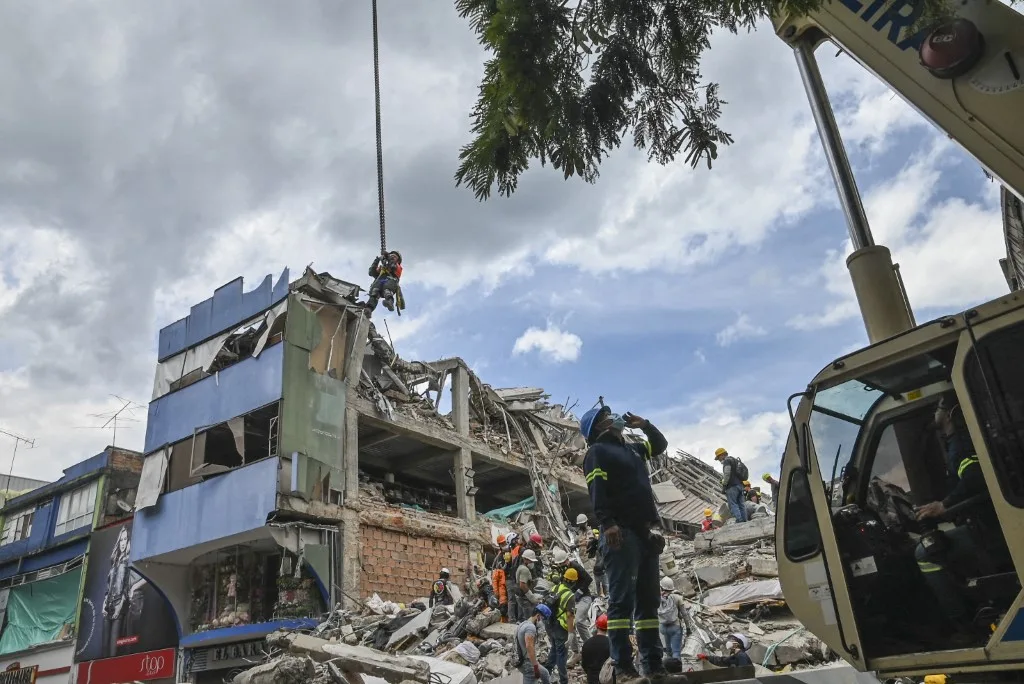
The most recent report released by Colombia’s National Disaster Risk Management Unit (UNGRD) raised the number of deaths as a result of the earthquake that occurred on Monday (10) to 288 and reduced the number of missing people to 202, compared to the 379 previously recorded.
The agency did not specify whether the drop in the number of missing people was due to the discovery of more bodies in the rubble or the fact that a significant number of people had been located after being isolated for several days. Given the magnitude of the disaster, authorities are working on an ever-changing assessment.
The earthquake, measuring 7.4 on the Richter scale, had its epicenter in the city of San José del Palmar, in the department of Chocó, in the Colombian Pacific region. According to UNGRD, the tremor has so far left 4,018 injured and 354 people have been rescued alive from the rubble.
The total number of people affected by the earthquake now reaches 145,601, grouped into 57,516 families, distributed across 448 municipalities, in 15 of the country’s 32 departments.
The damage assessment presented by the UNGRD includes 80,744 damaged houses, another 12,504 destroyed and 66 buildings that collapsed, the latter concentrated mainly in Cali and Pereira, respective capitals of the departments of Valle del Cauca and Risaralda, the two regions most affected by the earthquake.
The devastation also extends to service infrastructure. The agency reported damage to 2,595 educational centers across the country, 260 health centers, 267 roads, 87 aqueducts, 55 bridges and five airports. Among them is Matecaña Airport, in Pereira, which, since Monday, operates only for military and humanitarian flights.
“UNGRD continues to coordinate response and assistance efforts in the affected territories,” the agency said in a statement, reiterating its commitment to maintaining constant monitoring of affected communities.
This earthquake was the strongest to hit Colombia in 25 years. In addition to Chocó, the tremor severely affected the departments of Valle del Cauca, Risaralda, Caldas and Quindío, where the population is still trying to assimilate the magnitude of the disaster.
Source: www.brasildefato.com.br