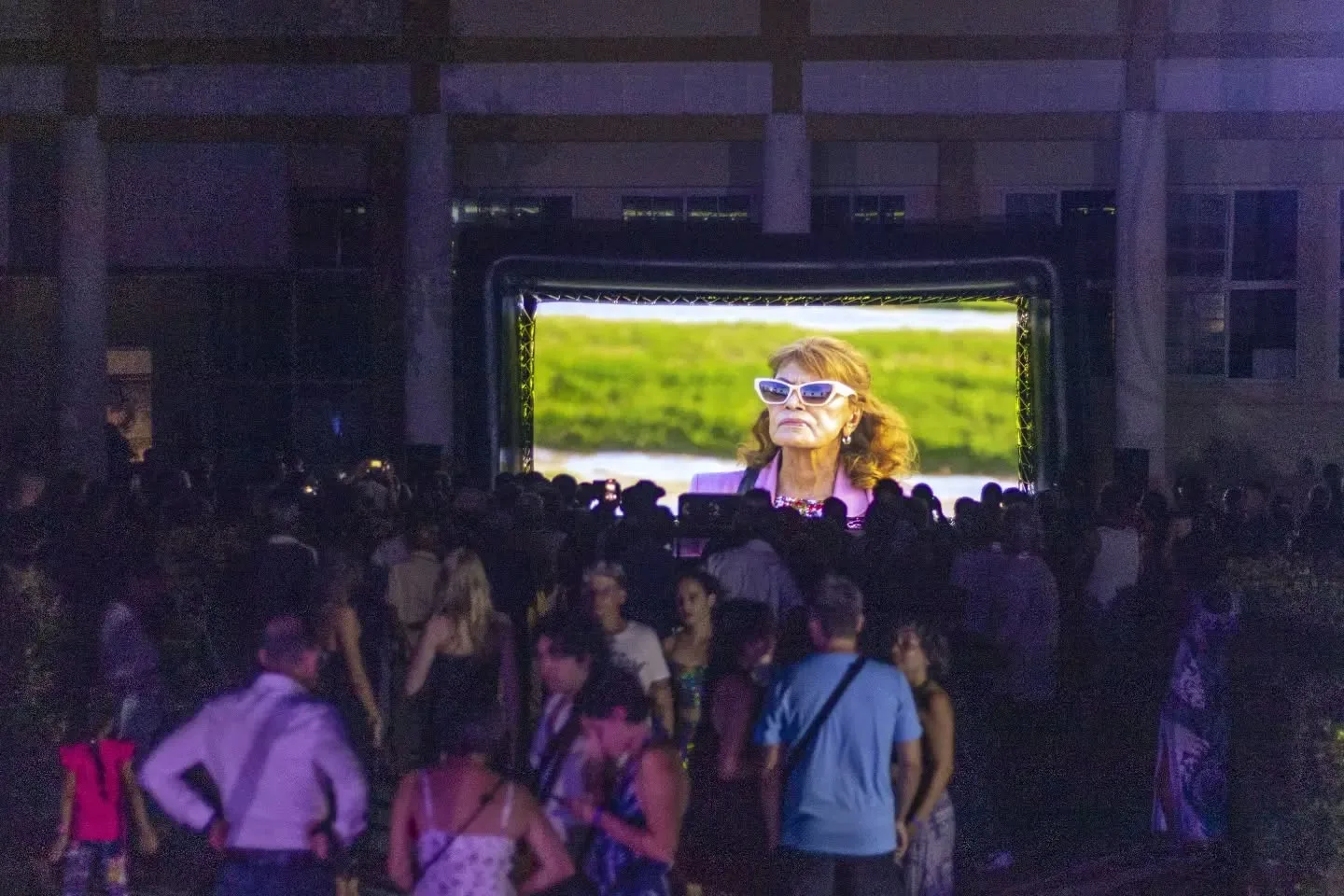
Amid the energy suffocation, the constant blackouts and the difficulties that Cuba faces, the cinema screens lit up to celebrate the twentieth edition of the Gibara International Poor Film Festival (FICGIBARA). Held from July 14th to 18th, the festival ends its program this Saturday.
It is one of the most important independent film festivals on the continent and the only one of its kind, due to the participation of local communities in the organization and screenings of the event. The inauguration took place on Tuesday (14), with an opening parade that brought together hundreds of residents in the city of Gibara, in the province of Holguín.
The opening of the festival was marked by the screening of “Neurotica Anónima”, a Cuban film directed by Mirta Ibarra and Jorge Perugorría. The beginning of the activities presented a wide selection of short fiction films and documentaries, mostly Cuban or made in co-production, which reflect the creative vitality of the island and its dialogue with Latin America. During the inauguration, the only foreign work of fiction presented was the Brazilian short film “Aprendi a choro”, directed by Santiago José Asef.
“It is a great joy to be able to hold this festival, a festival so important and characteristic of our culture”, he stated, in conversation with the Brazil in factLissy Alonso, Communication student.
Alonso highlights that, in a context marked by multiple difficulties, the event represents a space for encounter and hope.
“The festival is a place where the most important thing is the population’s access and exchange with works that remind us that art, to be true and moving, does not need large productions, but rather the ability to invite us to dream. And that is what we have to defend in Cuba today: the possibility of continuing to dream.”
In addition to the screenings, this edition of the festival also features spaces for reflection and debate on Ibero-American cinema, independent productions and the relationship between culture and local development in communities.
As part of the program, the visual book “Gibara, a Magic Manifesto”, by photographer Casey Stoll, was also presented, a work that proposes an exciting journey through a historical archive built from the different editions of the festival.
Founded in 2003 by Cuban Humberto Solás (emblematic director of “Lucía” and “The Century of Lights”, among others), the Gibara International Poor Cinema Festival was created with the purpose of giving visibility to feature-length and short films made with reduced budgets, but with a solid artistic proposal and strong social commitment.
In 2017, a few years after Solás’ death, the event was officially relaunched as the Gibara International Film Festival (FICGIBARA) under the presidency of Cuban actor Jorge Perugorría (of “Fresa y Chocolate” and “Guantanamera”).
Throughout its history, the festival has maintained a program that combines movie theaters, public squares and local communities, bringing audiovisual works closer to different areas of the population. Their awards are called “Cemi”, in reference to the idols of the region’s pre-Columbian aboriginal culture.
In addition to competitions for fiction, documentaries and new scripts, FICGIBARA functions as a forum for discussion about independent distribution, the economic challenges of cinema in the Global South and new forms of expression of audiovisual language. In its twentieth edition, the festival reaffirms its vocation as a space in which cinema and the community dialogue, supporting the idea that artistic creation can remain a form of encounter even in adverse scenarios.
Source: www.brasildefato.com.br