A total of 113 renowned international economists and academics signed a manifesto demanding that the United States government immediately suspend unilateral coercive measures against Venezuela, with the aim of mitigating the humanitarian emergency caused by two consecutive earthquakes.
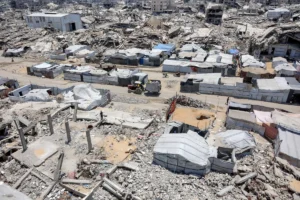
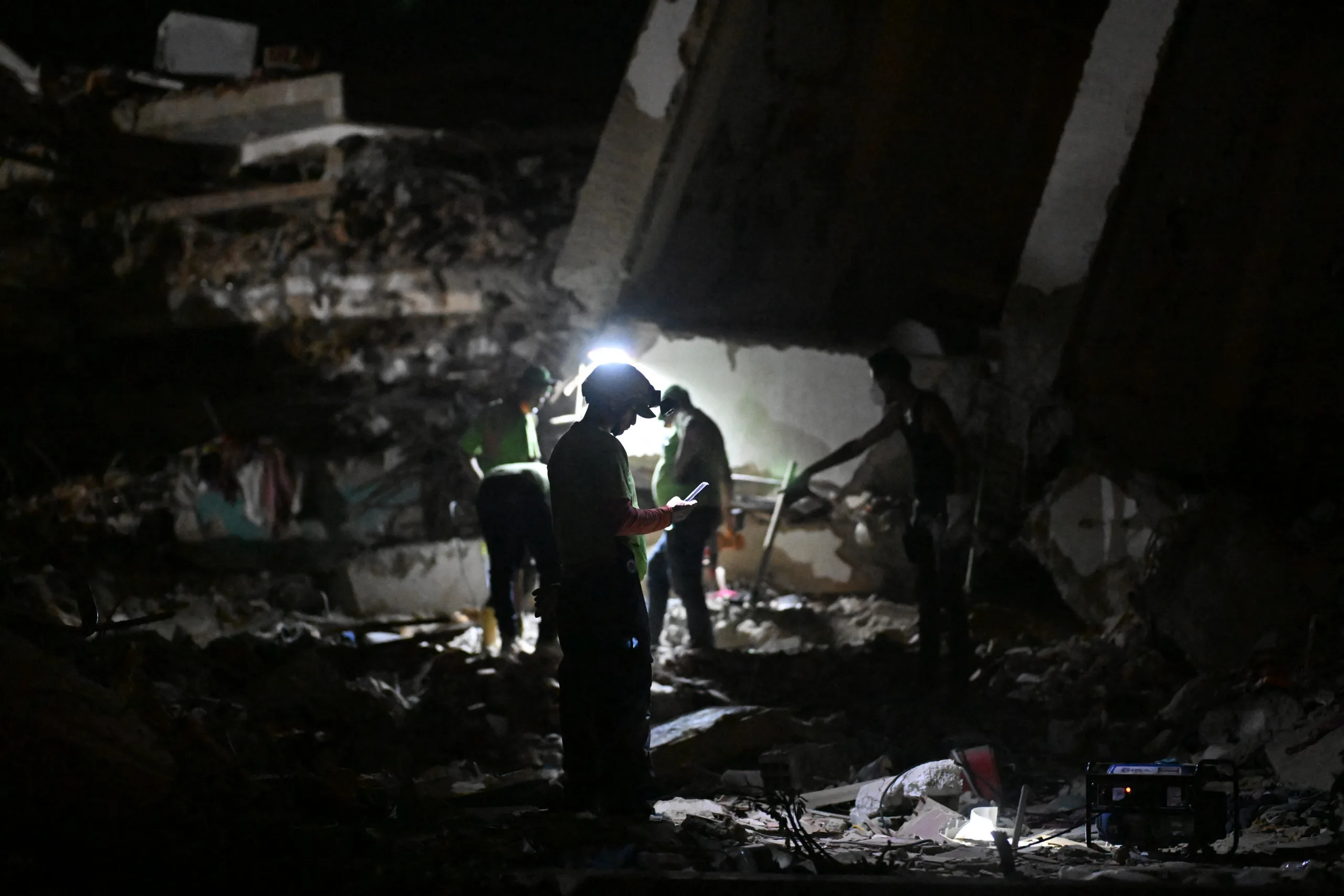
The earthquakes, which hit Caracas, the country’s capital, on June 24, and at least seven Venezuelan states, particularly La Guaira, left at least 3,685 dead and 16,740 injured, according to the latest official toll.
High-level international signatories such as Isabella Weber, Jeffrey Sachs and James K. Galbraith have called on the US Treasury Department to lift coercive measures imposed on the Central Bank of Venezuela (BCV), Petróleos de Venezuela SA (PDVSA), public financial institutions and the mining, petroleum, banking, transportation, telecommunications and tourism sectors.
The academics emphasized that “the emergency is human before it is political” and that rescue efforts, the supply of water, energy, food and medicine cannot be delayed due to diplomatic procedures.
The manifesto has the support of the Center for Economic and Policy Research (CEPR), whose co-director, Mark Weisbrot, described the withholding of billions of dollars belonging to the Venezuelan state by the United States and Europe as a “barbaric act”. Weisbrot explained that sanctions caused the loss of 74% of Venezuela’s Gross Domestic Product (GDP) between 2012 and 2020, isolating the country from international financial markets since 2017.
The request demands that the United Kingdom unfreeze BCV’s gold reserves at the Bank of England, valued at US$5 billion, and calls on Portugal to return US$1.2 billion deposited at Novo Banco, belonging to the Venezuelan Development Bank (Bandes), in compliance with a 2023 court decision.
They are asking the International Monetary Fund (IMF) to enable access to US$5 billion in Special Drawing Rights (SDRs) and approve an emergency disbursement of US$4 billion through the Rapid Financing Instrument (IFR).
CEPR researcher Andrés Arauz reported that the US State Department, led by Marco Rubio, is obstructing access to these resources by denying 25B certification, which recognizes BCV as a state-owned bank.
The text also demands a comprehensive moratorium on Venezuela’s external debt (held by corporate plaintiffs, bondholders from the 1990s and official creditors such as China and Russia) to suspend the collection of interest and fines during reconstruction.
Researchers declared Washington’s initial measures, which consisted of $300 million in aid, shipments of evacuation equipment, and a restricted temporary license for humanitarian flights, insufficient.
Arauz, the former Ecuadorian minister who coordinated the response to the Manabí earthquake in 2016, warned that the impact of the disaster in Venezuela is equivalent to 10% of its GDP, making it necessary, therefore, to massively import machines and technology, without the obstacles of sanctions, to avoid an even greater economic paralysis.
Source: www.brasildefato.com.br