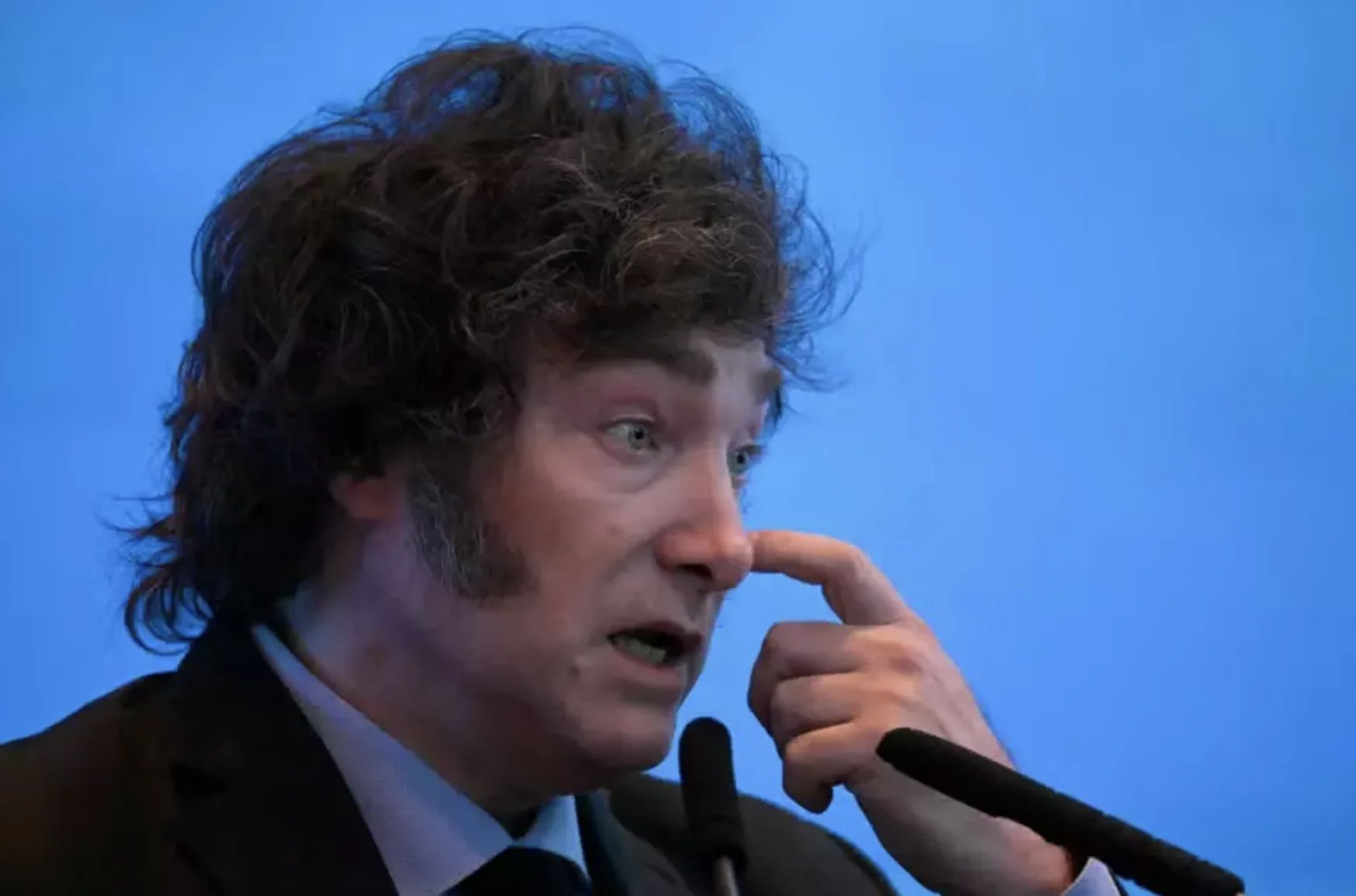
President Javier Milei, of Argentina, wants to make the country he governs an oasis of Artificial Intelligence (AI). “May Buenos Aires be for AI what Amsterdam was for the age of navigation”, argued the president, in an article recently published in the British newspaper Financial Times.
In Milei’s plans, AI is one step beyond fulfilling the role of a mere tool. It is through technology that the ultra-rightist — who, on other occasions, has called himself “anarcho-capitalist” — wants to create a new category of company: the automated society. The term gives a new look to the development of an economic model in which the role of the State evades the regulation of economic activities.
The legislative project was presented by the Argentine government at the beginning of June and proposes to reformulate the General Companies Law of Argentina, in force since the beginning of the 1970s. The text does not hesitate to be disruptive.
Alongside the Minister of Deregulation and State Transformation, Federico Sturzenegger, Milei went to the British press to say that “Argentina invites AI to free itself”. In the text for Financial Timesboth advocate maintaining AI with minimal state regulation in the South American country, creating a new category of business society and offering a low corporate tax rate to attract companies in the sector.
Calculated dystopia
Even when he was a candidate, Milei already promised to remove the Argentine State from as many responsibilities as possible. Wherever he could, he discontinued public services, encouraged privatizations and streamlined the public sector.
But dealing with AI goes further. Milei management wants to offer the ideal terrain for technology giants to prosper. This is, in practice, adherence to Pax Silica, a United States initiative to guarantee its own access to supply chains at various levels: critical minerals, semiconductors and AI. For Washington, the strategic alliance with suppliers of these materials is fundamental in the power struggle with China.
In the project that began to be processed in the Argentine Legislature, the “automated society” is defined in article 14: they are those that “develop their corporate purpose through autonomous algorithmic systems or Artificial Intelligence agents, without requiring workers or dependent human resources for their normal functioning”.
The initiative also incorporates Decentralized Autonomous Organizations (DAOs), a legal form given to the union of people around a common interest, integrating their capital in cryptocurrencies and coordinating actions through a set of rules written as computer code, in a contract protected by blockchain.
One of the main points of the debate surrounding the project refers to the following question: who would assume responsibility in the event of damage caused by companies not managed by humans? And how? Textually, the project explains that “the automated company is responsible to third parties, with its assets, for damages caused by its autonomous algorithmic systems or Artificial Intelligence agents”.
“The project remodels the bases we have for understanding the responsibility of companies and also the role of Artificial Intelligence”, he explains to Brazil in fact lawyer Flávia Lefèvre, specialized in consumer law, telecommunications and digital rights, and member of the Coalition Rights on the Network.
“The idea of legal personality arises, historically, to stimulate economic growth. Instead of having a person taking responsibility for what they are going to do, for the services and products they are going to sell, the possibility of a legal fiction was created, which is legal personality. But, behind this legal personality, there are partners, who are natural persons, and who can be held responsible”, says Lefèvre.
The concept dates back to the early 17th century, when the Dutch East India Company pursued the idea of limited liability. The basis was that any financial losses of agents could not exceed the capital invested in the organization. Over the centuries, this structure served as one of the pillars of the development of commercial activity.
For the 21st century, as Milei explained in the Financial Timesthe responsibility would be transferred, precisely, to the automated company.
The risks of expansion
Shortly after the publication of the text, historian Yuval Harari also wrote an article in the British publication, warning of the risks. “Countries that grant legal personality to AIs risk becoming something for which the historical record offers no analogy: not a corporate state, but an AI state, a country whose inhabitants could be governed by non-human corporations.” Milei took to social media to thank Harari for his intervention, calling the debate “fascinating and transcendental”.
Even before sending the project to the Argentine legislature, the Milei government had already been taking important steps in promoting the use of AI in Argentina, in particular attracting investments from giants in the technology sector. In the first half of the year, the Argentine Executive presented “Super RIGI”, a regime of tax, exchange and customs benefits for 30 years for projects exceeding US$1 billion in new activities or exploration in the country.
In May, Casa Rosada announced the Gêmeo Digital Social program, an AI platform that should integrate large volumes of personal data on health, mobility and even citizen participation in protests.
Palantir, a technology company founded by entrepreneur Peter Thiel, provides this service. Thiel, in fact, is a front-page character in history, co-founder of PayPal and Facebook’s first external investor. The businessman, known for migrating from city to city in the United States, always landing in places with milder tax regimes, took up residence in Buenos Aires a few months ago. There, Thiel acquired a six-bedroom mansion in Barrio Parque, one of the noble areas of the Argentine capital.
Palantir uses a software known as Gotham, which interconnects databases, including those available on social networks, and police reports. One of the risks would be the indiscriminate use of data to locate individuals in a migratory situation.
“It is a company linked to the United States for coercion, surveillance and the exercise of security. Within this issue, Thiel has come to Argentina to form partnerships and associations with the Argentine government”, ponders Ariel Goldstein, researcher at the National Council for Scientific and Technical Research (Conicet) and author of the book “La Nueva Oligarquía Tecnológica: Poder sin límites en la posdemocracia”, not yet published in Brazil.
In conversation with the Brazil in factGoldstein assesses that the initiative is supported by the Argentine president’s desire to position himself as a first-class ally of Washington. “In the region, Milei presents himself as an anti-Lula. Brazil is trying a model of defending its sovereignty in the face of US pressure in the region, and some regulation of new technologies. Milei, on the contrary, tries to implement a model of great subordination and alignment with Trump”, he explains.
Another pillar of Milei’s project to make Argentina a kind of unregulated AI laboratory in South America is known as Stargate Argentina. The idea, announced in 2025, makes it possible to build an AI data center in Patagonia. OpenAI, creator of ChatGPT, is expected to manage the project, alongside local company Sur Energy. According to Casa Rosada, the investment should be around 25 billion dollars.
Goldstein questions the project’s returns, in terms of revenue. “The initiative provides a major concession for economic groups to extract profits from the country without paying almost any taxes. There is no counterpart that implies the creation of jobs or promotes the development of the region, for example.”
Global dispute
For large corporations in the technology area to assume global dimensions, a factor to be considered when formulating market strategies is mapping which territories may be more or less friendly to investment and exploration activities. A more favorable tax environment and flexible legislation come into this account.
Sturzenegger, who spearheads deregulation in the neighboring country, explained the reasons why Argentina opens its doors — and borders — to economic agents operating in a market that is still so uncertain. Europe, according to the Argentine minister, “is going through a moment of excessive regulation”, while the United States would not be “an attractive place to implement these technologies”. In practice, experimentalism in terms of AI has fertile ground in countries on the periphery of capitalism.
For Goldstein, the natural conditions of the neighboring country stimulate economic interests. “Argentina has different types of natural resources. Let’s take the case of lithium, for example. Resources that can be used by the USA to expand this techno-political regime, in the dispute against China”, he says.
The global dispute has to do with the ability to develop the most improved AI model and, at the same time, find a balance between technological advancement and the role of the State itself. Beijing, for example, has defended what it classifies as “AI with Chinese characteristics”. As shown in the AI Index 2026 report, produced by Stanford University, the Asian giant is among the countries with the highest levels of enthusiasm regarding technology. Part of this sentiment lies in the high confidence that the State regulates AI tools, focusing them on delivering improvements in the real economy.
The development of the Chinese model, however, faces severe competition from the American productive sector. In recent weeks, Anthropic, responsible for the Claude AI model, has been accusing the Chinese group Alibaba of unduly copying the tool’s capabilities. The Chinese group denies this, while the United States has been tightening restrictions on the use of Chinese technologies in general. In this game of geopolitical strategy, the role of countries like Argentina becomes important.
Furthermore, the discussion involves the almost existential obligation, for states and societies, of structured control and supervision mechanisms in the face of the power of technology giants, “given the capacity that technology has to create profound damage to a large extent and, mainly, taking into account the people who dominate this market”, according to Flávia Lefèvre.
“The power of the State as a regulator, as a definer of rules so that the public interest is guaranteed, is fundamental. Technologies, today, are in the hands of people who have no commitment whatsoever to the public interest”, assesses the researcher.
The Argentine government has proposed exploring the open field of deregulation, interpreting the situation as an opportunity. “We don’t know if this will work, but it’s worth testing,” maintains Sturzenegger. In the tension between real democracy and economic freedom, Peter Thiel, when writing “The Education of a Libertarian”, in 2009, has already shown that, between the two elements, only one must prevail. “I no longer believe that freedom and democracy are compatible”, reflected the technology mogul, who found his ideal home in Argentina.
Source: www.brasildefato.com.br