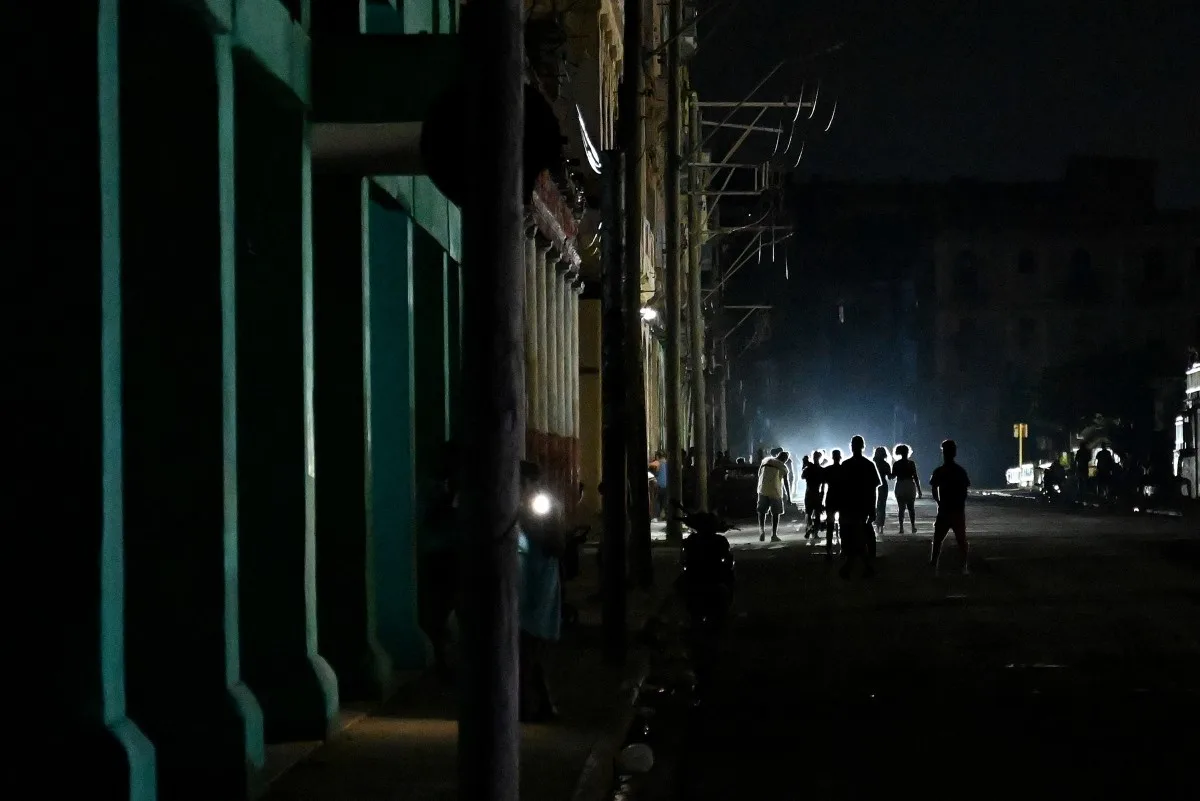
Cuba gradually restores electricity supply after a new blackout that hit the entire country this Monday (6). The energy crisis occurs amid the oil blockade imposed by the United States, which makes it difficult for fuel to reach the island and worsens the situation of the electrical system.
According to the Havana Electric Company, “distribution circuits benefiting 262,369 customers (…) 30.4% in the city” were reestablished. The company reported that “the restoration takes place gradually, as conditions allow” and highlighted the resumption of supply for “vital health” services in 43 medical care centers in the capital.
The blackout occurred after the “total shutdown” of the National Electric Energy System. The state-owned União Elétrica de Cuba reported that it has started recovery work with the reestablishment of a unit at the Energás Boca de Jaruco plant.
The director of Electricity at the Ministry of Mines and Energy, Lázaro Guerra, stated that the lack of fuel “undoubtedly hinders the process of restoring” energy.
President Miguel Díaz-Canel blamed the United States sanctions and wrote on the X network that “while the United States tries to induce a social explosion through suffocation, by blocking fuel access to Cuba, the UNE (Cuban Electric Union) is mobilizing”. In another post, he added that it was “heroic what employees do in the midst of a genocidal energy blockade.”
This was the third national blackout in six months and the eighth since the end of 2024. Cuba faces power cuts that reach 20 hours a day in different regions of the country. The country depends mainly on seven thermoelectric plants and generators fueled by imported diesel.
Session at the UN
Cuba takes to the United Nations (UN), this Tuesday, a complaint against the energy siege of the United States. The initiative comes amid accusations that the US government is trying to prevent the issue from being debated in the international organization.
Chancellor Bruno Rodríguez stated, on his social networks, that Donald Trump’s government “tries to prevent the UN General Assembly from speaking out, puts pressure on governments and seeks to coerce the sovereign will of member states”.
Rodríguez also stated that Cuba will defend the “sovereign right to live without energy siege, without external asphyxiation, without coercion, without threats of a bloodbath, without collective punishment.” He also wrote that “Cuba is not a threat, but the blockade is.” According to him, in the last four months only one ship with fuel arrived in the country.
Health impacts
The crisis also affects the healthcare system and other services. The Deputy Minister of Public Health, Carilda Peña García, stated that more than 10 thousand patients are waiting for surgeries in the country, including more than five thousand who require procedures related to oncological diseases. According to García, around 2,900 hemodialysis patients also face difficulties in maintaining treatments due to failures in the supply of water and electricity.
Between March 2024 and February 2025, the losses caused by the blockade in the health sector exceeded 288 million dollars. “These are figures that translate into hospitals without resources, consultations suspended and treatments that fail to reach those who need them most”, stated García.
In her words, “the sector needed to adopt a series of reengineering measures to alleviate the situation. The premise is not to close any health units, maintain services as far as possible and use available resources in the most efficient way.”
The authority also stated that “chronic patients require follow-up consultations, diagnostic exams and rehabilitation processes. Today this is not possible for everyone. Treatments that could be prolonged to provide a better quality of life can no longer be carried out.”
Another report released in Cuba states that the survival rate for children with cancer has fallen from 85% to 65%. The document also points to a lack of medicines, delays in surgeries, interruptions in the national immunization program and a shortage of inputs for the production of medicines. According to the report, of the 395 medicines produced in the country, 300 were no longer distributed due to lack of components.
The UN presented an Expanded Action Plan to reduce the effects of the energy crisis in Cuba. The program foresees an investment of 94.1 million dollars to maintain essential services for around 2 million people in eight provinces.
Source: www.brasildefato.com.br