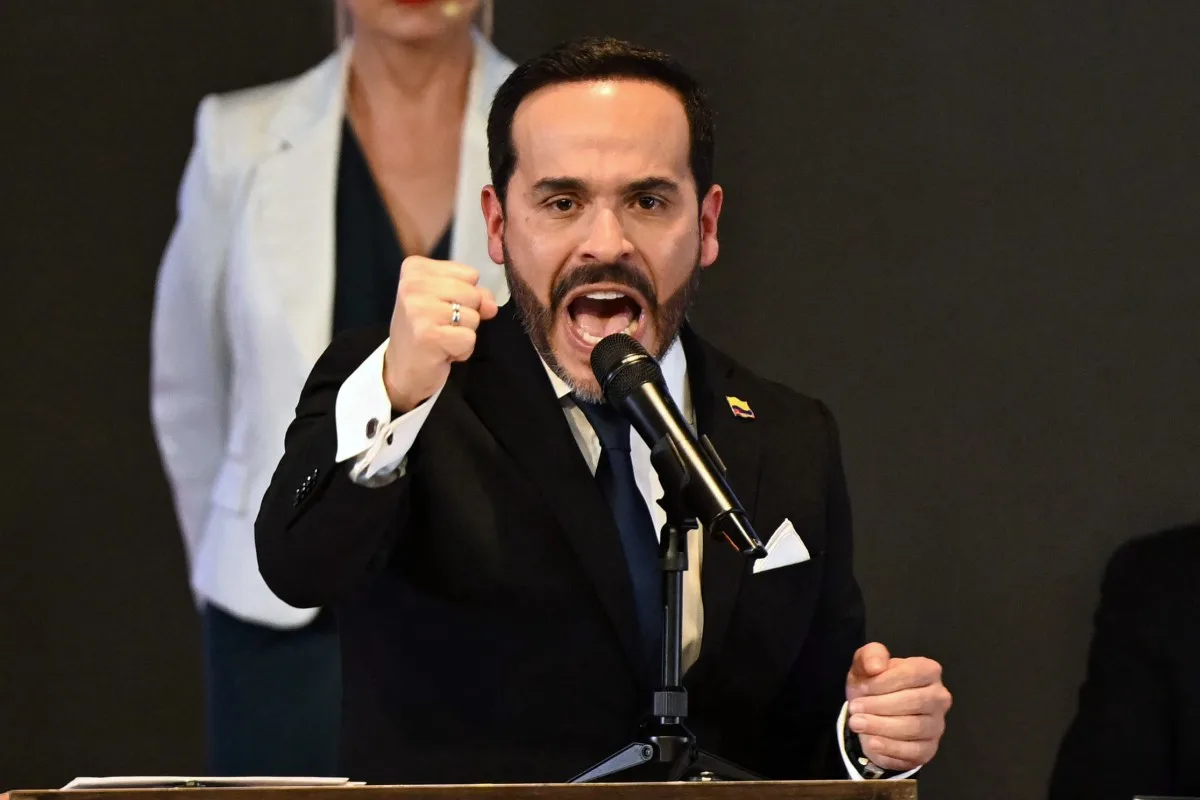
The elected government of Colombia, led by the ultra-rightist Abelardo de la Espriella, must promote a fiscal adjustment plan to try to reduce the size of the State by 40%. The announcement was made last Wednesday (1) by economist Miguel Gómez Martínez, former ambassador to France during Álvaro Uribe’s first term, who was appointed to be the new Minister of Finance.
In an interview with the broadcaster Blue Radiothe future minister criticized Gustavo Petro’s government. “We are not here to continue the party”, said the future minister. “There is no longer any way to continue financing public spending through debt. This needs to be very clear in the minds of Colombians,” said Martínez.
The package includes a review of public spending, the abolition of ministries, a budget growing below inflation from 2027 and a tax reform that, according to him, will not increase the burden. The declared priority is to reduce the fiscal deficit, at 6.4% of Gross Domestic Product. Gómez stated that, between January and April, the government spent an average of 40 trillion pesos per month and collected 28 trillion, and that the public debt exceeds 1,200 trillion pesos.
For Roberto Perez, professor at the University of Rosario and the Los Libertadores University Foundationa literal 40% reduction in the size of the state during a single presidential term is difficult to achieve. “This number is more associated with the new president’s political-programmatic speech than with a detailed technical program of fiscal consolidation”, he explains to the Brazil in fact.
According to the economist, although the fiscal deficit in 2025 in Colombia will have reached 6.4% of the Gross Domestic Product (GDP), and that corrections on the path are necessary, “a draconian plan of cuts does not necessarily represent a good austerity policy”.
“If the cuts are concentrated only in ministries, public bodies and payroll, they will hardly be enough to eliminate, alone, a deficit greater than 6% of GDP. On the other hand, if they affect transfers, public investments or social programs, the social and political costs could be much higher”, assesses Perez.
The Petro government reduced poverty to the lowest level in the country’s history and unemployment to the lowest level in 15 years. One of the progressive government’s measures was the reorganization of the income transfer system through the Renta Ciudadana program, which defragmented the distribution of resources to the population.
For Roberto Perez, the good performance is justified by a combination of fiscal policy, income transfer programs and the dynamics of wages itself.” Because of this, “if the new government reduces social spending, public investments or support programs for low-income families, the disposable income of these groups will decrease, employment linked to State hiring may be affected and social conflict tends to increase”.
The economist recommends distinguishing effective social spending from poorly targeted subsidies and unproductive investments.
In Colombia, according to Perez’s assessment, rapid cuts in public spending could lead to an increase in the number of families in poverty and a new rise in unemployment, “without this necessarily resulting in an improvement in informality in the labor market”.
In the energy area, the future minister defended resuming oil and gas exploration through hydraulic fracturing, a method known for its environmental impacts. The tool involves the injection of large volumes of water mixed with chemical and toxic substances, which can cause contamination and earthquakes.
Martínez’s proposal contradicts Petro’s energy transition policy, which suspended the opening of new extraction fields. The future minister, however, considered that Colombia “has become impoverished in energy terms”. According to him, the details of the austerity plan will be defined.
Source: www.brasildefato.com.br