Hamas announced this Monday (6) the dissolution of the committee that has administered the Gaza Strip for almost two decades.
“Hamas has taken a new step by no longer being in charge of the Gaza Strip to remove any pretexts from the occupation (Israel), which continues its aggression and war of extermination,” Hamas spokesman Hazem Qassem told AFP. “We are waiting for non-NACG express entry [Comitê Nacional para a Administração de Gaza, na sigla em inglês]. Hamas affirms its willingness to transfer government responsibilities to the committee to ensure its success.”
The NACG brings together Palestinian technocrats responsible for overseeing a possible civil administration of the enclave. The group is part of the measures established by the Peace Council, an initiative launched in October 2025 by the President of the United States, Donald Trump.
Movement aligned with agreement
For Uablid Rabah, president of the Palestinian Arab Federation of Brazil (FEPAL), today’s decision “is a natural evolution of what was agreed in 2024 by all Palestinian forces, in Beijing”. In conversation with the Brazil in factRabah considers that the declaration at the time “resolved for national reconciliation and the construction of a government of national unity, which would result, first, in a government of Palestinian technocrats who were not directly affiliated with any of the forces”.
The idea is to allow a government to direct unity to Gaza, enabling the reconstruction of the region, the management of the entry of humanitarian aid and the restoration of the territory’s habitability.
“It is a decision of the Palestinian social and political fabric, of all its forces, in the middle of that year, 2024, in Beijing”, explains Rabah.
Hamas’ movement, however, does not indicate a break with the movement’s foundations. The broadcaster Al Jazeera points out that, despite significant political change, Hamas’ political and military power in Gaza remains. In practice, the decision implies changes in everyday civil governance.
Gabriel Mathias Soares, Global Fellow at Habib University in Karachi, Pakistan, explains to Brazil in fact that, since 2023, important Hamas names, such as Yahya Sinwar and Ismail Haniyeh, have been assassinated by Israel. “Hamas’ situation was one of enormous pressure, but that up until now has not meant the dissolution of the group, nor would this step mean that in itself,” he says.
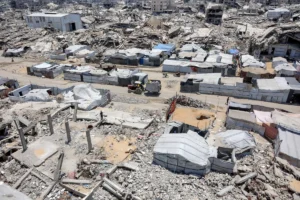
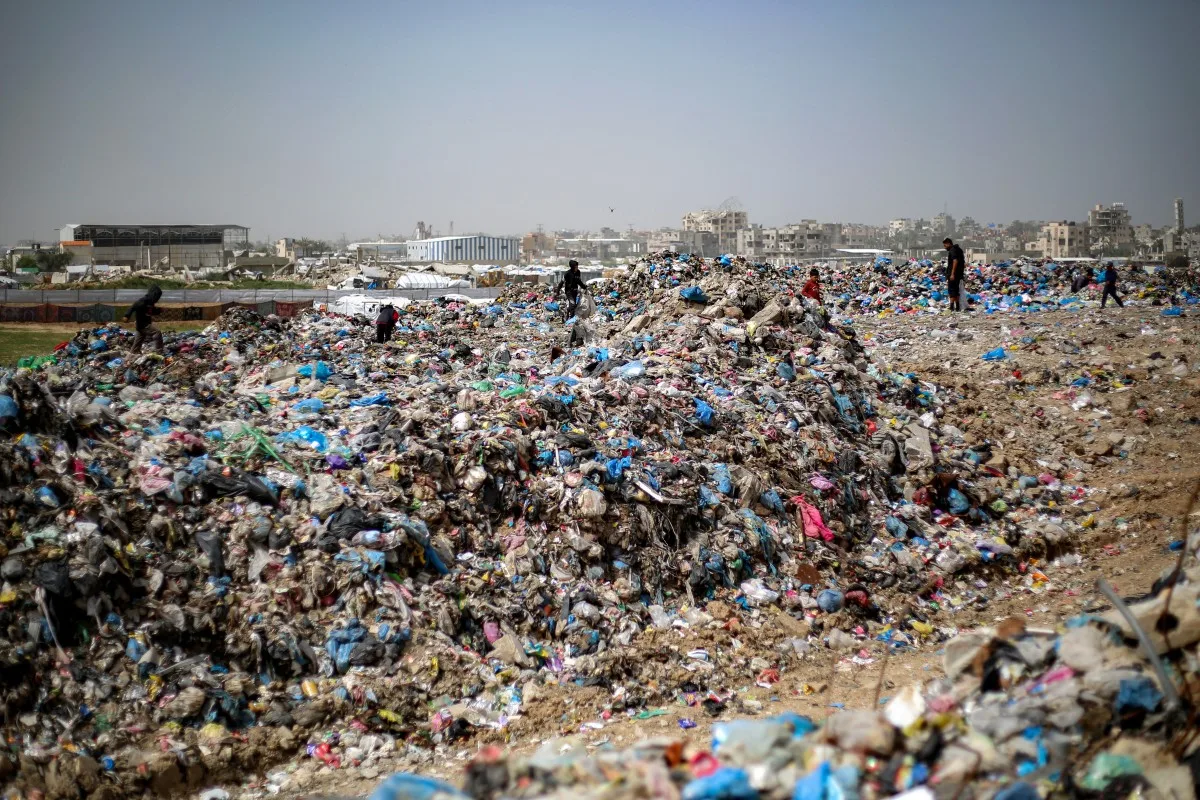
“This decision is of enormous consequence, because, even though the Gaza Strip is destroyed and has almost no functional institutions outside of international aid, what remains of control over the civilian sector is part of Hamas’ strength, its position, and a fundamental piece for its operation and achievement of its objectives, in addition to being a space for maneuver for the weakened group”, he explains.
Since the ceasefire came into force in October 2025, Hamas has shown itself willing to leave the administration of Gaza. The strategic move aims to contain the war promoted by Israel. On the other hand, Hamas rejects joining the disarmament proposed by Tel Aviv.
For Soares, “the ability to regenerate during the genocide perpetrated for two years in the tiny territory was a much more decisive factor, as the Palestinian population as a whole was constantly the target of ‘collective punishments’ and destruction of blocks, neighborhoods and even entire districts (towns and cities) in the Gaza Strip by Israel”.
The future
A point of utmost importance concerns the future of Palestine. “The fate and strength of each of these Palestinian political and resistance organizations, including Hamas, including Fatah, Islamic Jihad and other organizations, depend much more on the Palestinian future. And the Palestinian future will be zero if it remains fractured”, points out Rabah.
“There is also no future for Palestine without the application of all international law to Palestine and UN resolutions. Among them, the return of Palestinian refugees and their descendants, resulting from the great ethnic cleansing of 1947 to 1951, as well as the withdrawal of all settlers illegally installed in the West Bank, and the unblocking of the Gaza Strip, ponders the president of FEPAL.
Soares, in turn, considers that the conflict between the US and Israel against Iran “put even more pressure on allies, such as Turkey and Qatar, who have military relations with the US, Israel’s biggest supporter, to seek a way out of this escalation of the Gaza conflict for the region as a whole”.
The movement announced this Monday (6), therefore, does not mean the disappearance of Hamas. Although it is “a huge concession, since civil institutions would be transferred”, according to Soares.
Source: www.brasildefato.com.br