“It seemed like it would never end.” The sensation described Brazil in fact by sociologist and journalist Wilman Verdú, resident of Caracas, capital of Venezuela, is shared by thousands of Venezuelans who lived through moments of panic caused by the double earthquake that hit the country on Wednesday night (24).
The tremors of magnitudes 7.2 and 7.5 left at least 188 dead, more than 1,500 injured and caused destruction in several regions of the country, especially in the coastal state of La Guaira.
The tremors occurred around 6 pm and had epicenters in the states of Carabobo and Yaracuy, in the central-north region of the country. Since then, more than 40 aftershocks have been recorded, according to government information.
In Caracas, Wilman Verdú was at home when he noticed the first signs of the earthquake. Resident of a building built in the 1950s, in the 23 de Januaryin the commune The Honeycombhe says he initially felt a slight vibration.
“I got up from my chair and said: ‘It’s shaking’. But, suddenly, the earth literally started shaking. The floor lifted, the entire structure vibrated, the lamps hit each other and objects fell from the counters”, he recalls.
According to him, the most impressive aspect was the duration of the phenomenon. “We felt it was very prolonged. There was a pause of about 30 seconds and then it came back with even more force.”
Photographer Miguel Alfonzo also experienced hours of apprehension. At the time of the earthquake, he was working while his wife and baby were at home, on the 21st floor of a building.
“It was very strong. Fortunately, for our family, it was just a shock”, he tells the Brazil in fact.
Journalist Wilman Verdú reports that, after the tremors stopped, residents of the residential complex went down to the parking lots and open areas, where many families remained overnight.
“Around 2,500 people left the buildings and remained in the parking lots and baseball fields in the region. Some people woke up in their cars. Many families preferred to spend the night outside the buildings,” he says.
Despite the scare, the place where Verdú lives did not record any victims or serious structural damage. According to him, there were only cracks in coverings and minor material damage. Still, the fear remains.
“All it takes is for the floor to show any sign of movement for people to immediately get out of the apartments,” he says.
La Guaira concentrates destruction
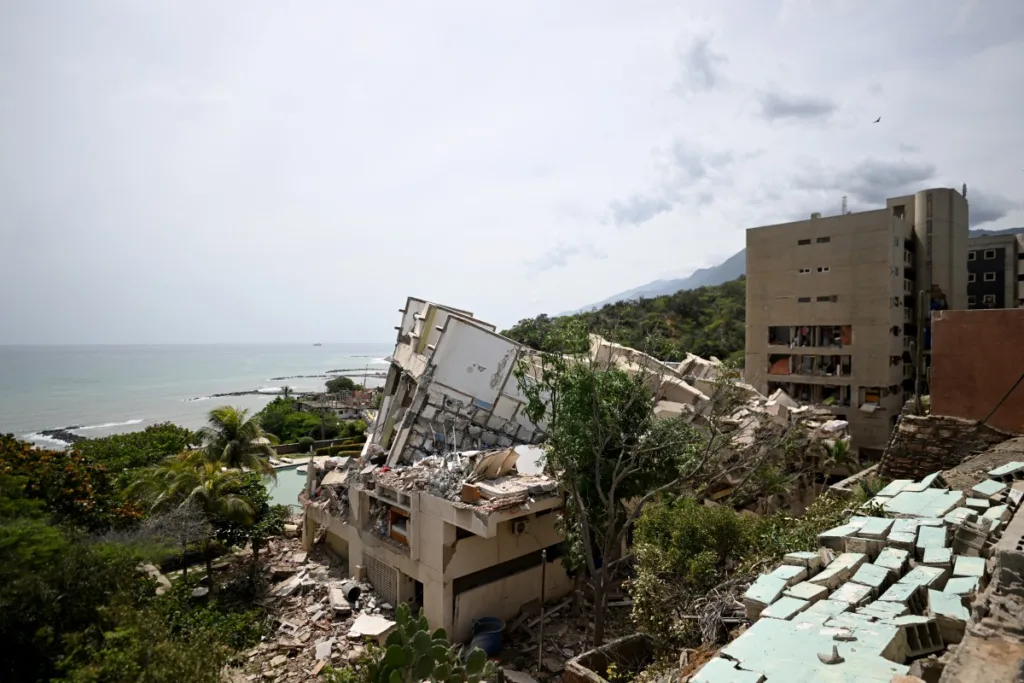
About 40 minutes from Caracas, the state of La Guaira became the main symbol of the tragedy. The coastal region, where the country’s main international airport is located, was declared a disaster zone by Venezuelan authorities.
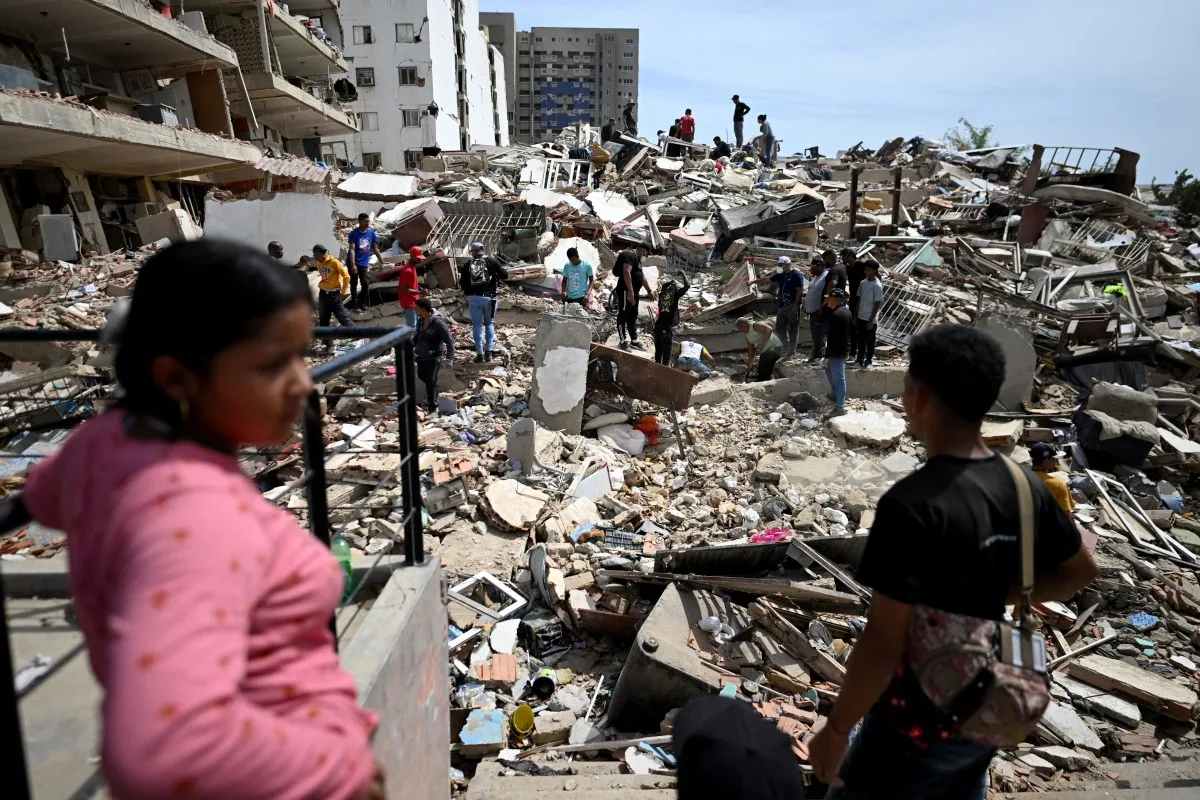
In locations such as Catia La Mar and Caraballeda, dozens of buildings collapsed or suffered serious structural damage. Rescue teams continue to work through the rubble in search of the missing, while residents try to locate relatives and recover belongings.
“It was terrible. Everything, everything collapsed,” resident Yilsmaris Blanco told AFP, as she watched the destruction in Catia La Mar. “We thank God because we are alive, but there are people suffering with family members buried and trapped under the rubble.”
The tragedy left thousands of people homeless. “We have nothing. Now we have nothing,” reported Larry Rojas, a resident of the area. “We don’t even have the courage to go in there.”
Solidarity
While official teams operate in the most affected areas, organized communities have helped to assist victims. In different regions of Caracas and surrounding areas, residents set up support networks to distribute water, food and blankets, in addition to helping to evacuate people from risk areas.
In popular neighborhoods and communities in the metropolitan region, neighbors organized joint efforts to remove rubble, locate missing people and welcome families who lost their homes.
Governments from several countries also offered to send humanitarian aid to Venezuela. The President of Brazil, Luiz Inácio Lula da Silva (PT), expressed solidarity with the country and stated that the Brazilian government is evaluating, together with the embassy in Caracas, ways to support recovery actions.
China, Russia, Cuba, Mexico, France, Italy and the United States also announced support or made teams and resources available to Venezuelan authorities. The European Union activated the Copernicus satellite monitoring system to assist with search and rescue operations.
The United Nations (UN) classified the tragedy as an emergency that will require a “massive collective effort” from the international community to support the actions led by the Venezuelan government and assist the affected populations.
Given the magnitude of the damage, interim president Delcy Rodríguez declared a national state of emergency and announced the creation of a US$200 million fund, with resources from the International Monetary Fund (IMF), to support the reconstruction of infrastructure and housing destroyed by the earthquakes.
Source: www.brasildefato.com.br