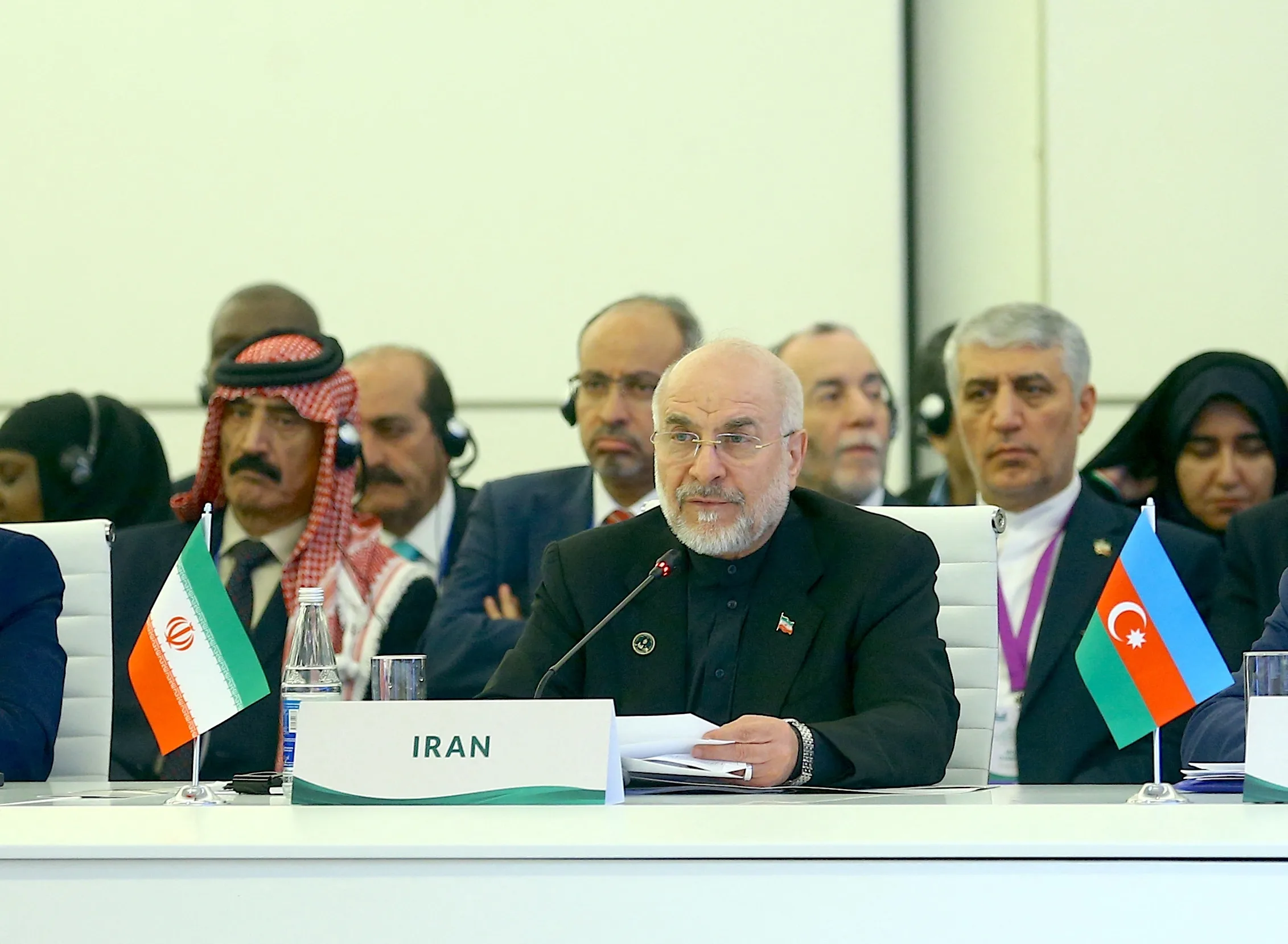
The President of the Iranian Parliament, Mohammad Bagher Ghalibaf, compared the memorandum of understanding between Iran and the United States to an American “declaration of defeat”. Ghalibaf, who is Tehran’s main negotiator, addressed the issue this Wednesday (24) in Baku, Azerbaijan.
“Islamabad’s memorandum of understanding was not the result of pressure and coercion, but a product of the resistance and strength of the courageous Iranian nation. An understanding that demonstrated that dialogue achieves results when the other party refrains from imposing its will on a civilized nation and accepts our rights,” Ghalibaf said.
“For this reason, the Islamabad memo turned into a declaration of US defeat,” he pointed out.
The Iranian official also called the attacks by Israel and the US on the Persian country, which began on February 28, a “criminal act”. Ghalibaf remembered the death of Ayatollah Ali Khamenei and more than 3,000 Iranians. The majority of victims were women and children.
The costs for Washington and Tel Aviv, however, have been high. According to Ghalibaf, “the Iranian nation has shown that the era of imposing its own will on independent nations has come to an end.”
The war would be a coordinated effort to change the strategic balance in the region, according to the Iranian parliamentarian. For him, the future of the region must be based “not on confrontation, but on interaction; not on elimination, but on coexistence”.
Agreement is being negotiated
Washington and Tehran agreed to use the 60-day deadline to reach a broader agreement. The period was established following the announcement of the memorandum of understanding. The document, among other points, determines that the US suspend the naval blockade of Iran and create an Iranian reconstruction and economic development program, with minimum financing of US$300 billion.
Furthermore, the agreement provides for the end of sanctions against Iran, including those on the United Nations (UN) Security Council, as well as the release of frozen Iranian assets and funds.
From the point of view of Tehran’s obligations, the agreement provides for the reopening of the Strait of Hormuz. Alongside Oman and other Persian Gulf countries, Iran must define how the strait will be managed in the future.
Another important point is Iran’s commitment not to produce or acquire nuclear weapons. The parties must still deal with the dilution of enriched uranium, under the supervision of the International Atomic Energy Agency (IAEA).
There is still no definition on how the frozen Iranian assets will be used. US Vice President JD Vance maintains that the resources would be used “to purchase American soybeans, American corn and American wheat for the benefit of the Iranian people”.
The Iranian ambassador to the UN, Ali Bahreini, rejects the idea. For him, “Iran is the only country that decides what to do with its assets”.
In an interview with BdF connection, and Radio Brasil de FatoRicardo Leães, professor of International Relations at the Escola Superior de Propaganda e Marketing (ESPM), assessed that the terms of the memorandum “signal a definitive victory for Iran”. Leães highlighted that Tehran “did not give in on absolutely any point that it considered a priority, and the United States had to give in on everything the Persian government asked for.”
Source: www.brasildefato.com.br