Published 06/11/2026 10:51 | Edited 06/11/2026 19:31
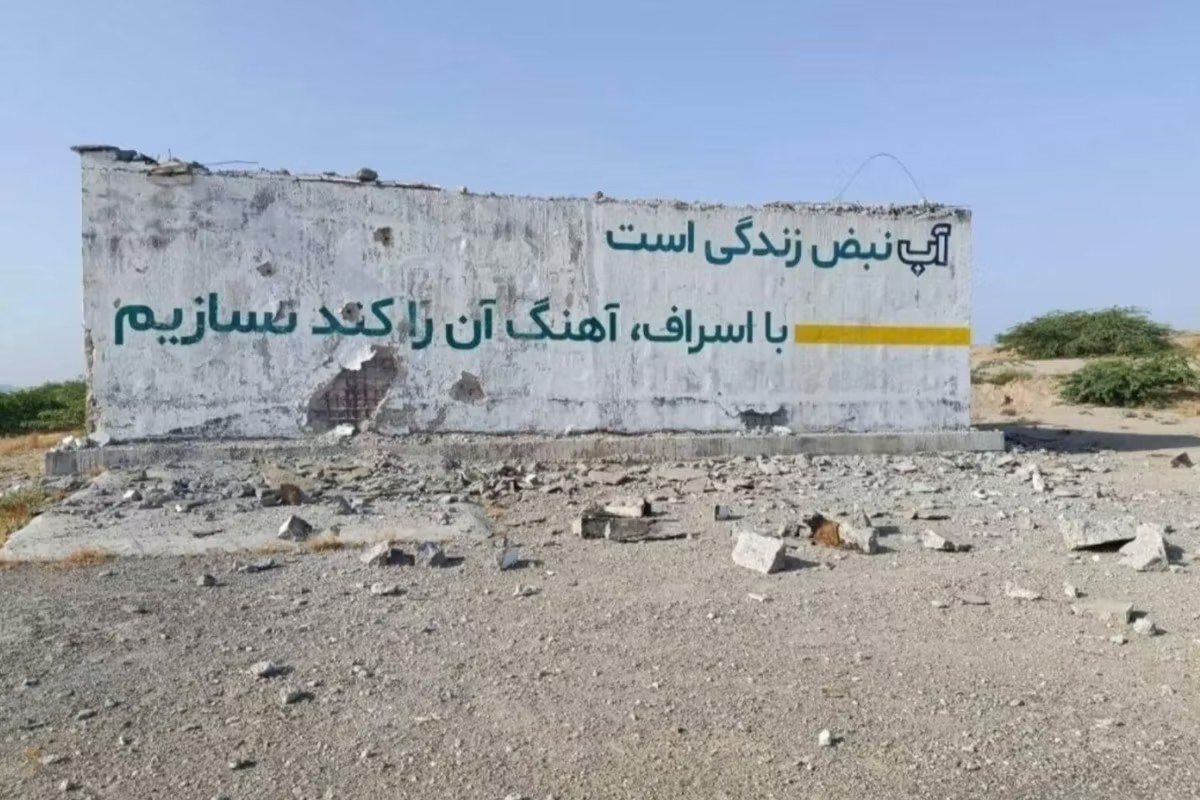
The attacks launched by the United States against Iran this Wednesday (11) became the target of accusations of war crimes. An analysis by the New York Times identified evidence that US bombs hit drinking water reservoirs that supplied around 20,000 people in the south of the country.
The bombings are part of a new offensive ordered by Donald Trump’s government against Iranian targets after the collapse of the ceasefire signed in April.
In the last few hours, the United States Central Command (CENTCOM) reported having attacked radars, communication systems, air defense positions and other military installations in different regions of the country.
In response, Tehran once again announced the closure of the Strait of Hormuz, a strategic corridor through which a significant portion of world oil trade passes, and launched new attacks against US-linked military positions in the Persian Gulf.
The complaint comes a few months after another episode that provoked strong international condemnation. In March, US bombings hit a girls’ school in the city of Minab, in southern Iran, leaving more than a hundred people dead, according to Iranian authorities, most of them children and women.
Human rights organizations and international law experts have called for an independent investigation into the attack, which targeted a civilian area and expanded accusations of violations of the Geneva Conventions during the war of imperialist aggression led by Washington.
According to the New York Times investigation, satellite images, videos released by the Iranian press and fragments of weapons found at the site indicate that two water storage structures in the Bemani region were hit by precision-guided munitions used by the United States Armed Forces.
CENTCOM itself reported having carried out attacks with “precision munitions” against targets near the Strait of Hormuz.
The newspaper’s analysis points out that the affected reservoirs were isolated, with no other military or strategic installations nearby, a characteristic compatible with a deliberate and highly precise attack.
The newspaper emphasizes that the intentional attack on civilian infrastructure constitutes a war crime under international humanitarian law. The facilities served approximately 20,000 residents of ten villages in the region.
The attack occurred amid temperatures exceeding 38°C in southern Iran, worsening the impact on the local population.
Iranian Foreign Ministry spokesman Esmaeil Baqaei called the action “a calculated war crime” and said the United States deliberately targeted infrastructure vital to the civilian population.
“These facilities provided drinking water for more than 20,000 people. This is not collateral damage, but a flagrant violation of human rights and international humanitarian law,” he declared.
Despite the damage, local authorities reported that emergency teams were able to restore supply through alternative routes and water trucks in less than 12 hours.
The Iranian government stated that the new US bombings had made the ceasefire signed in April “practically meaningless”. In a statement, the Ministry of Foreign Affairs held Washington responsible for the consequences of the new offensive and accused the United States of making ongoing diplomatic efforts unfeasible.
In response, Tehran launched missiles and drones against US-linked military installations in Bahrain, Jordan and Kuwait, increasing the risk of regionalization of the conflict.
Source: vermelho.org.br