Published 10/06/2026 11:22 | Edited 06/10/2026 11:39
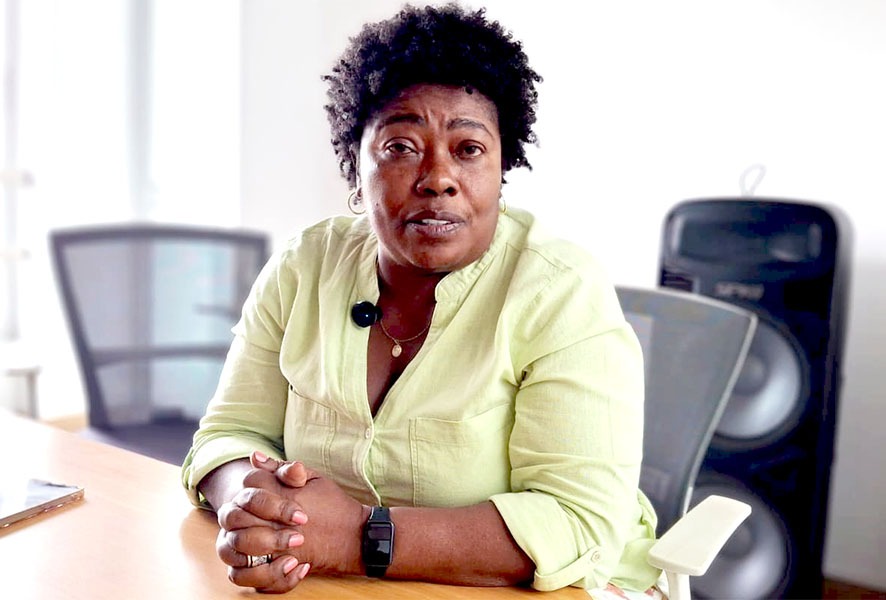
The leader of the Unique Union of Education Workers of Valle del Cauca (Sutev), Liliana Vivas Cortes, states that “Abelardo de la Espriella’s trajectory and proximity to the ultra-right, his links with drug trafficking and paramilitarism” should help Colombians go to the polls to defeat the neoliberal setback and everything that implies the loss of rights. The fascist candidate’s declaration that once elected he would “expel the Colombian Federation of Educators (Fecode) from the classrooms”, warned Liliana, exposed his “aversion to those who defend public education and demonstrate who it serves”. In this exclusive interview in Cali, capital of the Cauca Valley, known as the “Branch of Heaven”, the leader spoke about the mobilization to elect Iván Cepeda and Aida Quilcué on the 21st.
Abelardo de la Espriella said that, once elected president, he would “expel the Colombian Federation of Educators (Fecode) from the classrooms.” Who does this type of statement serve?
For us, this statement is not strange, considering Mr. Abelardo de la Espriella’s trajectory and proximity to the ultra-right, his links with drug trafficking and paramilitarism. What he expressed publicly is completely consistent with his view of the world, politics and how he would like to govern the State. This statement embodies his position and who he serves.
It is known that he never guaranteed any rights throughout his life, that he never defended education or social issues. Then he becomes truly coherent with his speech, with the type of person he is, with his ideology and that of those close to him.
Read more: Iván Cepeda denounces that Abelardo plans a fake attack to try to gain votes
What I find regrettable is that many Colombians who know this trajectory, who know this tragedy that we experienced in these years of war during 200 years of right-wing, neoliberal governments, identify with such a statement and such unreasonable ideas.
Colombian teachers, who are aware of our reality, who are close to the population, joined the Colombian Federation of Educators, because talking about this Federation is talking about teachers, education and rights. Fecode could never be outside the classroom because it is our essence to be with the communities and with our students in defense of public education as a right, public education with quality, public education with safety, identity and well-being.
So, here, what we have to do is establish a position: whether we are with the people, mobilized and articulated with our communities, or whether we will retreat with the right, with Abelardo.
I see several posters around the Union headquarters in support of the candidacy of senator Iván Cepeda and indigenous leader Isso Quilcué, as a “second progressive government”. What is your opinion?
President Gustavo Petro recovered numerous rights that were cut off during the government of Álvaro Uribe (2002-2010) such as the nighttime bonus, which now starts at 7pm instead of 9pm, the bonus on Sundays and holidays, which increased to 100%, and overtime, among other advances.
The implementation of the minimum living wage (which this year had an adjustment of 23.7% against inflation of 5.2%) was another achievement, something that could not be progressed much due to the right-wing opposition that we had to face from the Legislature, as well as obstacles imposed in relation to pension reform.
Read more: Meeting of Colombian women defends the environment and execrates fascist candidate
Despite this, there was progress with the right to protest and strike, the guarantees so that workers could claim their rights, as there were numerous problems in this situation of murders and the persecution of leaders. We believe that we have managed to make progress and hence the need, from trade union organizations, teachers and workers, to guarantee the continuity of this process, achieving the fruits that have been planted.
In the recent democratic dispute for the Congressional elections, we improved the correlation of forces (the Historic Pact increased from 20 to 25 senators and from 29 to 42 in the Chamber of Representatives). So, this time, from the Legislature, we will be able to have more impact on everyday life, stand out better.
Therefore, this is an indispensable task for our organizations: elect Ivan Cepeda to continue this progressive project as president. Otherwise, it would certainly represent a huge setback for workers and a disaster for Colombia.
President Petro recently warned that business sectors are trying to influence the process with bribes, blackmail and threats against workers, and that it is necessary to denounce and punish this electoral crime? This is compounded by anti-union violence, particularly in cities like Cali.
With Iván Cepeda we beat Abelardo de la Espriella both in Cali (52.51% against 35.2%) and in Valle del Cauca (53.2% against 33.8%). We know that Abelardo’s vote is driven by the mill sector (focused on food exports), which has a lot of influence in the Cauca Valley, with the support of the National Federation of Business Traders (Fenalco). It is known that they are coercing workers to vote for the ultra-right candidate under the argument that the continuation of the current policy of guaranteeing rights will generate unemployment and company closures. They are working with fear, blackmailing workers into supporting their own executioners, so that they give up the gains obtained during the Petro government, which favored them so much.
The persecution is total, pointing us out as guerrillas. They try to make us forget that the gigantic “Estallido social” (social explosion) that took place on the streets in 2021 came to benefit the people. Although it was traumatic, it was that pressure exerted by young people that made change possible, paving the way for us to have an alternative government in Colombia.
Against popular interests, the hegemonic media works in all ways, with all fears and concerns. These fears spread repeatedly in the media that monopolize to make lies reach the population as “information”. The ultra-right relies on them to try to regain control of the State.
In this battle between dependence and submission, between truth and lies, does the Colombian media play a well-defined role?
It goes without saying. There is no doubt. We are talking about mass media that have power, radio and television networks such as Caracol, RCN, the newspaper Espectador, the magazine Semana, El País, which in Cali and Valle del Cauca have strength, are all aligned in favor of the right-wing candidacy.
We have alternative means to counter us, but the superiority they have is great, it is a 200-year race with the opponent having started ahead, full of resources and imposing obstacles and difficulties. In addition to the advantage of capital, they rely on the fact of having been in power and bureaucracy.
So, I really think that we should value each of the advances we have made, because they were made under very difficult conditions.
We have to be motivated and go to battle in the second round in order to unmask their lies: because one day your candidate says he is an atheist, the next day he believes in God, that he is Catholic or evangelical. On one occasion he publicly attacks a journalist with sexist comments, then defends life, when there is evidence that he mistreats defenseless animals. He openly says that we should gut our enemies, and openly declares himself homophobic, and the abuse doesn’t stop there.
I believe that Colombians need to be coherent and make people respect us as human beings. We cannot allow a person like that to become president.
Despite all the difficulties, we are calling on conscience to elect Iván Cepeda and Aida Quilcué on the 21st, a responsible man and woman, up to the challenges that Colombia demands.
Collaboration with Caio Teixeira
__
This coverage by the ComunicaSul Collaborative Communication Agency was only possible thanks to the support of the São Paulo Bank Workers Union; Writers’ Union of the State of São Paulo; newspaper Hora do Povo; Red; Global South Dialogues; Citizenship Mail; Baron of Itararé; councilor Werner Tempel (PCdoB) of Santa Maria-RS; Professor Azuaite, from São Carlos-SP; Angelim Institute, the Public Services International (ISP) and the Colombian Workers’ Unitary Center, as well as several anonymous contributors.
Source: vermelho.org.br