Published 03/23/2026 18:41 | Edited 03/23/2026 19:00
A PCdoB delegation returned to Brazil this week after a week of political and solidarity activities in Cuba. In an interview at Panama airport, where she was making a stopover, Amanda Harumy, from the Party’s International Relations Commission, reported the severity of the economic blockade imposed by the United States and the international efforts to break the siege on the Caribbean island.
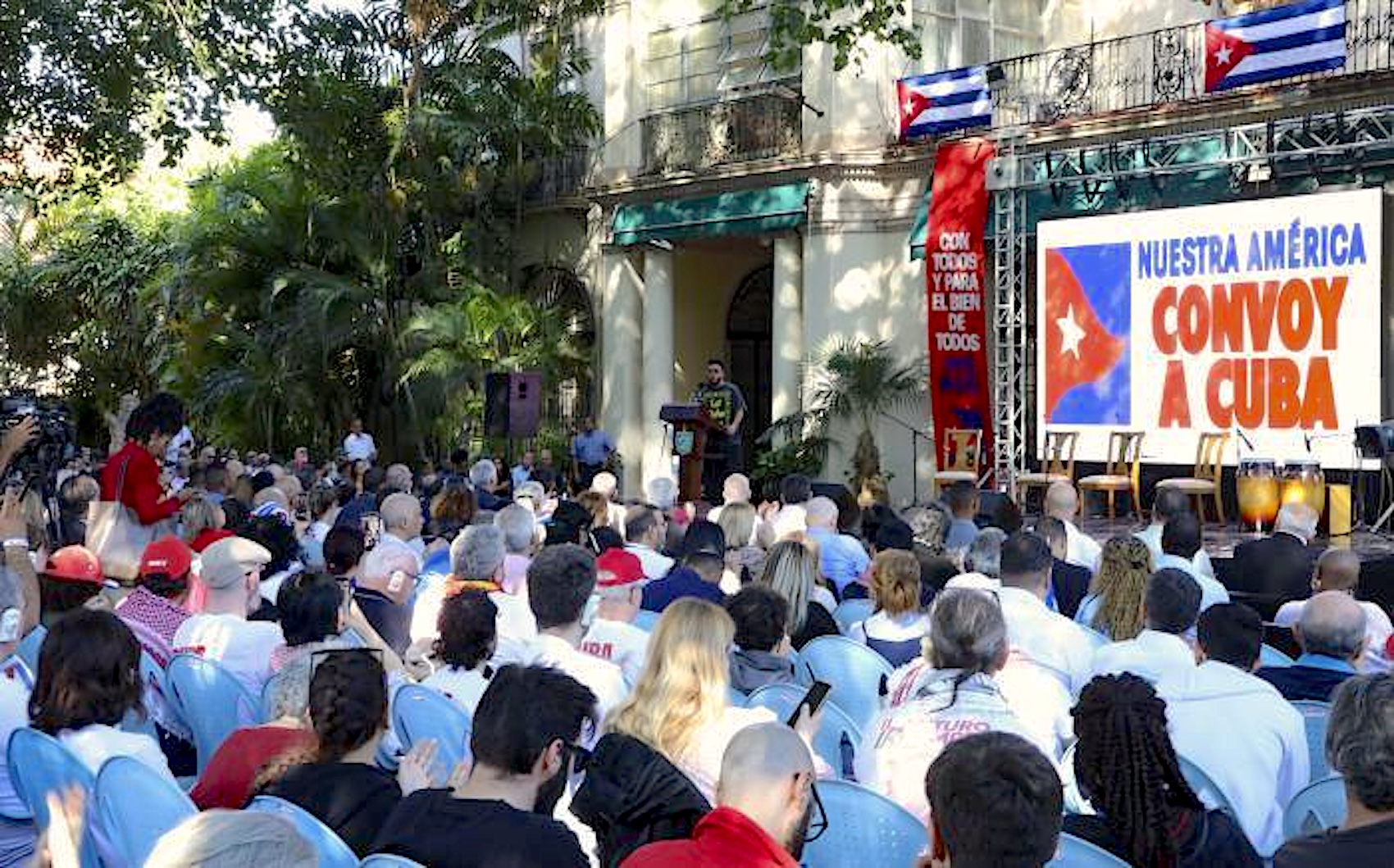
The Our America Caravan to Cuba, which brought together around 600 people from 33 countries – representing popular, progressive, revolutionary, left-wing and humanist forces – brought around 20 tons of material aid to the island. Being part of the convoy was not without blackmail and threats, such as the cancellation of many people’s North American visas.
Material crisis, political resistance
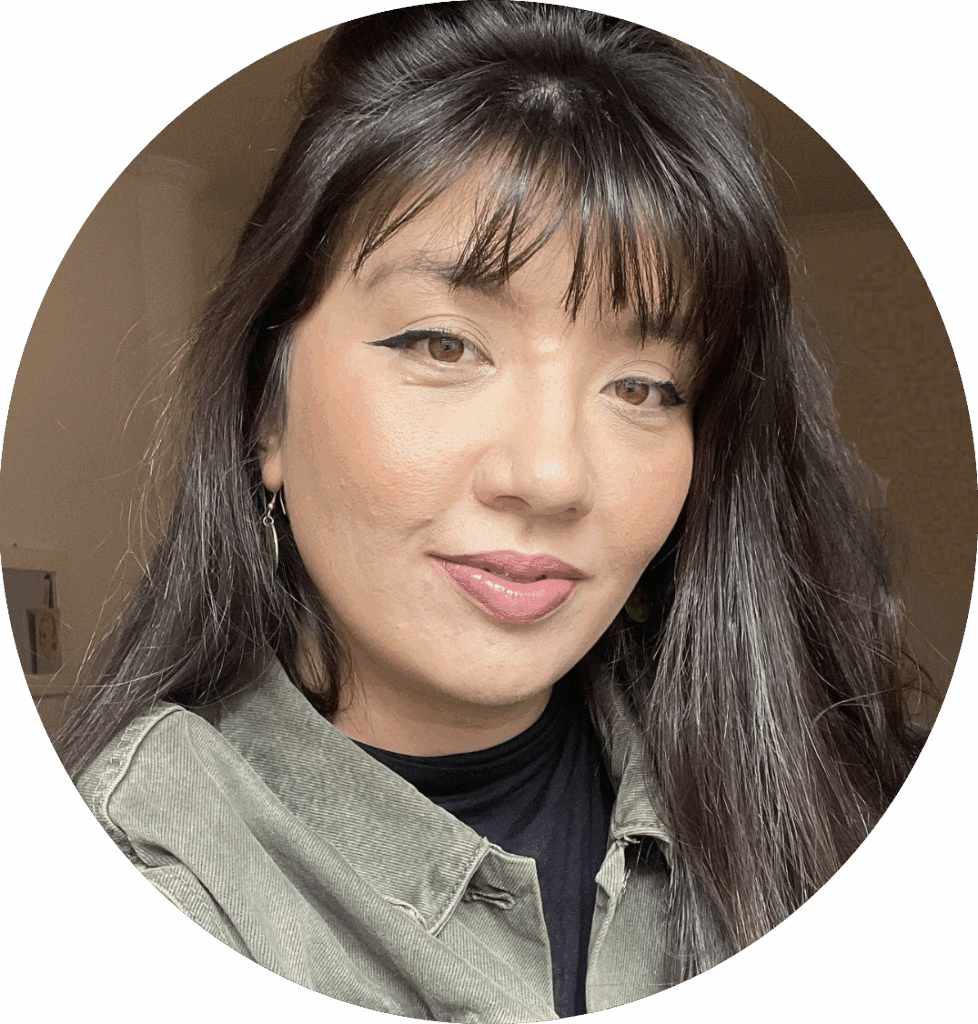
“There are sanctions that have lasted 60 years, but today there is a physical sanction: nothing enters the island,” said Amanda. According to her, the cut in fuel supply by Venezuela, after January 3, and the impediment of humanitarian aid from Russia and Mexico worsened an energy crisis that impacts everything from public lighting to basic services such as garbage collection and the functioning of universities.
Despite the difficulties, the leader highlighted that the Cuban people maintain political awareness: “They say: we are a revolutionary people, we are under imperialist attack.” For Amanda, it is essential to differentiate the material crisis from the failure of the socialist project: “Cuba is not a collapsed society. Socialist rights, concepts and foundations still exist.”
Humanitarian aid in suitcases and on boats
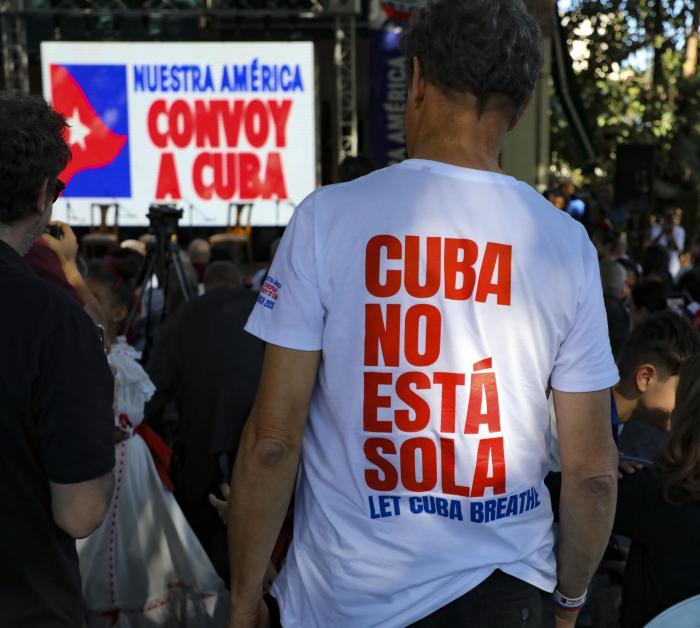
The delegation took medicines, masks, syringes, food, solar lamps and power banks. “It was exciting to see that these donations are already arriving at hospitals,” said Amanda. She also highlighted the sending of photovoltaic panels, which will arrive by sea: “They cannot block the sun. Today, 50% of electricity in Cuba comes from solar energy, with Chinese technological cooperation, but we need to help more to guarantee electrical autonomy.”
The Nuestra América Flotilla for Havana, which left Mexico with food, medicine and more solar panels, is expected to arrive on the island in the coming days. “It will not solve all the problems, but it will break the blockade and show that, with political will, it is possible to break the illegal siege”, he assessed.
International articulation and pressure on Brazil
The International Cuba Solidarity Conference, organized by different networks in the international progressive field, brought together representatives from more than 30 countries, including 150 young people from the United States, former British labor leader Jeremy Corbyn and Spanish politician Pablo Iglesias. “Many social movements in the US that defend Palestine and Cuba are persecuted internally by the Trump administration. We need to reverse this narrative”, said Amanda.
On the Brazilian side, deputy Orlando Silva and councilor Gustavo Petta participated, as well as other leaders such as Bianca Borges and Manuela Mirella. The delegation has already worked with the Brazilian ambassador to Cuba to press for concrete actions from the federal government. “Brazil is sending 20 thousand tons of food, but the distribution logistics are hampered by a lack of fuel. The energy issue is central”, he warned.
Solidarity as a political weapon
For Amanda, the mission in Cuba is directly connected to the Brazilian political scene. “This attack on Cuba, Venezuela, Latin America is part of Trump’s foreign policy. This will be present in our electoral debate and in the fight against the Bolsonarist extreme right”, he concluded.
The leader reinforces that solidarity cannot be limited to specific gestures: “We need to articulate government humanitarian aid, energy cooperation and active diplomacy. Defending Cuba means defending the sovereignty of Latin America.”
Source: vermelho.org.br