Published 02/24/2026 13:37 | Edited 02/24/2026 20:09
Brazil and 20 other countries accused Israel of promoting an illegal occupation in the West Bank by expanding settlements, reclassifying Palestinian lands and deepening administrative control over the territory, in violation of international law and UN resolutions, according to a joint statement released this Monday (23).
“We clearly state that Israel’s illegal settlements, and decisions designed to promote them, constitute a flagrant violation of international law, including previous United Nations Security Council resolutions and the 2024 Advisory Opinion of the International Court of Justice,” says the statement signed by the foreign ministers.
The foreign ministers of Brazil, France, Denmark, Finland, Iceland, Indonesia, Ireland, Egypt, Jordan, Luxembourg, Norway, Palestine, Portugal, Qatar, Saudi Arabia, Slovenia, Spain, Sweden and Turkey, as well as the secretaries-general of the League of Arab States and the Organization of Islamic Cooperation, signed the document.
According to the signatory governments, the measures announced by Israel “are part of an evident trajectory that aims to alter the reality on the ground and advance an unacceptable annexation”.
The statement also points out that the acceleration of settlement policy, including the approval of the E1 project, represents “a deliberate and direct attack on the viability of the Palestinian State” and compromises the implementation of the so-called Two-State Solution, in addition to threatening regional stability.
The E1 project refers to an Israeli settlement expansion plan in a strategic area east of East Jerusalem, situated between the city and the large Ma’ale Adumim settlement bloc in the occupied West Bank.
Implementation of the project would create Israeli territorial continuity between East Jerusalem and Ma’ale Adumim, cutting the West Bank in two and interrupting the geographic link between the north and south of the Palestinian territory.
The international community considers that E1 makes the formation of a contiguous and functional Palestinian State unviable, having been identified for years as one of the main concrete obstacles to the so-called Two-State Solution and as a decisive step towards the de facto annexation of parts of the West Bank.
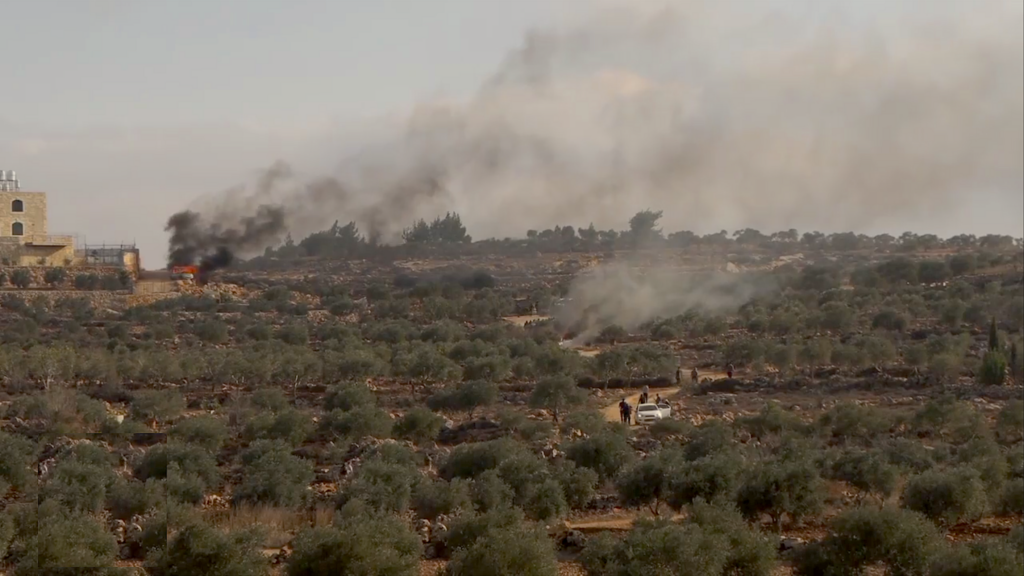
The document also calls on Israel to end settler violence against Palestinians and hold perpetrators accountable, while reaffirming its commitment to adopting concrete measures, in accordance with international law, to contain the expansion of illegal settlements and the policies and threats of forced displacement and annexation in Palestinian territory.
The text also reaffirms the categorical rejection of any annexation measures, declaring opposition to “all actions aimed at altering the demographic composition, character and status” of the Palestinian Territory occupied since 1967, including East Jerusalem.
According to the chancellors, such initiatives consolidate permanent changes in the legal and administrative status of the territory, in direct contravention of international law.
In the context of Jerusalem, countries highlight the need to preserve the historical and legal status quo of the Holy Places, especially during the month of Ramadan. The statement recognizes the role of Jordan’s Hashemite custodianship and condemns “repeated violations of the status quo,” classified as a threat to regional stability.
The signatories also demand that Israel immediately release tax revenues owed to the Palestinian Authority, withheld by Tel Aviv.
According to the document, these resources, provided for in the Paris Protocol, are “vital for the provision of basic services” to the Palestinian population in both the West Bank and the Gaza Strip.
In the end, the governments reiterate their commitment to a political solution based on the creation of an independent, sovereign and viable Palestinian State, within the borders of June 4, 1967, in accordance with UN resolutions and the Arab Peace Initiative, stating that the end of the conflict is an indispensable condition for peace and integration in the Middle East.
Source: vermelho.org.br