Published 02/21/2026 11:13
The United States Supreme Court ruled this Friday (20) that President Donald Trump exceeded his authority by using an emergency law to impose broad trade tariffs against foreign partners, overturning most of the tariffs adopted as a policy of economic coercion.
By 6 votes to 3, the ministers stated that this type of measure requires explicit authorization from Congress.
The decision was made despite the Supreme Court having a conservative majority. The vote that formed the majority was written by the President of the Court, John Roberts, and had the support of two ministers appointed by Trump —Neil Gorsuch and Amy Coney Barrett— in addition to the three liberal ministers.
For the court, the emergency law cited by the government, approved in 1977, does not authorize the president to create tariffs unilaterally.
In the vote, Roberts stated that Trump claimed a power that the Constitution reserves for the Legislature. According to him, given the economic and political dimension of these measures, the head of the Executive “needs to identify a clear authorization from Congress” to exercise them, which does not occur in the text of the law invoked.
The rule used by Trump, the International Emergency Economic Powers Act, allows the president to take exceptional measures in the face of “unusual and extraordinary threats” to the national security, foreign policy or economy of the United States.
The Court, however, understood that the authorization to “regulate imports” provided for in the law cannot be interpreted as permission to impose taxes or tariffs, which are Congress’s prerogatives.
With the decision, the 10% global tariff imposed in April last year and higher surcharges applied to some of the United States’ main trading partners, such as Canada, Mexico, China, the European Union, Japan and South Korea, fall.
On the other hand, tariffs adopted based on other legislation remain in force, such as those justified for reasons of national security, such as those applied to steel and aluminum.
In rejecting the government’s argument, the Court stated that the fact that tariffs involve international relations does not authorize the president to decide alone on this type of measure.
For the president of the court, John Roberts, Congress does not give up its competence “through vague language or without carefully established limits”.
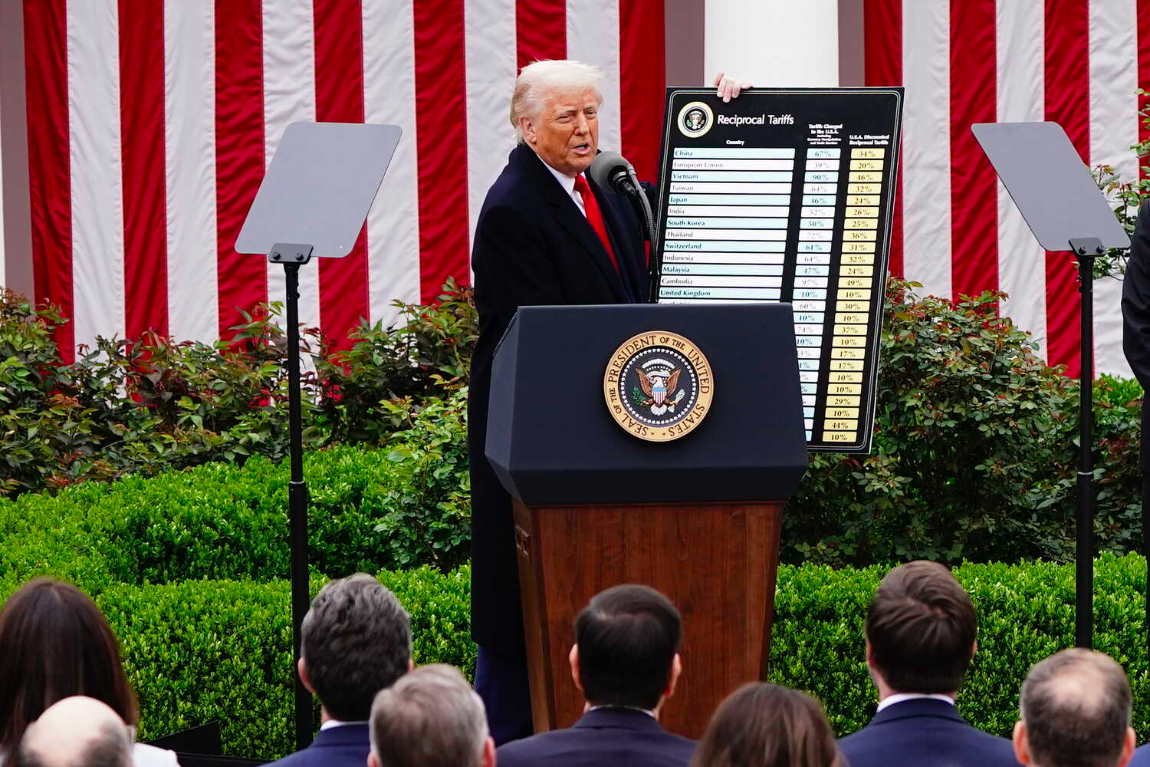
Trump reacted by criticizing the decision and attacking the ministers who voted against the government. At a press conference at the White House, he said he was “deeply disappointed” and said he felt “ashamed of certain members of the Court for not having the courage to do what is right for our country.”
The president classified the majority judges as “unpatriotic and disloyal to the Constitution” and suggested, without providing evidence, that they had acted to serve “foreign interests”.
Despite the defeat, Trump stated that he intends to use other legal instruments to keep tariffs in force. He acknowledged, however, that these alternatives are “a little more complicated” than the broad use of emergency law rejected by the Court.
In addition to the internal effects, the trial has international repercussions. By limiting the use of emergency laws to impose tariffs, the Supreme Court imposes restrictions on the use of trade measures as a form of economic coercion and diplomatic pressure.
Countries affected by the tariff, including Brazil, are following the decision closely. Brazilian products were taxed at up to 50%, affecting sectors such as meat and coffee, before part of the surcharges were removed at the end of 2025.
Source: vermelho.org.br