Published 02/20/2026 09:40 | Edited 02/20/2026 10:41
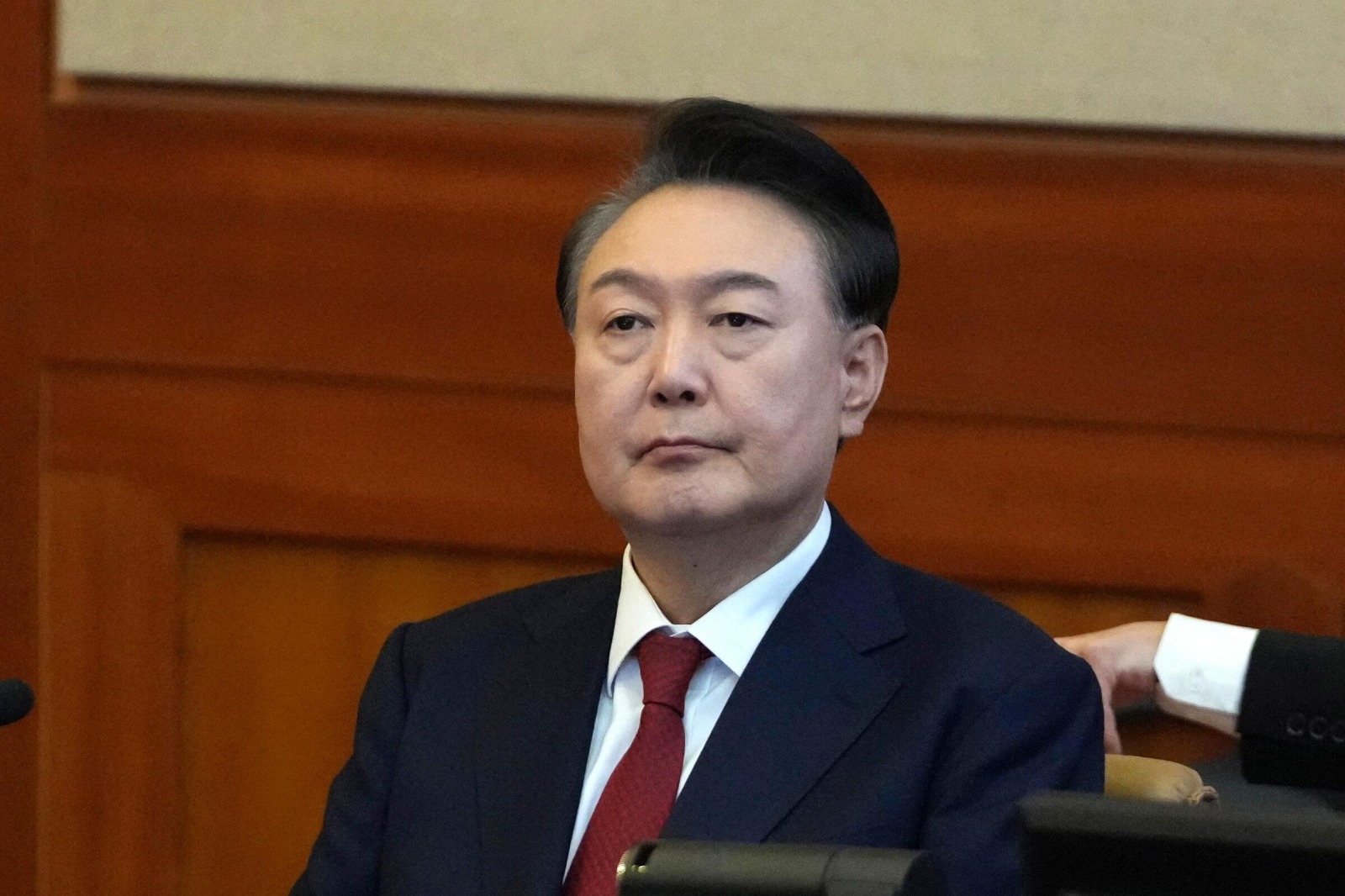
Former President of South Korea Yoon Suk Yeol was sentenced this Thursday (19) to life in prison for leading an insurrection by declaring martial law in December 2024, in an attempt to subvert the constitutional order and paralyze Parliament with the use of the Armed Forces.
The decision was made by the Seoul Central District Court, which concluded that Yoon used presidential authority to mobilize the Armed Forces against the Legislature, with the aim of preventing the functioning of the National Assembly and subverting the Constitution.
According to the sentence, the then president conspired with Defense Minister Kim Yong-hyun and other senior civil and military officials to send troops to Parliament on the night of December 3, 2024, in an attempt to block the plenary, prevent deliberations and enable the arrest of political leaders.
The court classified the coup operation as an act of insurrection, even though martial law only lasted about six hours.
When reading the decision, judge Ji Gwi-yeon stated that the sending of armed troops to Parliament and the use of equipment to try to carry out arrests “constitute acts of insurrection”, highlighting that the measure resulted in an “enormous social cost” and seriously compromised the political neutrality of the Armed Forces and the police.
The court also highlighted that the declaration of martial law caused a deterioration in South Korea’s international credibility and deepened internal political polarization, leaving society in a state of extreme confrontation. For the magistrates, the claim of national emergency presented by Yoon was not legally sustainable.
Despite recognizing the seriousness of the crimes, the court rejected the Public Prosecutor’s request for the death penalty. The judges found that there was no meticulous long-term planning, that there was an attempt to limit the use of lethal force and that most of the plan ended up failing. Even so, they opted for the maximum prison sentence, provided for by law for the crime of insurrection.
During the reading of the sentence, Yoon, 65, remained silent and showed no reaction. In addition to him, seven other defendants were convicted in the same case. Former Defense Minister Kim Yong-hyun received a 30-year prison sentence, while former Seoul and national police chiefs were also sentenced to sentences ranging between three and 18 years. Two defendants were acquitted.
Yoon’s defense stated that they will discuss the appeal and classified the decision as politically motivated. Lawyers maintain that the declaration of martial law was a legitimate use of the president’s emergency powers, an argument rejected by the court.
The crisis began on the night of December 3, 2024, when Yoon announced martial law in a television address, alleging the existence of “anti-State forces” and supposed electoral fraud, without presenting evidence. Hours later, 190 parliamentarians broke the military and police siege around the National Assembly and approved an emergency resolution that repealed the measure.
The episode triggered mass protests and led Parliament to approve Yoon’s impeachment in less than two weeks. The Constitutional Court confirmed his definitive dismissal four months later, paving the way for criminal proceedings.
Yoon also faces other trials, including a previous sentence of five years in prison for abuse of power and obstruction of justice. In total, he faces eight criminal actions related to his actions in the final period of his mandate.
In a post on social media, current president Lee Jae Myung stated that the reversal of martial law was only possible through institutional and popular mobilization. “It was possible because it was the Republic of Korea,” he wrote, praising the reaction of Parliament and civil society to the attempted democratic rupture.
Yoon’s conviction marks an unprecedented episode in the country’s recent history, establishing that a democratically elected president can be held criminally responsible for trying to use the Armed Forces to impose an authoritarian solution to the political crisis.
Source: vermelho.org.br