Published 02/11/2026 18:07 | Edited 02/11/2026 21:08
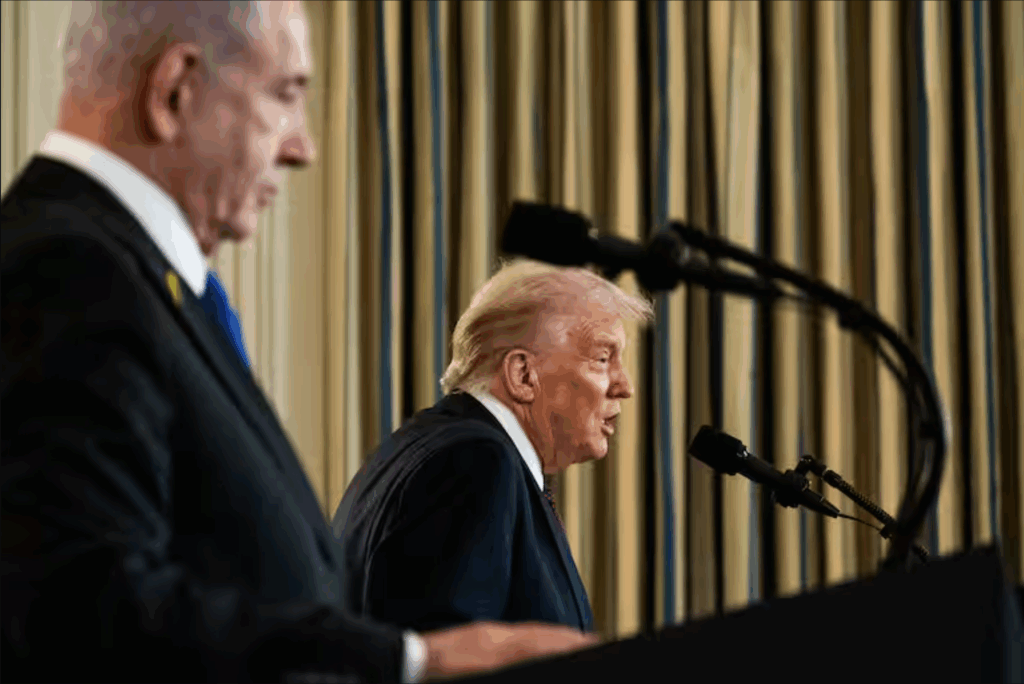
The almost three-hour meeting between United States President Donald Trump and Israeli Prime Minister Benjamin Netanyahu ended this Wednesday (11) without definitive decisions — but with a clear message from the White House: negotiations with Iran will continue.
Trump claimed to have “insisted” on continuing dialogue with Tehran and reiterated his preference for an agreement, although he maintained the rhetoric of “military deterrence” if US demands are not met. For Netanyahu, the simple diplomatic advance is already a cause for concern.
Analysts interviewed by international vehicles point out that the Israeli prime minister is “clearly apprehensive” about the possibility of an understanding that focuses only on the Iranian nuclear program, without covering ballistic missiles and Tehran’s support for armed groups in the region.
Maximalist demands and confrontational diplomacy
According to researcher Barbara Slavin, from the Stimson Center, Netanyahu brought an agenda of broad demands to Washington — which include the permanent dismantling of Iran’s nuclear program and severe restrictions on its military capabilities.
For the expert, the Israeli leader historically prefers a maximum pressure approach and does not welcome a negotiated solution that preserves part of Iran’s strategic infrastructure. “He does not want diplomacy to be successful,” she said.
The stance reinforces a line adopted for decades by Netanyahu, who has defended military action against Iran and criticized multilateral agreements, such as the one signed in 2015 and abandoned by Trump in his first term.
Elections on the horizon and political calculation
The Israeli domestic context also weighs in. Netanyahu is facing difficulties in approving the budget and is dealing with the possibility of early elections. A strategic victory against Iran — diplomatic or military — would have high symbolic and electoral value.
The recurring criticism of its diplomacy is that it favors confrontation and threatening rhetoric, even when allies opt for negotiating routes. By bringing forward his trip to Washington to specifically discuss US-Iran negotiations, the prime minister signaled the centrality of the issue on his political agenda.
Trump oscillates between agreement and threat
Although he declares a preference for an understanding, Trump maintains military pressure. The sending of the aircraft carrier USS Abraham Lincoln to the Gulf and the possibility of additional mobilization of forces fuel the climate of tension.
The American president made it clear that, if there is no agreement, “something very hard” could happen. Still, unlike the Israeli expectation of an exclusively coercive line, Trump keeps the diplomatic route open.
This strategic ambiguity — dialogue under threat — creates discomfort in Israel, which fears an agreement considered insufficient to neutralize what it defines as an existential threat.
Gaza, West Bank and international legitimacy
The visit also comes under increasing international pressure due to the war in Gaza and operations in the West Bank. Netanyahu seeks to ensure that Washington does not impose conditions related to Israeli military actions while negotiating with Tehran.
The prime minister’s diplomacy has prioritized the maintenance of Israeli regional hegemony, to the detriment of broader multilateral initiatives. Israel’s adherence to the so-called “Peace Council” proposed by Trump, but viewed with caution by US allies, is part of this strategic alignment effort.
Risk of isolation or regional rearrangement
If a deal between the US and Iran is reached on the terms advocated by Washington, Netanyahu could face a dilemma: accept it as a fait accompli or intensify his campaign against the legitimacy of the agreement.
The Israeli seizure reveals not just tactical divergence, but dispute over the future balance of power in the Middle East. While Trump explores diplomacy as a bargaining instrument, Netanyahu maintains his focus on permanent deterrence — a strategy that increases tensions and reduces negotiation margins in a region already marked by prolonged conflicts.
Source: vermelho.org.br