Published 01/30/2026 08:31 | Edited 01/30/2026 12:48
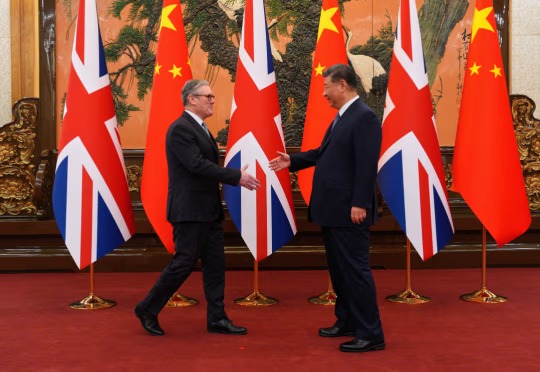
After a period of diplomatic deterioration and oscillations between rapprochement and confrontation, British Prime Minister Keir Starmer visited Beijing this Thursday (29). It was the first trip by a UK head of government to China in eight years.
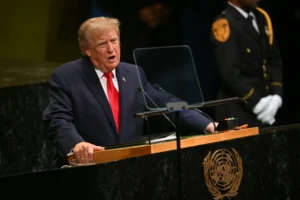
The trip takes place amid increased tensions between the United States government and its traditional allies, sending a harsh message to US President Donald Trump.
Upon receiving the British Prime Minister, Xi stated that China and the United Kingdom need to “overcome differences” and defend “true multilateralism”, while the two governments announced agreements to expand economic cooperation, including visa exemptions for Britons and trade facilitation measures.
Xi acknowledged that the relationship between the two countries has gone through “ups and downs” over the years and stated that “sometimes, good things take time, as long as it is the right thing, which serves the fundamental interests of the country and the people.”
The Chinese president said the two countries will be able to “stand the test of history” as long as they adopt a broad vision, respect each other and move forward together.
In response, Starmer stated that he intends to build a “more sophisticated” relationship with Beijing and reiterated that he seeks to bring “stability and clarity” to the bilateral relationship after years of inconsistency.
The British Prime Minister said that he is in China “with the British people in mind” and recalled that he promised, upon taking office, to make the United Kingdom “project itself back to the world”.
The British leader added that “events abroad affect everything that happens in our countries, from prices on supermarket shelves to how safe we feel”, arguing that broader engagement is necessary to understand the international scenario as a whole and build a relationship appropriate to current challenges.
The meeting between the two leaders lasted around 80 minutes, almost double the time initially scheduled in the official agenda. The extension of the meeting was interpreted by both delegations as a sign of willingness to deepen the dialogue at a time of readjustment of bilateral relations.
After the conversation, Xi and Starmer participated in a private meeting alongside their top advisers, including Chinese Foreign Minister Wang Yi and British National Security Advisor Jonathan Powell.
The restricted format made it possible to deal with sensitive topics on the bilateral agenda, in addition to international issues.
Afterwards, the leaders participated in an official lunch in the Golden Hall, a space traditionally reserved for high-level meetings in the Great Hall of the People. In addition to the economic and geopolitical agenda, the meeting included cultural and historical references, reinforcing the symbolic nature of the visit.
Starmer also participated in an event promoted by the UK-China Business Council, in which he reiterated the importance of expanding economic and business engagement between the two countries.
The prime minister highlighted the need to deepen commercial and institutional dialogue, aligning the diplomatic resumption with an agenda of practical cooperation.
Economic agreements, travel facilitation and security cooperation
Among the most relevant announcements of the visit is the granting of visa exemptions for British citizens traveling to China for up to 30 days, a measure that will be valid for both tourism and business.
With the decision, the United Kingdom joins the group of around 50 countries whose citizens can enter Chinese territory without the need for prior authorization for short stays.
The British government treats the agreement as a significant advance in the resumption of bilateral dialogue, by reducing bureaucratic barriers and expanding the circulation of British businesspeople and investors.
In the economic field, the two countries agreed to deepen cooperation in the services sector, an area in which the United Kingdom exports approximately £13 billion per year to the Chinese market.
A feasibility study was announced to create a more structured agreement in this segment, with the aim of establishing clearer and legally binding rules for British companies operating in China.
The initiative signals an attempt to institutionalize the commercial relationship after years of diplomatic instability.
Among the business moves highlighted during the visit, pharmaceutical company AstraZeneca announced an investment of US$15 billion in its Chinese operation.
Beijing also agreed to reduce the import tariff on Scotch whiskey from 10% to 5%, a measure that, according to British government estimates, could generate benefits of around £250 million for the sector over five years.
In addition, memorandums of understanding were signed in areas such as technical standards, health, professional education, the sports industry, food safety and animal and plant quarantine.
The agenda also included a cooperation agreement to share information in the fight against organized crime and irregular immigration.
The British government claims that the measure could help to stop the supply of vessels and engines used in crossing the English Channel, some of which have industrial origins in China, in addition to expanding cooperation against drug trafficking networks.
The agreements reached also reinforce the Joint Economic and Commercial Commission between the two countries, a mechanism resumed last year and now presented as a permanent axis of bilateral dialogue.
Source: vermelho.org.br