Published 01/30/2026 19:33 | Edited 01/30/2026 20:36
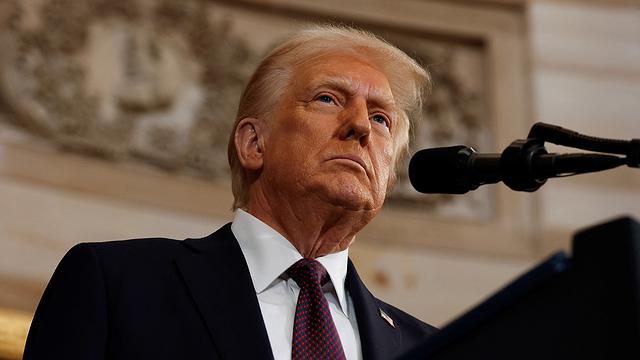
The President of the United States, Donald Trump, declared this Thursday (29) a “national emergency” against Cuba and created a tariff system to punish countries that sell or supply oil to the island, increasing the pressure on Havana at a time of severe energy supply crisis.
The measure formalizes the strategy announced by the North American president himself to interrupt the flow of oil while Cuba is already facing almost daily blackouts and fuel shortages in several provinces.
The White House maintains that Cuba represents “an unusual and extraordinary threat to the national security and foreign policy of the United States” and associates the Cuban government with “numerous hostile countries, transnational terrorist groups, and malign actors adverse to the United States, including the Government of the Russian Federation (Russia), the People’s Republic of China (PRC).”
Trump’s executive order authorizes the application of additional tariffs on products imported from any country that, “directly or indirectly,” sells or supplies crude oil or derivatives to Cuba. The text does not set an automatic percentage. The process will be defined on a case-by-case basis.
According to the White House document, it will be up to the Secretary of Commerce to hunt down countries that are supplying oil to the island. Then, the Secretary of State will decide whether to apply the tariff and at what percentage. The final word will be from the president.
The document also provides that the measures may be modified or suspended if Cuba or the affected countries “adopt significant measures” to align with “the national security and foreign policy objectives of the United States.”
Cuban President Miguel Díaz-Canel stated that the measure seeks to “stifle the Cuban economy by imposing tariffs on countries that sovereignly trade oil with Cuba.”
“Under a false and empty pretext of arguments, sold by those who practice politics and enrich themselves at the expense of the suffering of our people, President Trump intends to suffocate the Cuban economy,” he wrote on his social network.
“Didn’t the Secretary of State and his harlequins say that the blockade did not exist? Where are those who insist with their false versions that it is a simple ’embargo on bilateral trade’?”, he asked.
Díaz-Canel added that the new measure “reflects the fascist, criminal and genocidal nature of a small group that hijacked the interests of the North American people for purely personal purposes.”
Foreign Minister Bruno Rodríguez stated that Washington “now proposes to impose a total blockade on fuel supplies to our country” and that the decision is based “on a long list of lies that aim to present Cuba as a threat that it is not”.
The new offensive comes weeks after the kidnapping, on January 3, of Venezuelan President Nicolás Maduro and Cilia Flores by US forces. Since then, oil shipments from Venezuela to Cuba have been halted. Caracas was one of the island’s main suppliers.
Mexico, which began to occupy a central position in supply, also became a target of pressure. President Claudia Sheinbaum classified the oil shipment as “a sovereign decision”, but shipments scheduled for this month were reduced or suspended.
A consultancy heard by the newspaper Financial TimesKpler, states that Cuba received just 84,900 barrels this year in a single Mexican shipment on January 9 — equivalent to around 3,000 barrels per day.
In 2025, average imports were 37 thousand barrels per day. With stocks estimated at 460,000 barrels at the beginning of the year, the projected autonomy is 15 to 20 days without new deliveries.
The shortage is already affecting electrical generation. Prolonged blackouts have become frequent. There are queues at gas stations. There is a lack of fuel oil for thermoelectric plants. The energy crisis affects industrial production, transport and basic services in a context of prolonged GDP contraction.
The current offensive expands the “maximum pressure” policy applied in Trump’s first term, when additional sanctions were imposed on the island. This time, the focus shifts to energy supply, directly reaching countries that maintain trade relations with Havana.
Source: vermelho.org.br