Published 01/28/2026 17:33 | Edited 01/28/2026 17:47
The pact signed between Brazil and the European Union (EU), on Tuesday (27), in the area of personal data protection and privacy, created the “largest area of secure data flows in the world”, according to the Brazilian government.
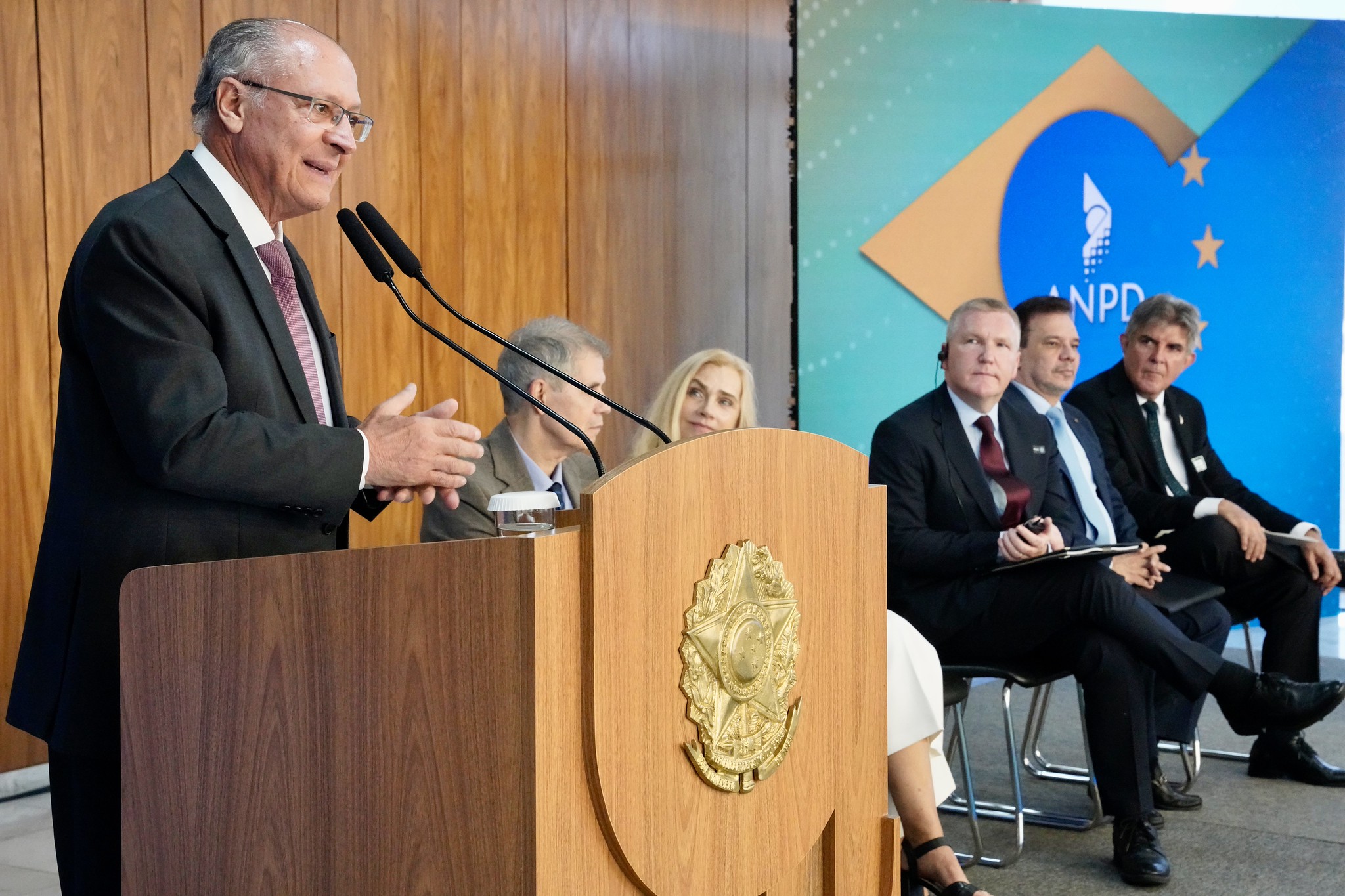
Covering 700 million people, the agreement observes the reciprocal recognition of standards for international data transfer. The acting President of the Republic and Minister of Development, Industry, Commerce and Services, Geraldo Alckmin, participated in the ceremony at Palácio do Planalto, which sealed the pact.
“The agreement will bring more legal security, make life easier for people and companies, reduce costs, improve competitiveness and encourage reciprocal investments. There is a study that indicates that digital commerce can grow by 7% to 9%, in addition to pointing out an even greater complementarity of services, bringing the European Union and Brazil closer together”, said Alckmin.
Read more: Lula criticizes US interventions at the opening of the Panama Forum
Representing the EU was the European Commissioner for Democracy, Justice, Rule of Law and Consumer Protection, Michael McGrath. He highlighted that the decision creates an area of trust resulting from years of dialogue and technical exchanges.
“Above all, it is the result of a shared conviction that, in the 21st century, protecting our citizens’ personal data is not a barrier to trade, but rather the foundation for a sustainable digital economy,” said McGrath.
Legal security
The measure has already come into force after mutual recognition. With this new legal framework, it is established that the international transfer of personal data between Brazil and the European Union has guarantees of rights protection and legal security.
Recognition by Brazil occurs through the Resolution of the National Data Protection Authority (ANPD), understanding that the European Union provides a level of protection compatible with that provided for in the General Personal Data Protection Law (LGPD). On the other hand, the European Commission understands that Brazil is also in compliance with the established standards. Only Argentina and Uruguay, in South America, had this agreement with the Europeans.
Read more: Lula criticizes US interventions at the opening of the Panama Forum
According to Planalto, regulatory standardization simplifies operations, reduces costs, accelerates business, boosts innovation projects and cooperation initiatives, mainly in the area of technology.
As highlighted, for Brazilian citizens, “recognition guarantees that their personal data, when legitimately transferred to the European Union, receives protection equivalent to that guaranteed to European citizens, with effective supervision and accountability mechanisms. In practice, this applies to the use of banking services, telephone services, digital platforms, applications and streaming services operated by companies based in the EU, guaranteeing rights such as access, correction and deletion of personal data, when applicable”, informs the Brazilian government.
“From an economic point of view, adaptation significantly reduces bureaucracy and regulatory costs for companies operating between Brazil and the European Union, by eliminating the need for additional mechanisms, such as specific contractual clauses, technical audits and complex compliance procedures”, adds Planalto.
Source: vermelho.org.br