Published 12/08/2025 11:17 | Edited 12/08/2025 11:47
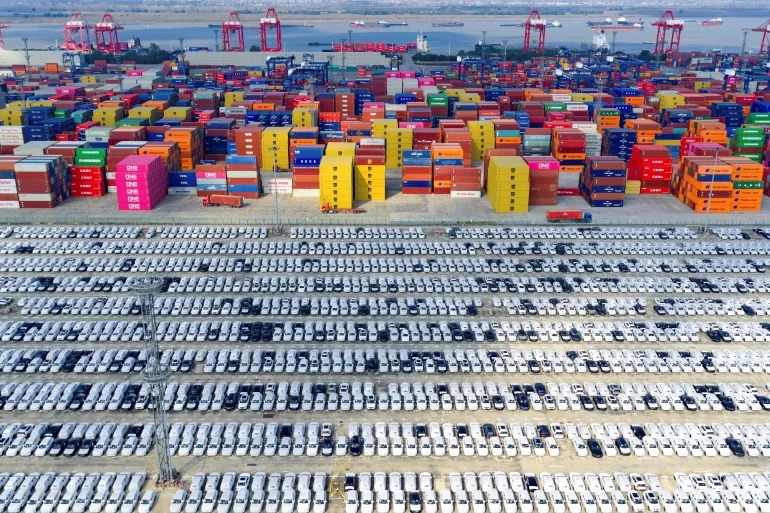
Between January and November 2025, China achieved a trade surplus of 1.08 trillion dollars, an increase of 21.7% compared to the same period in 2024, according to data released last Friday (5) by the General Administration of Customs.
It is the first time that a country has surpassed the trillion-dollar mark in just eleven months, a result that reinforces the structural strength of the Chinese economy amid the United States’ tariff escalation under the Donald Trump administration.
“Protectionism cannot solve the problems caused by global industrial restructuring, but will only worsen the international environment for trade,” said the country’s president, Xi Jiping, after the result was published.
In an interview this Monday (8), the Minister of Commerce, Wang Wentao, also commented on the result by stating that China “will continue to vigorously boost consumption and expand its high-standard openness to sustain the country’s high-quality development”.
The declaration reinforces the official diagnosis that the policy of commercial integration and strengthening of the internal market remains at the center of the Chinese strategy to overcome the international environment marked by geoeconomic disputes.
He stated that the economic strategy for 2026 combines expanded opening, stimulating the domestic market and consolidating exports, in line with the guidelines of the 20th Central Committee of the Communist Party of China.
The data shows that the expansion is supported by three central geoeconomic blocks. Trade with ASEAN — a group made up of ten Southeast Asian countries and integrated into one of the world’s most interconnected industrial chains with China — reached 6.82 trillion yuan (around US$963 billion), an increase of 8.5% in the period and reaffirmation of its role as Beijing’s main trading partner.
Relations with the countries of the Belt and Road Initiative (BRI) also registered progress, with an increase of 6% between January and November. Bilateral flow totaled 21.33 trillion yuan (around US$3.01 trillion), which represents 51.8% of all Chinese foreign trade in the period.
In practice, more than half of China’s international trade already takes place within the integration network structured by Beijing in Asia, Africa, the Middle East and part of Latin America, a movement that reinforces the geoeconomic reorientation accelerated since the beginning of the tariff dispute with the United States.
The flow with the European Union rose 5.4%, totaling 5.37 trillion yuan, around US$758 billion, even in the face of warnings from European governments about the increased presence of Chinese products in the regional market.
The combination of expanding markets in Asia, Africa, the Middle East and Europe contrasts with the 16.9 percent drop in bilateral trade with the United States.
According to Reutersthe movement has been amplified by the “trade diversion” that directs Chinese goods to alternative markets in response to the tariff barriers imposed by Trump. International demand for electrical machines, semiconductors, automobiles and high-value-added products sustained the export surge and increased the share of these segments to 60.9 percent of total foreign sales.
Source: vermelho.org.br