Published 12/02/2025 09:08 | Edited 12/02/2025 09:34
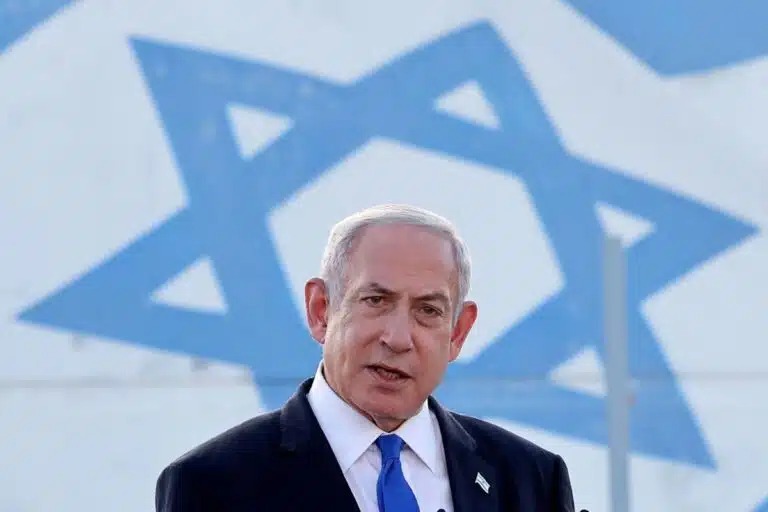
Israel’s Prime Minister, Benjamin Netanyahu, opened a political and institutional crisis by asking President Isaac Herzog to end the corruption trial against him since 2020.
The request, sent last Sunday (31) by his defense, attempts to interrupt three processes in which the prime minister is responsible for bribery, fraud and breach of trust, amid a scenario of international wear and tear, internal protests and growing instability caused by the war in the Gaza Strip.
The Presidency confirmed receipt of the request and stated that it will analyze it responsibly. In an official note, Herzog’s office declared that this was an “extraordinary request, which carries significant implications”.
The president said he understands the request “is deeply destabilizing for many people across the country” and that he will not be driven by “violent rhetoric.” Herzog stated that he will only consider the “good of the Israeli state and society”.
The initiative occurs when the trial reaches a decisive phase. After five years of hearings, the prosecution concluded its stage in the summer of 2025, and Netanyahu is undergoing interrogation in the so-called Case 4000, which investigates whether he granted regulatory benefits to the Bezeq telecommunications group in exchange for favorable coverage on the Walla portal. The prime minister denies all accusations.
Netanyahu tries to turn criminal case into national issue
In a video posted on social media, Netanyahu stated that the immediate end of the trial would help reduce internal tensions. He said the process had become “a focus of intense confrontations” between sectors of society and Israeli institutions.
He also stated that “the public interest dictates otherwise” the continuation of the trial and declared that he would prefer to prove his innocence until the end, but that “reality and national interest” would require another path.
In the request delivered to Herzog, the defense argues that the frequent hearings harm Netanyahu’s ability to govern and that a pardon would be positive for the country.
Lawyers claim that the trial would be “destroying Israel from within”. Netanyahu accuses the Public Ministry of using abusive methods and claims that there was “an attempt to find evidence to incriminate the prime minister”.
There is, however, a central element that differentiates the current case from any precedent: Netanyahu does not admit guilt.
Israel typically grants pardons only after convictions, and there is no tradition of pardons while the trial is still ongoing. The only exception occurred in 1986, in the so-called Line 300 Case, when then-president Chaim Herzog pardoned Shin Bet agents involved in the deaths of two kidnappers in advance. In that episode, those responsible had admitted their participation and the main argument was the preservation of state secrets. This is not the case with Netanyahu.
Pressure from Trump reinforces political weight of unprecedented pardon
Netanyahu’s request comes just weeks after US President Donald Trump sent an official letter to Herzog defending the pardon. Trump wrote that he considers the trial of the Israeli prime minister an “unjustified political persecution” and called on the Israeli president to end the process.
On a visit to Israel in October, the republican had already publicly defended the measure in a speech in the Israeli Parliament.
When announcing the request, Netanyahu mentioned American pressure. “President Trump called for an immediate end to the process so that together we could advance vital interests shared between Israel and the United States during a window that may not be repeated,” said the premier.
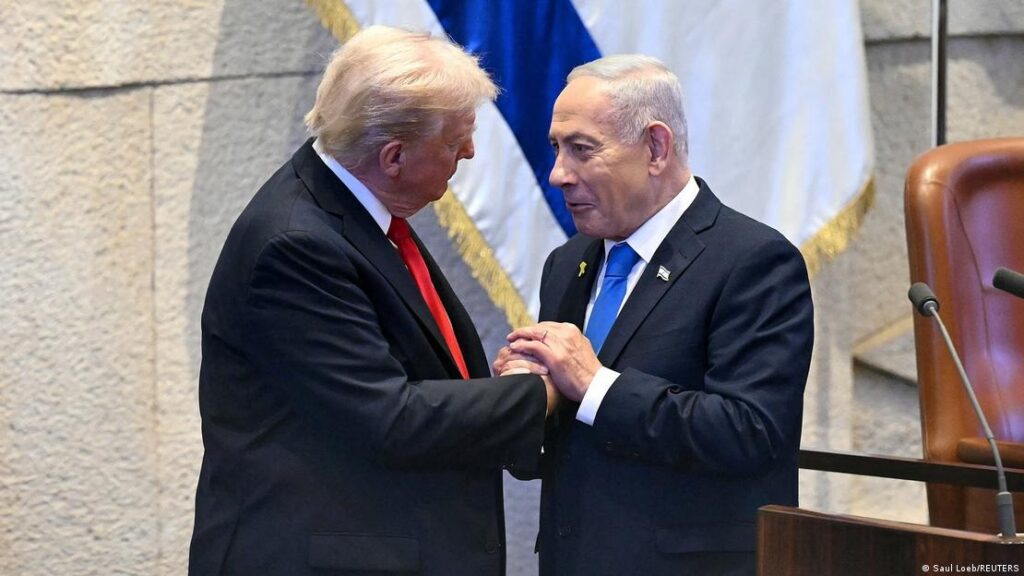
On Monday (1st), the two spoke by phone. According to the prime minister’s office, they discussed the pardon request and Trump invited Netanyahu to a meeting at the White House.
These movements are part of a strategic rapprochement between Netanyahu and Trump, which is also centered around the war in Gaza and regional negotiations on security and diplomatic agreements.
The call came hours after Trump used his Truth Social network to advocate that Israel adopt a “diplomatic” stance toward Syria.
Opposition talks about abuse of power and sees attempted judicial escape
Opposition parties reacted with criticism of Netanyahu’s request. The leader of the Democratic Party, Yair Golan, stated that “only the guilty ask for forgiveness”. He said that the trial has not collapsed over eight years and that the prime minister is trying to escape a possible conviction without taking responsibility.
Opposition leader Yair Lapid declared that “it is not possible to grant a pardon without admitting guilt and immediately withdrawing from political life”.
Former Prime Minister Naftali Bennett stated that he would support the end of the trial only if Netanyahu agreed to withdraw from politics “to get Israel out of this chaos”. According to him, this would be the only way to “rebuild the country”.
Civil groups and families of victims of the October 7 attacks also criticize the movement.
The Movement for the Quality of Government in Israel said a mid-process pardon would be a “death blow to the rule of law.” Activist Shikma Bressler declared that Netanyahu asks “for his trial to be canceled without taking any responsibility” and that the country faces “the future of its democracy”.
Families of hostages and victims of the Hamas attack expressed outrage. Einav Zangauker, mother of former hostage Matan Zangauker, promised that Netanyahu “will not be pardoned on his watch.”
She said the prime minister seeks to “evade responsibility and punishment, all in the name of remaining in power.”
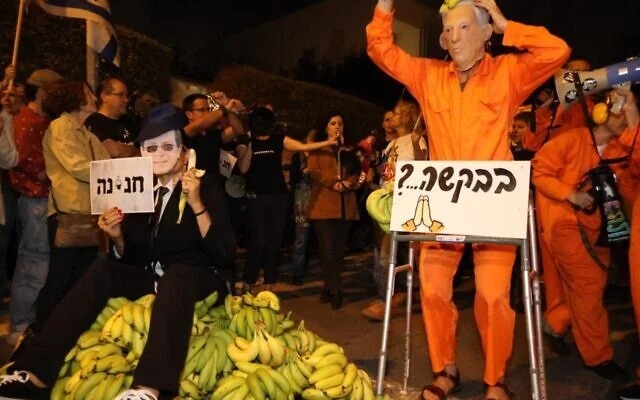
After the order was announced, thousands of people protested in Tel Aviv. Protesters wore Netanyahu and Herzog masks, orange prison jumpsuits and performed scenes with stacked bananas, criticizing the political content of the pardon.
The Brothers in Arms movement stated that Netanyahu is trying to “evade judgment under the guise of national concern” and that “those who divided the country for twenty years will not unite it now.”
Polls show the country is divided. A Kan TV survey indicates that 43 percent of Israelis are against the pardon and 38 percent are in favor. Among Arab voters, 69 percent reject the measure. Among Likud voters, Netanyahu’s party, support reaches 72 percent.
Herzog will be pressured for weeks; Supreme Court may block decision
Despite his ceremonial role, Israel’s president has the constitutional authority to grant pardons. However, experts say an early pardon would be unlikely to withstand Supreme Court scrutiny.
The court could understand that the pardon violates the principle of equality before the law and that Netanyahu does not meet minimum criteria, such as assuming responsibility.
Herzog has indicated that he does not intend to act quickly. Opinions from the Pardons Division of the Ministry of Justice should be produced in the coming weeks. The analysis can take up to two months.
If the president decides to grant the pardon, the signature of the Minister of Justice will be required. The State Attorney General’s Office must also comment.

Behind the scenes, government and opposition interlocutors discuss the possibility of an agreement that includes opening a commission of inquiry into the failures of October 7th and suspending parts of the judicial reform promoted by the right-wing coalition.
Lawmakers say no progress will be possible if Netanyahu insists on remaining in office as he seeks to end his own trial.
Netanyahu participated in a new hearing this Monday. He argued with prosecutor Yehudit Tirosh, who accused him of lying when he denied giving interviews to the Walla portal. The prime minister responded that the prosecutor “lied throughout this entire process”. Case 4000 remains the most sensitive axis of the accusation.
The court’s work takes place in parallel with the conflict in Gaza, where more than 68,000 Palestinians have been killed, according to local authorities.
The conduct of war became part of political calculations. Analysts point out that Netanyahu faces pressure to remain in power, as international arrest warrants were issued against him and his former Defense Minister Yoav Gallant by the International Criminal Court in November 2024.
As the process progresses, the perception grows that the pardon request is less a legal gesture and more an attempt at political survival.
At the heart of the debate is the question of whether President Herzog will allow a sitting prime minister to end his trial without admitting guilt and without stepping down from office, something unparalleled in the country’s history.
Source: vermelho.org.br