Published 11/19/2025 11:38 | Edited 11/19/2025 18:53
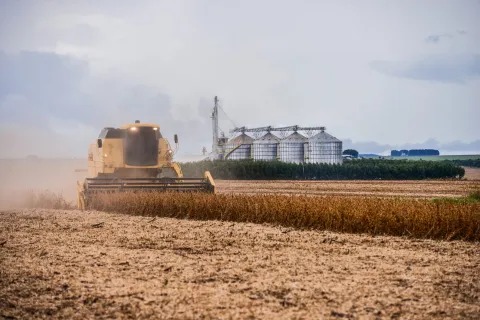
Farmer Franklin Carmack, from Tennessee, divides his days between farming and odd jobs outside the farm. The fifth generation of the family on the same piece of land, he sells t-shirts, drives trucks and repairs boats to try to sustain the property created at the end of the 19th century.
The improvised routine is already taking its toll. Carmack takes four pills a day to control his high blood pressure and says he lives with the fear of being the family member who will interrupt a story that began at the end of the 19th century.
“What will be left in a year, two years? Am I going to be responsible for ending something that started in the late 1800s?” he told CBS.
Carmack is no exception. Farmers across the country report the combination of rising costs, depressed prices and uncertainty brought on by U.S. trade policy.
Data from the Department of Agriculture shows that major crops — corn, soybeans, wheat and cotton — have not posted consistent profits since 2022, while inputs such as seeds, fertilizers, parts and fuel have become more than 30% more expensive over the past five years.
The new round of tariffs imposed by the Donald Trump administration has worsened the crisis in the United States’ countryside and pushed farmers into a combination of losses, debt and side jobs, a scenario that is already driving bankruptcies and pressure on mental health in rural regions.
Financial pressure has pushed producers to extreme measures. Carmack and friend Jeffrey Daniels, who also grows cotton, soybeans and corn, produced 250 T-shirts at $35 each to try to offset crop losses.
The effort yielded little: combined, the two estimate losses of US$800,000 in 2025.
The deterioration of accounts occurs while farmers face high interest rates, weakened international demand and a drop in the price of cotton, impacted by the advance of synthetic fabrics. “Morale in the industry is the lowest I’ve ever seen. Everyone is on edge,” Carmack said.
In the same period, the instability generated by trade disputes worsened uncertainties. Tensions with China had already been eroding prices since the Biden administration.
In 2025, the new round of tariffs adopted by Donald Trump brought the biggest shock to the sector, increasing barriers, halting sales and leaving producers without a planning horizon.
Bankruptcy, mental health and the impact of tariffs
The economic scenario has been accompanied by prolonged social effects. Agricultural bankruptcies grew 57% in the first half of 2025, according to federal data.
In some rural counties, community groups report increased requests for psychological help and a higher incidence of emotional crises among farmers. In Missouri, the organization Shelby County Cares says it has recorded more emergency calls and more visits since the beginning of the year.
The director, Jolie Foreman, states that there is only one therapist for 6 thousand inhabitants in the region and reports personally knowing producers who have taken their own lives.
Her husband’s father, a farmer since the 1970s, has already lost three family members to suicide. CDC data indicates that the rate among farmworkers is three times higher than among the general working population.
Tariffs have deepened this situation. Soybeans, the largest US export crop, generated almost US$25 billion last year, and China was the main buyer.
In May, Beijing completely suspended purchases of American soybeans in response to the Trump administration’s tariffs, halting sales and leaving stocks stranded. “Any part of the sprayer that comes from China has a tariff. And this is passed on to us immediately”, said Daniels.
Although Trump announced an annual deal with President Xi Jinping and promised $13 billion in federal aid, producers say the package does not change the fundamentals of the crisis.
“It will help pay some bills, but it doesn’t solve anything. It’s a band-aid when we need stitches,” said Carmack.
Even among supporters of the former president, a feeling of frustration is growing. Agriculture-dependent counties gave Trump about 80% of the vote in the last election. But, pressured by the current situation, farmers report that they have taken complaints to Republican politicians at public meetings and demanded alternatives.
“A lot of people feel disappointed. Maybe there is a method behind all this, we don’t know yet,” said Daniels.
Carmack says he is willing to show his reality to the president. “I would show him the routine: cleaning equipment, dispatching trucks, running after bills. Then I would put a stack of bills in his hand and show him how much I get for the harvest. He’s an intelligent man. It wouldn’t take him five minutes to realize that this isn’t going to work.”
Source: vermelho.org.br