Published 12/11/2025 15:47 | Edited 11/13/2025 16:58
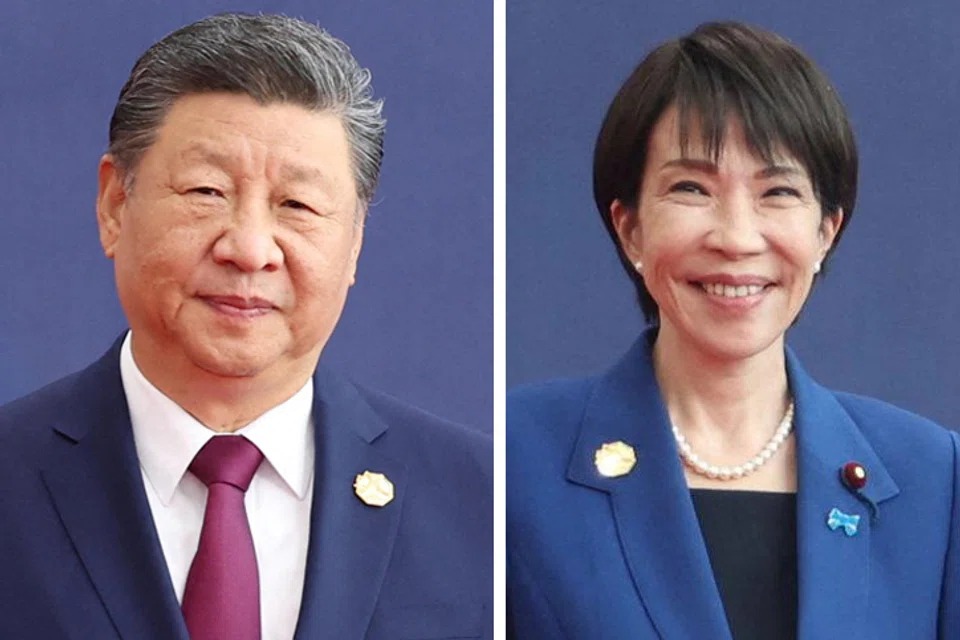
China expressed this Wednesday (12) “strong dissatisfaction and firm opposition” to the statements made by Japanese Prime Minister Sanae Takaichi, who linked the defense of Taiwan to Japanese national survival.
Beijing considers the speech to be “gross interference in China’s internal affairs” and a direct violation of the one-China principle, the basis of diplomatic relations between the two countries since the normalization of relations in 1972.
The crisis comes less than a month after Takaichi took office, and represents the worst Sino-Japanese tension since 2021.
At a press conference, the spokesperson for the Taiwan Affairs Office of the State Council, Chen Binhua, stated that “the world only has one China and Taiwan is part of China.”
He recalled that Japan “committed countless crimes against the Chinese people during its colonial rule over Taiwan” and that China “restored the administration of the island 80 years ago” after defeating Japanese aggressors.
“If anyone tries to challenge China’s fundamental interests and obstruct Chinese reunification, the Chinese government, the Chinese people and the military will never accept or tolerate such an act,” he warned.
Chen urged Japan to “reflect deeply on history, learn from it and strictly adhere to the one-China principle and the spirit of the four political documents” that govern bilateral relations.
He also warned officials from the ruling Taiwan Democratic Progressive Party in Taipei that “any plan to separate Taiwan from China through external forces is doomed to failure.”
The Chinese response was amplified by state media. The Yuyuan Tantian blog, linked to state broadcaster CCTV, called Takaichi a “political opportunist” and claimed that she was “inflating the Taiwan issue to strengthen the control of her minority government and justify the increase in the Japanese military budget”.
The text, published by the Yuyuan Tantian blog, linked to CCTV, mocked the prime minister by questioning whether “Takaichi had been kicked in the head by a donkey”, an expression used to describe her as a fool.
The publication also stated that, if he continued “overstepping the limits and talking nonsense”, he might “have to pay a price”.
The reactive tone was followed by a publication by the Chinese consul general in Osaka, Xue Jian, who commented on the prime minister’s speeches on the X network (formerly Twitter) and wrote that “the dirty neck that has stretched out must be cut without hesitation”.
The post was deleted, but it sparked protests in Tokyo. Parliamentarians from different persuasions classified the text as “extremely inappropriate”, and Chief Cabinet Secretary Minoru Kihara stated that Japan had asked Beijing for “appropriate measures” against the consul general.
The Chinese Foreign Ministry, in turn, defended the diplomat and reaffirmed, through spokesman Lin Jian, that Takaichi had made “blatantly wrong comments about Taiwan”, asking “where exactly Japan intends to take its relations with China”.
During a parliamentary session on Friday (7), Takaichi stated that a Chinese offensive against Taiwan would constitute a “situation of threat to the survival” of Japan, an expression used by the 2015 National Security Law to allow the Self-Defense Forces to operate outside Japanese territory in cooperation with allies.
The prime minister refused to back down, claiming her words were “hypothetical” but “consistent with the Japanese government’s position.”
Since taking office, Takaichi, with a nationalist profile and close to former Prime Minister Shinzo Abe, has defended the increase in military spending to 2% of GDP and the expansion of “counterattack” capabilities, with long-range missiles.
The speech about Taiwan breaks with the strategic ambiguity that guided Sino-Japanese relations and was received in Beijing as a sign of a qualitative change in Japanese policy, bringing the country closer to the rhetoric of military containment promoted by Washington.
Security experts say the diplomatic escalation reflects structural tensions between Asia’s two largest economies.
Analyst Yasuhiro Kawakami of the Sasakawa Peace Foundation told the Washington Post that he did not believe Takaichi intended to “magnify the incident” but warned that “pushing Japan further into the American camp is not in China’s interests, and Beijing knows this.”
Professor Ren Xiao, from Fudan University, told the newspaper that the Chinese reactions “reflect the deep distrust towards the new Japanese leader” and noted that “emotional and inflammatory comments will only worsen the situation”.
According to him, “if Takaichi refuses to read the environment and doubles down on his unpleasant comments, it is clear that the Chinese side will not back down either.”
The incident occurs just days after the first meeting between Takaichi and President Xi Jinping, on the sidelines of the APEC summit in South Korea, when both had promised to seek a “constructive and stable relationship”.
Now, the confrontation over Taiwan reopens historical wounds and calls bilateral dialogue into question.
For China, the Japanese statements break the tacit post-war pact, according to which Tokyo should remain neutral in disputes over Chinese sovereignty. By invoking the memory of Japanese colonialism and reaffirming the one-China principle, Beijing reinforces its historical legitimacy and the defense of territorial integrity in the face of new military and political pressures from the Washington-Tokyo axis in the Indo-Pacific.
Source: vermelho.org.br