Published 11/06/2025 10:45 | Edited 11/06/2025 12:33
The state elections held on Tuesday (4) confirmed a broad victory for the Democratic Party and imposed a shock on the political structure of the Donald Trump government.
Simultaneous Democratic victories in New York, Virginia, New Jersey, California, Georgia, Mississippi and Minnesota revealed an electorate willing to react to the White House’s growing authoritarianism and deteriorating purchasing power under the second Republican term.
The combination of persistent inflation, falling real income and the prolonged closure of the federal government (shutdown) — which paralyzed essential public services — converted social discontent into electoral repudiation, eroding Trumpism’s support base in the urban and suburban regions of these locations.
In every vote this Tuesday, Democrats won in style, from the highest profile races to local races.
Counties that had tilted to the right in 2024 have swung back to the left, and the suburbs that fueled Democratic victories in the first Trump administration have returned with a vengeance.
According to the PoliticoDemocrats “improved their margins even among voters without a college degree”, which indicates a social realignment around the cost of living issue.
The North American press treated the result as a “political shock” within the government. Reuters highlighted that “the electorate showed growing dissatisfaction with Trump’s external focus, while families’ daily lives continue to be marked by rising prices and cuts in public services.”
Already the New York Times pointed out that “opposition to Trump not only survived the former president’s return, but also reconfigured itself around new state leadership.”
At the same time, the result exposed two simultaneous fissures: one within the Republican Party, which tries to hold candidates and campaign tactics accountable but avoids blaming Trump, and another within the Democratic Party itself, which begins to experience a dispute between the emerging socialist left and the institutional center that seeks to reconsolidate power.
One of the most visible signs of this new stage is the election of Zohran Mamdani in New York, seen as a milestone in the rise of the organized left and the strengthening of a popular field post-2024.
Inside the White House, the atmosphere was one of embarrassment and denial. Trump reacted to the defeats by trying to minimize the political impact, stating on his social media — in capital letters — that “Trump was not on the ballot, and the shutdown were the two reasons why the Republicans lost the election.”
In a meeting with Republican senators, he also stated: “They say I wasn’t on the ballot and that was the biggest factor. I don’t know if it’s true, but I’m honored that they say that.”
Behind the scenes, allies recognized that the president was distancing himself from the population’s most immediate economic concerns. An advisor interviewed by Politico stated that “people don’t feel like he kept his promises. He won by promising to reduce costs and put more money in people’s pockets, but that didn’t materialize.”
Other advisors tried to convince him to focus his speech on domestic issues, such as inflation, income and jobs — areas in which criticism of the government intensified.
Despite internal pressure, Trump preferred to attribute the defeats to external factors, accusing California of “fraud” in the plebiscite that expanded Democratic representation and threatening to cut federal resources to New York after the victory of socialist Zohran Mamdani.
The stance reinforced the perception, inside and outside the Republican Party, that the president remains more concerned with preserving his own political capital than with reorganizing the government in the face of the crisis.
California: Gavin Newsom Leads Structural Response to Trumpism
The victory in California was considered the most strategic of the electoral cycle. Governor Gavin Newsom managed to approve Proposition 50, a measure that returns the power to redraw electoral districts to the Legislature — a change that should guarantee up to five new Democratic seats in the House of Representatives in 2026, reversing part of the advantages created by Republican redistricting in Texas (supported by Trump to be able to consolidate districts in the national dispute).
The result was not predictable. Internal polls showed just 38% support for the measure in September, but Newsom turned the campaign into a referendum against Trump.
“Californians felt empowered. It was something to do, not just say,” said the governor.
For analysts New York Timesthe victory transformed California into “an institutional counterpoint to the White House”, and consolidated Newsom as a strong name for the 2028 presidential race.
O Politico noted that the governor “used Trumpism as a contrast in management, not ideology: he promised efficiency, inclusion and stability, instead of confrontation.”
The progressive press highlighted the symbolic nature of the vote: Proposition 50 represents a structural realignment of the electoral system and reinforces the West Coast’s protagonism in a time of political polarization.
However, Newsom’s victory reflects the effort of the Democratic establishment to reoccupy the political center, presenting itself as the “rational” alternative to Trump’s economic disorder — a liberal and business face that, although resisting the extreme right, preserves the logic of capital.
Another facet of Newsom’s victory is the dispute with the party’s left wing, rejuvenated by Mamdani’s victory in New York. The new mayor of the richest city in the country is a supporter of Senator Bernie Sanders and Representative Alexandria Ocasio-Cortez, considered in the country as left-wing radicals.
Other Democratic victories and the national mosaic of reactions
In Virginia, Democrat Abigail Spanberger won the largest electoral margin for a Democratic governor since 1961, beating Republican Winsome Earle-Sears by more than ten percentage points.
Additionally, Democrats flipped 13 seats in the House of Delegates and won the race for Attorney General with Jay Jones.
“Virginians have been loud and clear that they are tired of the Trump administration,” said strategist Christina Freundlich, who worked on the state campaign.
In New Jersey, fellow Democrat Mikie Sherrill won a sweeping victory over Jack Ciattarelli, turning the election into a direct referendum on Trump. Sherrill won 26% more votes than the Democratic performance in 2021, and his campaign focused on the federal government’s defunding of the Gateway Tunnel, vital to millions of workers.
“Trump gave Sherrill a political gift,” quipped the New York Times.
Democrats still won in Georgia — where they regained two seats on the Public Utilities Commission, breaking a fast of almost two decades — and in Mississippi, by breaking the Republican supermajority in the state Senate.
In Minnesota, the special elections maintained the balance: a victory for each party, but with a side effect that gave Republicans a temporary advantage in the state House.
This set of results, according to the Politicoshows that Democratic victories were neither isolated nor symbolic, but “part of a national trend that combines economic discontent, rejection of Trumpism and reorganization of the opposition’s social base.”
Within the Democratic Party, a new clash in the making
If the result encouraged the progressive camp, it also opened an internal dispute over the direction of the Democratic Party.
The simultaneous victories of Zohran Mamdani, in New York, and moderates such as Spanberger, Sherrill and Newsom marked the beginning of a clash between two visions of the future: one, socialist left, linked to popular and union mobilization; the other, liberal and institutional, focused on market stability and centrist discourse.
“The blue tide did not unify the Democratic Party — on the contrary, it opened space for a new internal conflict”, assessed the New York Timesin an editorial published on Wednesday (5).
The analysis points out that the acronym “has not yet consolidated a coherent political identity” and predicts that this tension is likely to intensify until the 2026 legislative elections.
While Mamdani represents the impulse for renewal — supported by Bernie Sanders, Alexandria Ocasio-Cortez and the Communist Party of the USA —, Newsom and Spanberger project themselves as faces of the resumption of institutional governance.
The result is a victorious but fragmented coalition, where the programmatic consensus is still in dispute.
This divergence expresses the confrontation between the two political lines within the North American Democratic camp: on the one hand, the one that seeks to recover the legitimacy of capital under a progressive veneer; on the other, the one that tries to build popular democracy as a response to the precariousness and social war promoted by Trumpism.
Republicans are divided and spare Trump from defeat
Among Republicans, election night generated discomfort and recriminations. According to the New York Timesthe party leadership blamed the candidates, the government shutdown and the lack of economic focus, but avoided mentioning Trump as responsible.
House Speaker Mike Johnson even stated that “the continuity of the presidential agenda depends on maintaining control of Congress”, and revealed that Trump promised “more involvement in rallies and fundraisers” next year.
Other government allies advocated a change of tone. Former White House strategist Steve Bannon told Politico that Trump needs to “double and triple down on his populist agenda,” while Vice President JD Vance declared that “it’s time to focus on the domestic front.”
Vivek Ramaswamy, billionaire and Republican and Trumpist donor, in a video published on social media, warned: “Our side needs to talk about accessibility. Making the American dream possible, reducing costs.”
Still, Republican analysts admit the problem runs deeper.
Trump’s approval rating has fallen to 37%, and more than 60% of voters disapprove of his handling of the government shutdown.
Conservative commentator Erick Erickson wrote on X (formerly Twitter) that “the president and his base have embraced the same policies that raised costs and cannot admit it.”
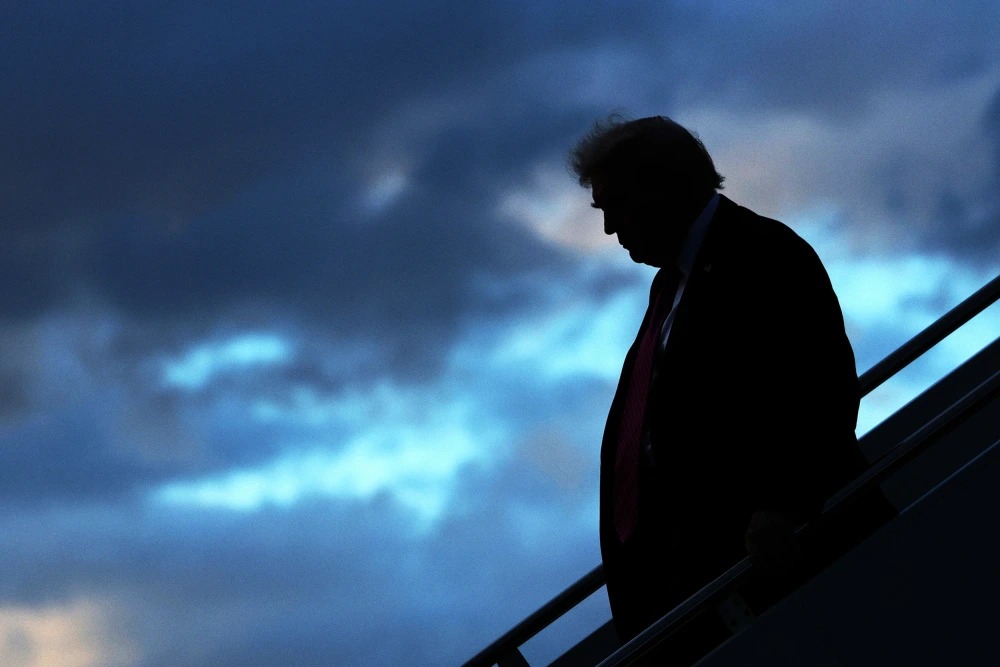
“By all accounts, Trump was not on the ballot, but his shadow weighed more than ever on the Republican defeat,” summarized the New York Times.
In the final balance, the party that won the White House in 2024 now finds itself divided between blind loyalty to the leader and the fear of losing local power. Trumpism, previously synonymous with mobilization, is beginning to become an electoral burden.
Source: vermelho.org.br