Published 03/11/2025 15:35 | Edited 11/03/2025 16:16
Since gaining independence in 1975, the Mozambique Liberation Front (Frelimo) has been leading the country, aiming to build a prosperous, fair and egalitarian nation. Since then, many advances have been made in the social sphere. Today, one of the main obstacles is the reconstruction of the country, after the serious demonstrations resulting from the right-wing action in last year’s presidential elections.
After the re-election of the then Frelimo candidate and now president Daniel Chapo, the result was questioned by the right-wing opposition party, Podemos — whose candidate was Venâncio Mondlane —, along the lines of what Brazil and other countries have seen happen in recent years.
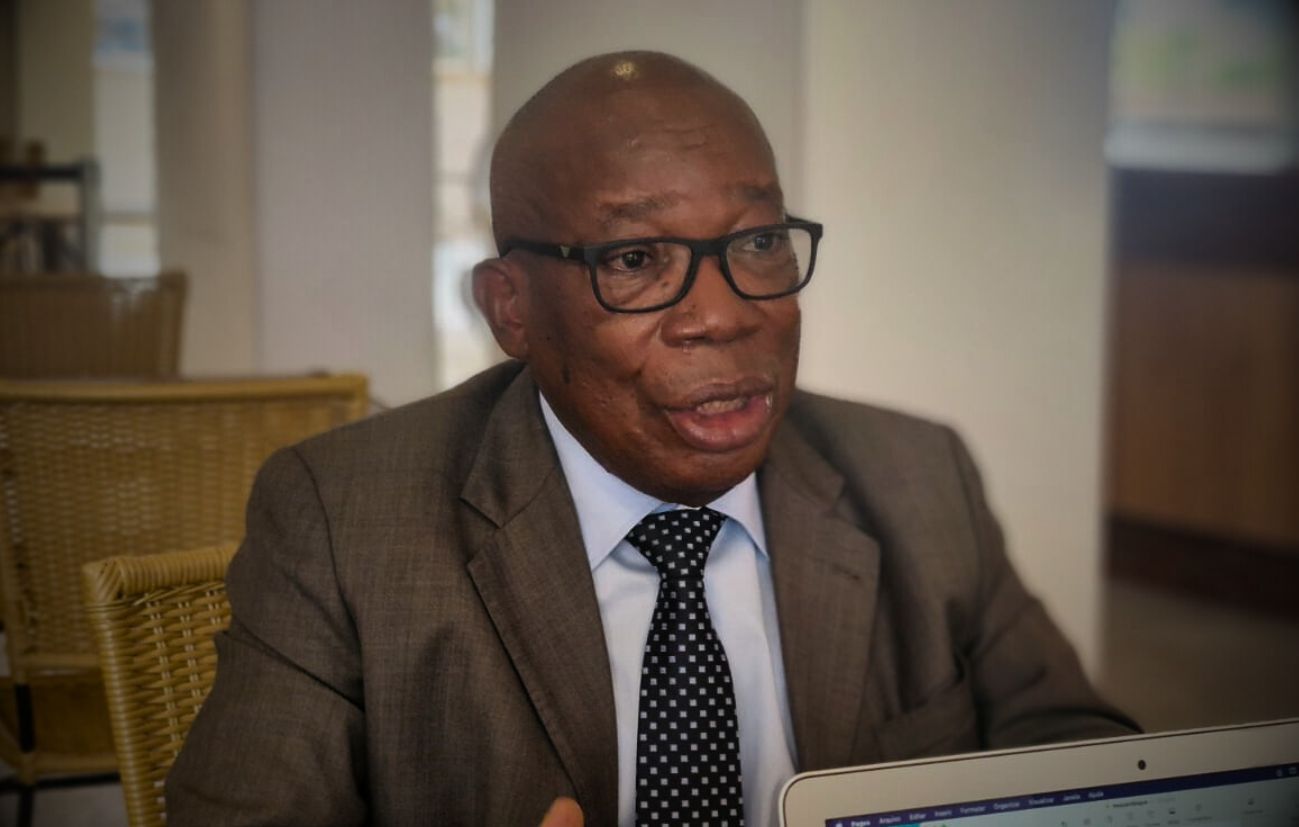
“Neocolonialism is our enemy as always — and I’m not talking about the Portuguese people, but about the system. This system has not ended. What Venâncio wanted to do was what happened in Brazil, where they tried to discredit President Lula’s victory. This has been happening in several countries; it is a way of destroying democratically elected governments, to really impose their ideas”, explains Filipe Chimoio Paunde, from the Frelimo leadership, in an interview with Red Portal.
Paunde participated in the 16th PCdoB Congress, held in October, in Brasília. “We came at the invitation of our brothers from the Communist Party of Brazil, because we know that it fights for the well-being and progress of the people and for non-discrimination”, he highlighted.
In this conversation, he talks about what the months were like after the wave of demonstrations that destroyed the Mozambican economy and increased poverty, the main measures that Frelimo took to rebuild the country, the actions of the right to put an end to popular and left-wing governments and the admiration of Mozambicans for Lula.
Check out the main excerpts below.
Attack on Mozambican democracy
“As always, we carried out a democratic process, with free and fair elections. One of the candidates was Venâncio Mondlane, from Podemos, who for the first time contested the elections and was not well structured in the country. Still, and with only 10% of the votes counted, the candidate called a press conference to say that he had won the elections.
We continued the process and, when it ended, the country’s electoral bodies — including the National Commission, a political body with representation from several parties with seats in the country’s legislature — concluded that there was no doubt about Frelimo’s victory, with 78% of the votes. The other parties, including Podemos, together had 22%.
However, candidate Mondlane soon said that he did not agree with that result and decided to lodge a complaint with the Constitutional Council, which then asked him to present the voting forms he had. And that’s when the falsehood was caught: most of these bulletins were repeated. It was thus proven that Mr Venâncio Mondlane had not been the winner, but our president Daniel Chapo, from Frelimo”.
Demonstrations and damage to the country
“Organizations opposed to progressive parties, allied with imperialism, were with Venâncio. They organized protests with a lot of resources so that the protesters could eat and move around.
These demonstrations were quite shocking and caused more economic and social damage than the 16 Years War (Mozambican Civil War, which took place between 1977 and 1992) because they destroyed many companies, commerce and factories. As a consequence, many Mozambicans became unemployed and many investors and businesspeople were harmed. The country was completely destroyed.”
Neocolonialist action
“Neocolonialism is our enemy as always — and I’m not talking about the Portuguese people, but I’m talking about the system. This system is not over. What Venâncio wanted to do was what happened in Brazil, where they tried to discredit President Lula’s victory. This has been happening in several countries; it is a way of destroying democratically elected governments, to really impose their ideas.
These regimes do not want equality, social justice, progress, in short, a fairer country. The poorer the people, the happier they are. The crisis we are experiencing in Mozambique is part of this type of process”.
Resumption
“Faced with this scenario, after President Daniel Chapo took office and the new government was installed, there was a need to create a platform, which we called Inclusive National Dialogue, whose foundation is the fact that the country is above all political parties. And I think this helped a lot, because from then on the demonstrations began to wane. However, we still suffer its effects today.
To help overcome poverty, one of President Chapo’s priorities was to introduce a new philosophy, let’s say, citizen financing. Thus, the Local Development Fund was created, a type of financing that comes directly from the government for citizens to open their businesses; 60% of this fund goes to youth — who suffer most from unemployment — and women.
We are also taking actions to improve infrastructure and we are going to create the development bank because the banks that exist in Mozambique are foreign. Loan rates are unbearable. We want a national, state-owned bank, where rates are affordable, where Mozambicans can borrow and develop. Because the more Mozambicans can have economic activities, the more the country will grow and with that, we can continue to improve the living conditions of our population”.
Relationship between Frelimo and the population
“Frelimo enjoys a lot of popularity because after independence, in 1975, many advances were made. Before, 98% of Mozambicans did not know how to read and write. Then, Frelimo introduced the Literacy and Adult Education System, carried out campaigns and expanded teacher training, with the creation of the Instituto Superior Pedagógico and, later, the Pedagogical University (today, the illiteracy rate is around 38%). Before, there was only one university and today we have more than 37 higher education institutions.
Another important point is that before Frelimo governed the country, cities did not have an energy network, including the capital, Maputo — the Frelimo government introduced it. In relation to water, a large supply program was also established for regions where there was no piped water, in addition to the opening of several wells. These are basic things that didn’t exist before.
Likewise, we invested in health, with the expansion of training from basic and secondary nurses to doctors. And as a result of this, we are proud to say that today maternal and child mortality has dropped substantially and life expectancy in Mozambique has gone from 45 to 70 years. Before, we had 9.5 million inhabitants and today we have more than 32 million. The population knows that all of these were Frelimo’s achievements.”
Relations with Brazil
“We have very friendly relations with Brazil. In President Lula’s first administration, Brazil’s investment in Mozambique was very large. Mozambicans and I are fans of President Lula because he is our voice in the world, not just for Brazilians.
Lula defends the interests of those who have no say, the interests of those who are poor. In Brazil, more than 33 million people were lifted out of poverty. This is a great indicator of a statesman who strives for promoting the well-being of his citizens”.
Source: vermelho.org.br