Published 10/31/2025 14:13 | Edited 10/31/2025 14:52
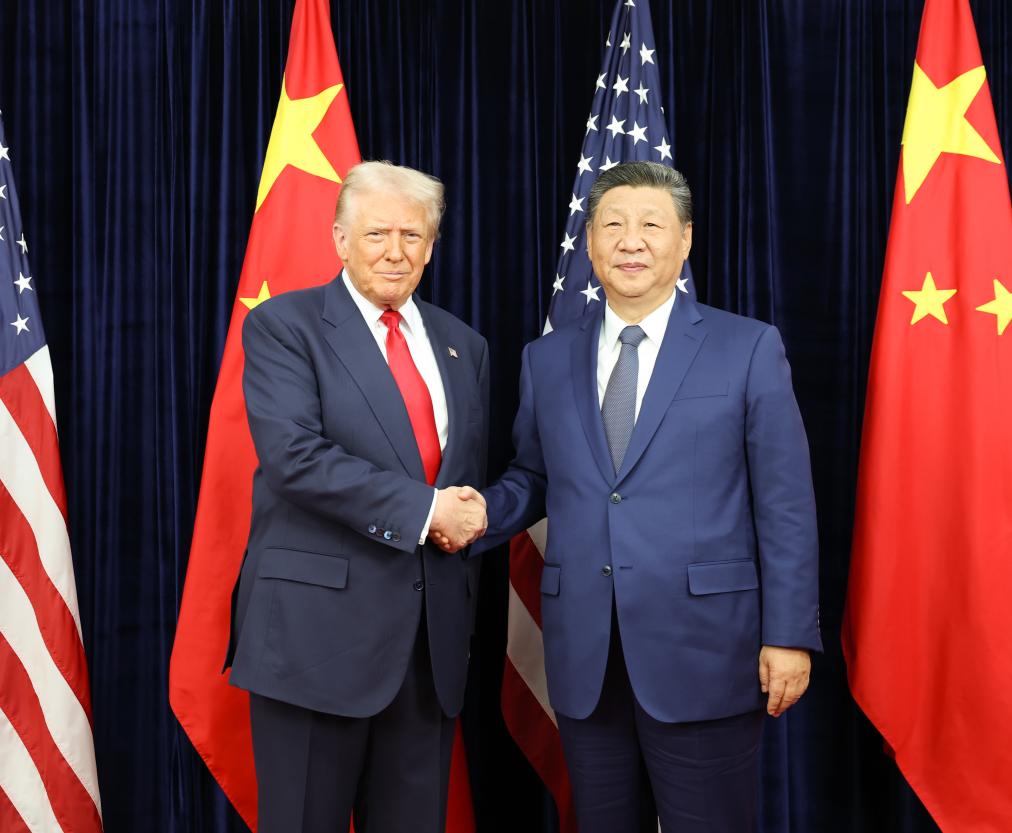
The meeting between Donald Trump and Xi Jinping, in Busan, South Korea, this Thursday (30), produced images of conciliation and gestures of apparent reciprocity. But, behind the photos, the balance was asymmetrical.
China achieved a reduction in tariffs, suspension of sanctions and postponement of technological controls, while the United States took its victory speech for domestic consumption.
The outcome of the meeting — followed, the following day, by Xi’s isolated projection at the APEC summit in Gyeongju — consolidated the reorganization of the economic and diplomatic board: Beijing once again set the pace of the dispute and Washington began to react.
The agreement calls for a reduction in tariffs from 57% to 47%, the suspension of port fees on Chinese ships and the postponement of export restrictions that would prevent Beijing companies from accessing semiconductors and critical technologies.
In return, China will resume purchases of soybeans and suspend, for a year, restrictions on exports of rare earths, minerals that account for 90% of the world’s supply and are essential for the defense, energy and technology sectors.
In practice, the truce restores the scenario prior to the tariff escalation — but with Beijing in a more solid position.
“The Chinese have become increasingly bold in exerting influence and are happy to pocket all of the US concessions,” he said. New York Times Julian Gewirtz, former White House China policy adviser.
Meanwhile, Trump celebrated a truce with his electoral base. “Our farmers will be very happy! I would like to thank President Xi for this!”, wrote the Republican in Truth Social, referring to the resumption of soybean exports and Chinese promises to contain the flow of fentanyl precursors.
The American press classified Xi’s strategy as “the art of making Trump appear victorious, emerging stronger”. For economist Jonathan Czin, from the Brookings Institution, the agreement “can be described as tactics without strategy” — a gesture by Trump to show initiative, without long-term objectives.
“Instead of dealing with structural issues, China has orchestrated a game of whack-a-mole that forces Washington to react, from one issue to another,” he said.
The calculated use of rare earths was the centerpiece of this movement. In October, China had imposed broad restrictions on ore exports, signaling that it could paralyze entire production chains if the US tightened sanctions. The gesture prompted Washington to back down.
After the meeting in South Korea, the Chinese Ministry of Commerce announced the suspension of restrictions for one year, projecting rationality and control, while maintaining the threat as an instrument of deterrence.
“After Trump started his trade war, China was the only country that responded in kind,” noted Zhu Feng, professor of international relations at Nanjing University. NOW.
“Beijing’s biggest victory may be making Washington think twice before imposing new measures,” said the professor.
The calculus of deterrence and the power shift
The annual truce, which could be reviewed in 2026, gives time for China to move forward in strengthening its autonomous production chains.
The Chinese Communist Party’s new five-year plan prioritizes self-sufficiency in semiconductors and clean energy, with investment in national technology and regional partnerships that reduce dependence on North American inputs.
For Scott Kennedy, from the Center for Strategic and International Studies, “Chinese threats have led the US to retreat. Xi has created a safer space for China’s economic system and its efforts to achieve greater global leadership.”
The agreement also suspended the expansion of the lists of Chinese companies banned from operating with US technology, which could reach up to 20,000 companies. The maneuver is interpreted by analysts as the second American retreat in less than two years, reinforcing Chinese bargaining power.
“Maybe this card won’t always work, but for now, we’ve hit America’s soft spot,” said Tu Xinquan, a former adviser to China’s commerce ministry.
The day after the agreement was announced in Gyeongju, Trump had already left the country and Xi assumed the role of the sole head of a superpower at the Asia-Pacific Economic Cooperation (APEC) summit.
In his opening speech, he defended regional integration and issued an indirect warning to Washington and its allies. “We must oppose protectionism, resist one-sided bullying and prevent the world from returning to the law of the jungle,” he said.
Xi also called on Asian economies to “extend chains rather than break them,” criticizing Western attempts to move factories out of China. In bilateral meetings, he offered South Korea and Japan cooperation in energy and infrastructure.
With Canada and Australia, it discussed investment mechanisms in green trade.
The Chinese leader took advantage of the forum to promote the New Silk Road (Belt and Road Initiative) — a global infrastructure and trade plan led by Beijing —, in addition to highlighting the RCEP (Regional Comprehensive Economic Partnership) and the CPTPP (Comprehensive and Progressive Agreement for Trans-Pacific Partnership).
These last two blocks bring together countries from Asia and the Pacific and symbolize the Chinese project of regional economic integration, which seeks to reduce dependence on commercial networks dominated by the United States.
Silence as a method
The outcome of Xi Jinping’s trip to South Korea and the APEC summit left a clear message: China no longer needs to win disputes with announcements or ruptures. His strength today lies in managing time, controlling the discourse and transforming each impasse into a tactical advantage.
By allowing Trump to declare victory, Beijing has consolidated a more stable and predictable space of power, while the United States continues to oscillate between impact measures and improvised reviews.
Chinese diplomacy operates with the calculation of those who see global politics as a marathon, not a rally.
Xi left Asia without spectacular gestures, but with a truce tailored to Chinese interests and a network of economic alliances that is quietly expanding. Trump came home with headlines; Xi came back with results.
And, in the balance between form and substance, it is the country that says less that seems to decide more.
Source: vermelho.org.br