Published 10/24/2025 10:29 | Edited 10/24/2025 10:50
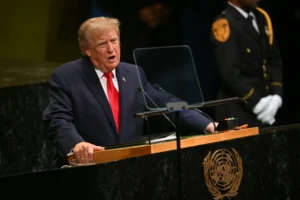
The President of the United States, Donald Trump, announced this Thursday (23) the break of all trade negotiations with Canada, one of his main partners and historical ally, after the broadcast of a video produced by the government of the Canadian province of Ontario in which former president Ronald Reagan appears criticizing tariffs.
The Republican classified the material as “false” and “outrageous”, stating that it was an attempt to interfere in the American Supreme Court’s decision on the legality of its tariffs.
“Based on your outrageous behavior, all trade negotiations with Canada are terminated,” the president wrote on Truth Social. The decision marks yet another episode of instability in Trump’s foreign policy, which has alternated gestures of cordiality and abrupt ruptures with historical allies.
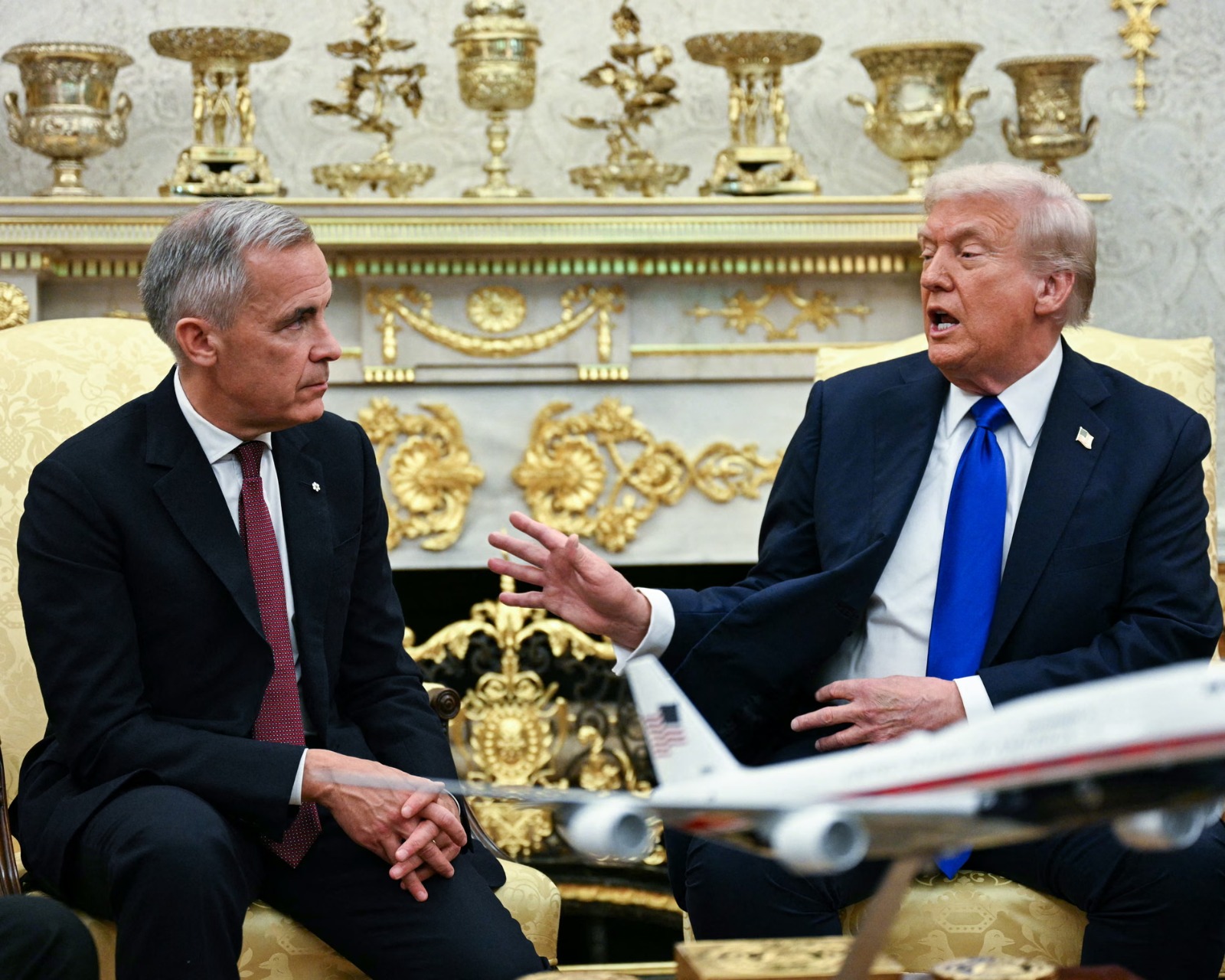
Two weeks earlier, the president had received Canadian Prime Minister Mark Carney at the White House and spoke of “mutual love” between the countries.
The sudden break reinforces the perception that the United States’ commercial strategy is guided by impulses and electoral interests, rather than by consistent diplomatic or economic criteria.
Since the beginning of the year, Trump has imposed 35% tariffs on Canadian products, as well as 50% surcharges on metals and 25% on automobiles, measures that have hit the economy of Ontario, the industrial province responsible for much of the country’s steel and vehicle production, hard.
The Canadian government retaliated with its own tariffs, later partially suspended, in an attempt to negotiate an agreement for the steel and aluminum sectors. The tariff escalation has brought bilateral relations to their worst moment in decades and comes amid the review of the North American free trade agreement (USMCA), scheduled for 2026.
The video that led to the breakup is about a minute long and was produced by the Ontario government, led by Doug Ford.
Shown on television channels in the United States during baseball league broadcasts, the commercial brings together excerpts from a speech given by Reagan in 1987, in which the former president warns that tariffs and protectionist policies lead to job losses and trade wars.
The recording is authentic and appears in the archives of the Reagan presidential library, but Trump accuses the video of reordering the sequence of sentences.
“When someone says, ‘We’re going to impose tariffs on foreign imports,’ it seems like they’re doing something patriotic by protecting American products and jobs. And sometimes, for a short time, it works — but only for a short time,” Reagan says in the excerpt. “In the long run, such trade barriers harm all American workers and consumers.”
Pressured by the MAGA movement, the Ronald Reagan Foundation, responsible for preserving the former president’s collection, released a statement stating that the advertisement used “selective excerpts of audio and video” and that the Ontario government “did not seek or receive authorization to edit the statements”.
The agency also informed that it is studying legal measures. Trump, in turn, reacted by saying that Reagan “loved tariffs for our country and for our national security”, in contrast to the liberal free trade discourse that marked the Republican Party in the 1980s.
Doug Ford confirmed having ordered the ad and mocked Trump’s reaction. “I heard the president saw our announcement. I’m sure he wasn’t very happy,” he said.
Although conservative, Ford has been critical of Washington’s trade policies, which he called “a knife stuck in us.” In previous statements, he even threatened to cut off energy supplies to the United States in retaliation.
“We will never stop defending the end of American tariffs against Canada,” he wrote online.
Canadian Prime Minister Mark Carney also reacted to Trump’s decision. He stated that Canada “will not allow unfair US access to its markets if negotiations on different trade agreements fail” and that “the old relationship with the United States is over.”
Carney, elected at the beginning of the year, is trying to diversify Canadian exports and reduce dependence on the North American market.
The new crisis with Canada increases the Trump administration’s perception of isolation and deepens uncertainty about commercial stability on the continent. Analysts see the decision as yet another impulsive gesture of North American foreign policy, based on retaliation and political use of tariffs.
For Brazil, which is negotiating with Washington to reduce tariffs imposed in July, the episode serves as a warning: not even historical partners can escape the volatility of the White House.
Source: vermelho.org.br