Published 10/15/2025 12:21 | Edited 10/15/2025 17:54
The ceasefire between Israel and Hamas, in force since last Friday (10), began to show signs of exhaustion before even completing a week.
Under a climate of mutual distrust, Israel decided to keep the Rafah crossing on the border with Egypt closed and reduce the flow of humanitarian aid by half, alleging that Hamas failed to comply with the agreement by not returning all the bodies of the dead hostages.
The Islamic movement, in turn, accuses the Israeli government of using the humanitarian crisis as an instrument of political pressure and says it is facing difficulties in locating the bodies under the rubble caused by two years of bombings.
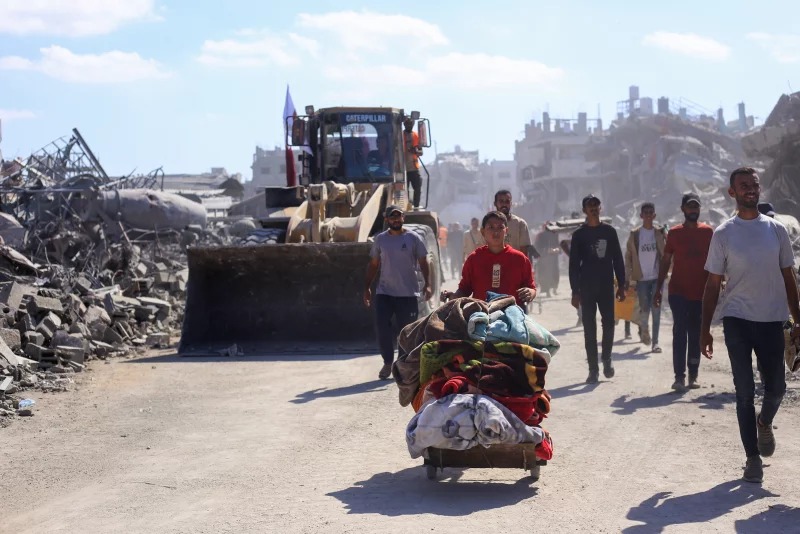
The Israeli measures add to a growing situation of insecurity in the cities of the southern Gaza Strip, where thousands of displaced people are trying to return to the ruins of their homes.
The UN and the World Food Program warned that the reduction in aid — from 600 to 300 trucks per day — already compromises the distribution of food, water and medicine.
The United Nations Office for the Coordination of Humanitarian Affairs (OCHA) reported that 15,600 people needed urgent medical evacuation, while the Red Cross recorded episodes of turmoil and hunger around the convoys that still managed to enter the enclave.
Amid the impasse, Benjamin Netanyahu’s government announced that it will not allow fuel and gas to enter Gaza, except for essential humanitarian infrastructure, until Hamas hands over all the bodies.
The decision was formalized in a note from COGAT, the military body that oversees the flow of aid to the Palestinian territory.
“Hamas violated the agreement on the handover of the bodies of the hostages. As a result, the political leadership decided to impose sanctions related to the humanitarian pact,” the statement said.
The hardening of the Israeli stance has reignited criticism from humanitarian agencies and hostage families.
The Forum for the Families of Hostages and Missing Persons classified the decision as “immoral and counterproductive” and called for the implementation of the agreement to be suspended “until all the bodies are brought back”.
The UN warned that the closure of Rafah and the withholding of aid “increases the suffering of a population that has already experienced months of hunger and collapse”.
Aid cuts and tensions on the ground
The reduction in the number of trucks and the closure of crossings worsened a situation that the UN itself describes as “almost unsustainable”. According to spokeswoman Olga Cherevko, “the crossings are closed on the Israeli side, but we are collecting supplies inside Gaza in an attempt to guarantee the minimum necessary for survival.”
The World Food Program confirmed the entry of just 137 trucks since the weekend, while UNICEF reported sending just a few dozen with tents, blankets and hygiene kits.
Organizations such as Oxfam, CARE and the Norwegian Refugee Council continue to be unable to fully operate, facing administrative barriers imposed by Israel.
“We are in limbo. The needs of a population that has lived through months of hunger will not be met with a few trucks,” said Bushra Khalidi, policy advisor at Oxfam.
The blockade also affects the Gaza Humanitarian Foundation, created with support from the United States, which temporarily suspended its activities after criticism from the UN about the lack of neutrality and militarization of distribution.
On the Palestinian side, Hamas tries to defend itself from the accusations by saying that “locating the bodies is difficult” and that part of them are under tons of rubble left by Israeli bombings.
The group promised to deliver four more bodies “in the coming days”, but the slowness of the process fuels Netanyahu’s speech, which accuses the movement of “acting in bad faith”.
So far, eight bodies have been returned — seven of Israelis and one of an unidentified Palestinian.
Meanwhile, the Red Cross warns that the recovery of the dead could take “days or weeks”, and there is a risk that “some will never be found”.
“Bringing back the dead is an even greater challenge than releasing the living. This must be a top priority,” said Christian Cardon, spokesman for the International Committee of the Red Cross.
The delay fuels new internal tensions in Israel, where family members of the hostages accuse the government of failing to protect and negotiate.
Families charge the government and denounce negligence
The harshest reactions to the impasse came from the families of the dead and missing hostages. In Tel Aviv, the Hostage Families Forum organized a new vigil in Hostage Square, accusing the government of “trying to erase its immediate duty” to recover the bodies.
“Whoever takes the flags and pins from the hostages is betraying Jewish morals and degrading the agreement,” the statement said. The reference was to criticism of the president of the Knesset, Amir Ohana, who removed the symbol of captives from his lapel during a session in parliament.
The revolt grew after the release of an official letter from the Office of Hostages and Missing Persons, which expressed “sadness at the high price paid” by the families and stated that “thanks to this price, we have reached the end of the war and the return of all hostages”.
The lack of an apology was interpreted as indifference. “Sometimes one word is preferable: sorry,” wrote Merav Svirsky, sister of one of the dead hostages. Other mothers and fathers called the letter “insulting.”
The government reacted by trying to contain wear and tear. Coordinator Gal Hirsch declared that “pressure on Hamas will persist and increase until the complete return of the fallen hostages” and said that the topic was taken up by Netanyahu in conversations with US President Donald Trump and Egyptian President Abdel Fattah al-Sisi at the Sharm el-Sheikh summit.
The intention was to reinforce the international demand for Hamas to hand over the remaining bodies and maintain the ceasefire.
Despite strong rhetoric, the case exposed divisions within Israel. Local analysts point out that the prime minister is trying to balance his domestic populist appeal with the need to preserve the agreement brokered by the United States and Egypt.
The outcome of negotiations with Hamas could define Netanyahu’s political future, already under intense pressure from allies and victims’ families.
Trump’s role and the risk of the agreement’s collapse
As tensions grow, former President Donald Trump, who brokered the ceasefire, tries to maintain his image as a peace organizer. After speaking at the Knesset last Monday (13), Trump stated that Hamas “needs to lay down its arms” and warned: “If you don’t, we will disarm you. This will happen quickly and perhaps violently.”
The declaration, interpreted as a thinly veiled threat, reinforced the climate of uncertainty about the future of the truce.
Trump defends a “transitional phase” in Gaza under international administration and a possible Arab peacekeeping force.
The plan, however, faces resistance from both Hamas and sectors of the Israeli government, which reject any mention of the creation of a Palestinian state. The UN and Arab countries warn that without a political solution, the ceasefire “could collapse in a matter of days”.
On the ground, the Israeli army keeps more than half of Gaza under control — including the devastated north, the city of Rafah and the entire border with Israel. The logistical blockade and the aid impasse prevent any concrete sign of reconstruction. World Bank estimates indicate that more than US$50 billion will be needed to rebuild the enclave, where 67,000 Palestinians have been killed since 2023.
The first days after the agreement confirm that the truce announced as “a historic dawn” by Trump could turn into a new cycle of accusations and retaliations. Without trust between the parties, the promise of peace seems increasingly dependent on gestures that, so far, no one is willing to give.
Source: vermelho.org.br