Published 10/14/2025 15:57 | Edited 10/14/2025 16:07
Right-wing parties have acted to promote setbacks around the world, expanding the crisis caused by neoliberalism by employing even more neoliberalism. Two cases draw attention in Europe this week due to the resistance to this forced attempt to remove social rights while expanding labor exploitation.
In Belgium and Greece, workers, organized by unions, staged general strikes to denounce the measures. While Belgians deal with a series of measures that include pension reform and budget cuts, Greeks are fighting against a proposal for modern slavery that could increase working hours to 13 hours a day.
Belgium
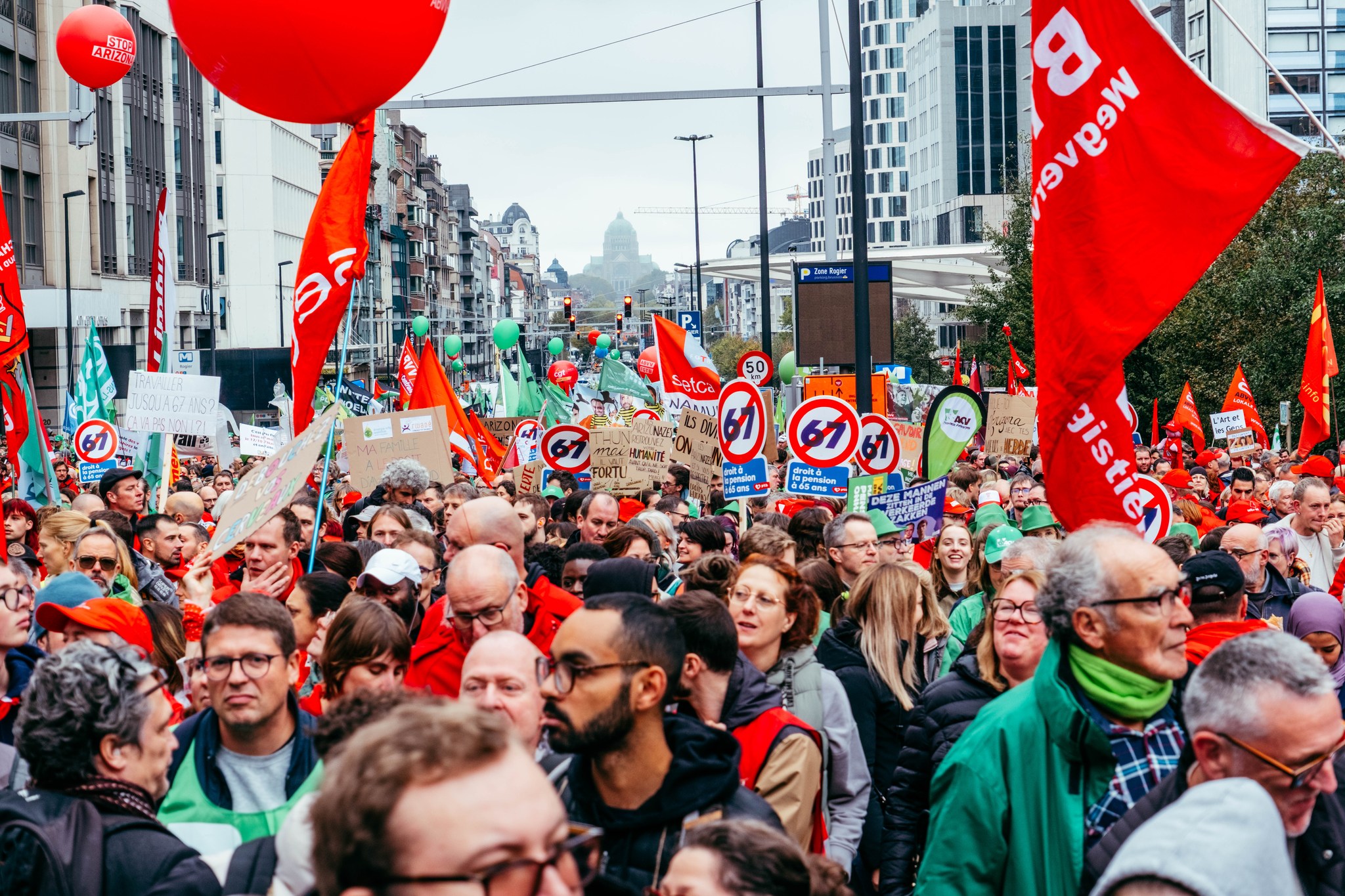
Workers in Belgium staged a general strike in the country this Tuesday (14). With great popular support, the demonstrations denounce the cuts and dismantling of public services and social security promoted by the government of nationalist Prime Minister Bart De Wever.
Since taking office in February with the support of a right-wing coalition, Wever has aimed to reform pensions and the job market in the country. He wants to reform Social Security, restricting rules for categories, limiting unemployment insurance to two years and aligning public servants with those in the private sector.
To top it off, he is preparing cuts in the 2026 budget to adapt the country to the European Union’s fiscal adjustment standards, which establishes a budget deficit with a limit of 3% and public debt of up to 60% of GDP (Gross Domestic Product), while currently, the deficit is at 4.5% and the debt already represents more than 100% of GDP.
read more: The centenary of the “Iron Lady” and the dark legacy that shaped global neoliberalism
The strikes affected Charleroi and Zaventem airports, close to the capital Brussels. The subway lines were also paralyzed and roads were blocked by the protesters’ march, which also affected other public transport. Garbage collection and prison workers also crossed their arms.
The FGTB (General Federation of Belgian Workers), which brings together the country’s unions, estimates that the protest in Brussels brought together 140,000 people. THE AFPThierry Bodson, president of the entity, stated that “an entire generation refuses to allow in six months to destroy what our parents and grandparents took so long to build”.
Greece
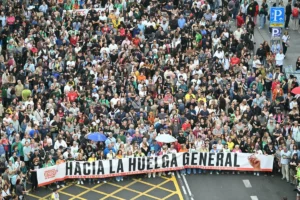
Also this week, unions and the population of Greece took to the streets to confront the government of conservative Prime Minister Kyriakos Mitsotakis, who is trying to introduce a working day that can reach 13 hours a day.
On October 1st, the unions had already launched a general strike. Now this Monday (13) and Tuesday (14), again, public services and urban transport were paralyzed.
The Greek Parliament is preparing to vote on the law that is denounced as a “return to the Middle Ages” by workers. The Minister of Labor and Social Security, Niki Kerameus, defends the law by justifying that she would be employed for only 37 days a year and on a voluntary basis.
Leaders of Adedy (in Portuguese, Confederation of Public Employees’ Unions) and GSEE (General Confederation of Greek Workers) do not accept this argument and point out that workers who do not adhere to the new working hours will be at risk of dismissal.
Source: vermelho.org.br