Published 10/14/2025 16:29 | Edited 10/14/2025 18:44
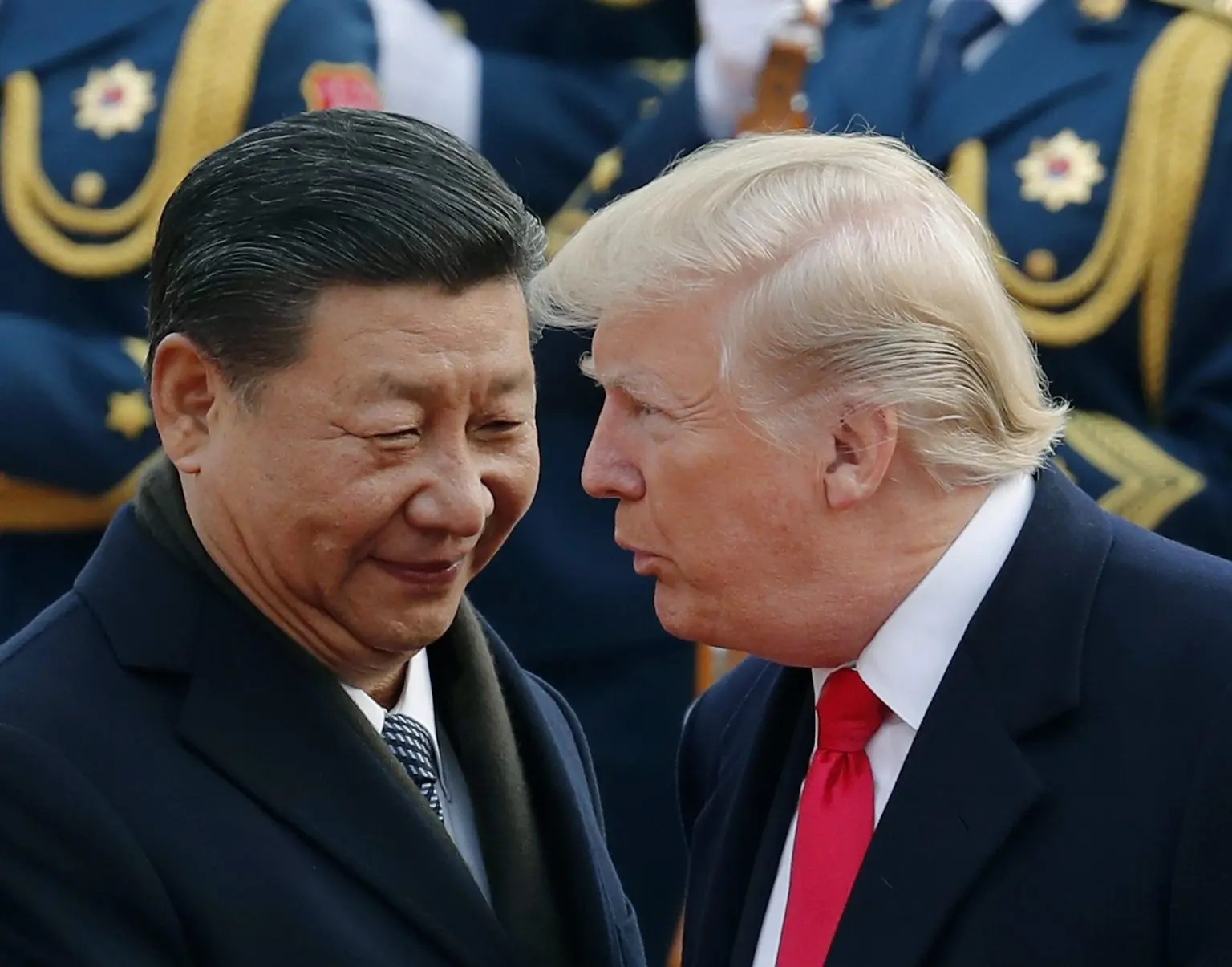
United States Treasury Secretary Scott Bessent confirmed this Tuesday (14) that Donald Trump and Xi Jinping should meet at the end of October, in South Korea, during the APEC summit.
The information came after a week marked by strong instability between the world’s two largest economies, in which China expanded controls on rare earth exports and Trump reacted by threatening a 100% tariff on Chinese products.
According to Bessent, “the tariff does not need to happen”, and the “lines of communication have been reopened”, which signals an attempt to contain the Republican’s political weariness before the meeting with the Chinese leader.
Beijing’s decision, announced on October 9, surprised Washington.
By including five new strategic elements — holmium, erbium, thulium, europium and ytterbium — and imposing new demands on semiconductor and defense companies, China has shown that it will not give in to Trump’s protectionism.
Analysts see the move as a calculated move to expand Xi’s room for maneuver before the bilateral meeting.
“This increases Beijing’s bargaining power ahead of the expected Trump–Xi summit in South Korea,” he told Reuters consultant Tim Zhang, founder of Edge Research, based in Singapore.
The new rules reach the base of high-tech industrial chains. China controls more than 90% of the world’s refining of rare earths, used in defense equipment, electric motors, semiconductors and turbines.
From November onwards, foreign companies that use Chinese material or technology will need an export license, even if they do not involve companies from the country.
The Ministry of Commerce informed that the restrictions will begin on November 8th and will be expanded on December 1st, when they will also include refining and processing equipment.
In Washington, the White House classified the new rules as “announced without prior notice” and assessed that they seek to “exert control over global technology chains”.
Bessent, on the other hand, adopted a more cautious tone and acknowledged that “the relationship, despite last week’s announcement, is good”.
The secretary also confirmed that teams from both countries met over the weekend in Washington, on the sidelines of the IMF and World Bank meetings, and that there were “substantial communications” between the negotiators.
Xi Jinping’s firm stance on rare earths has exposed the limits of Trump’s trade blackmail strategy.
The US president had used the threat of triple-digit tariffs to pressure Beijing, but ended up faced with a response that widened the scope of the dispute.
By tightening its grip on an essential input to the digital economy and military industry, China has shifted the center of the trade war to the realm of technology and productive sovereignty.
For Neha Mukherjee, rare earths analyst at Benchmark Mineral Intelligence, in an interview with Reutersthe world is heading towards a “period of structural bifurcation”, in which China seeks to internalize its production chain — from refining to technological development — while the United States and its allies accelerate efforts to create parallel industrial systems.
The division could show the beginning of a transition from the tariff war to a war of production chains, with profound consequences for the global economy.
Amid the tensions, the Chinese Ministry of Commerce reiterated that “the United States cannot call for dialogue while threatening new restrictive measures”, and that the scope of the restrictions is “limited” and aimed at “the security and stability of global chains”.
The US Treasury spokesperson sought to reassure investors, stating that “talks are ongoing” and that “tensions have been substantially reduced”.
The meeting between Trump and Xi, scheduled for the end of the month, takes place in a context in which both are testing their ability to impose opposing agendas: North American economic nationalism and the Chinese project of technological sovereignty.
Xi’s firm reaction to tariff pressure shows that China does not intend to negotiate under threat — and that Washington’s diplomatic calculation, based on intimidation, has lost its effectiveness.
Source: vermelho.org.br