Published 06/10/2025 14:20 | Edited 06/10/2025 15:13
Denunciations of torture and mistreatment against Global Sumud Flotilla activists multiplied this week, involving citizens of at least ten countries and rekindling the debate about the maritime blockade imposed by Israel to Gaza.
Human rights organizations and foreign governments confirmed reports of violence, degrading conditions and physical abuse against hundreds of people detained after the interception of vessels in international waters.
Flotilha, consisting of 42 ships and 437 participants – including parliamentarians, lawyers, militants and Swedish activist Greta Thunberg – departed at the end of August bringing humanitarian aid to the Palestinian enclave.
The group was approached by the Israeli Navy in an operation considered illegal by jurists and diplomats, who claim that the action occurred outside the Israeli jurisdiction.
Since then, the country has maintained more than 150 people arrested and has deported 171, amid a series of complaints documented by lawyers and Israeli organization Adalah.
According to the entity, prisoners are being kept in overcrowded cells, unhealthy and without regular access to lawyers, medications and drinking water. In a statement, the group stated that Israel “is applying daily tactics against Palestinians under their custody, submitting them to systemic torture and horrible abuse.”
Adalah also confirmed that a Muslim woman was forced to remove the Islamic veil and received only one shirt as a replacement.
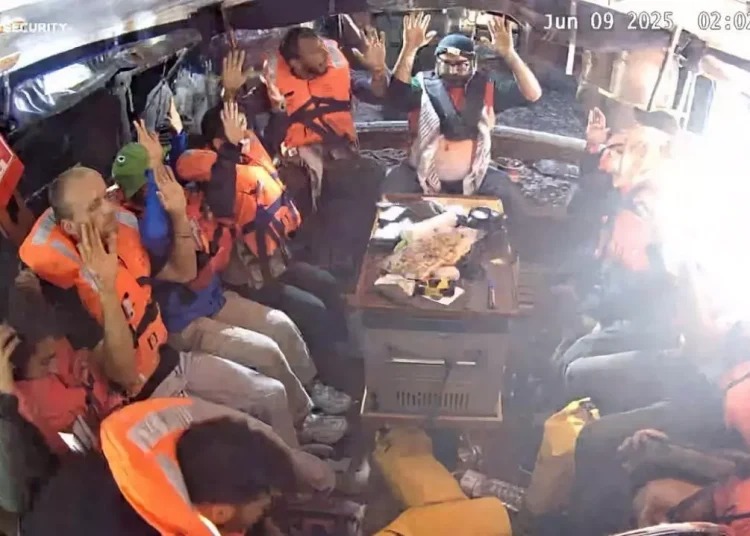
Reports of deported activists and family members of detainees describe beaters, sleep deprivation, violent interrogations, insults and food restriction. A Dutch activist said he was immobilized with his hands tied to his back and something placed on his face.
“I could hardly breathe,” said Marco Tesh, when he landed in Madrid.
Another, Australian Surya Mcewen, reported that she was “kept in a cage with 80 people, without food or water, while Israeli minister Itamar Ben-Gvir shouted insults against us.”
Similar cases have been confirmed by foreign governments. Australia said it was providing consular assistance to seven detained citizens, including Mcewen and filmmaker Juliet Lamont, who reported having had her confiscated medication and fear of a stroke.
“I am seriously concerned about the risk of having a stroke after my medication was confiscated,” he said.
She said she was tied with plastic sections, hit by water cannons and left for seven hours in a place without ventilation, with their clothes soaked, while soldiers pushed her head repeatedly.
In New Zealand, the case provoked political crisis. Three citizens – Rana Hamida, Youssef Sammour and Samuel Leason – are arrested in the same Neguev penitentiary, without access to lawyers.
“My son is in a crowded cage without water and no lawyer,” said Adrian Leason, father of one of the activists. Rana’s sister reported shoulder injuries and lack of information about the medical treatment received.
Green Party leader Chlöe Swarbrick said the New Zealand government “has a legal obligation to prevent genocide” and accused Prime Minister Christopher Luxon of “washing the hands of that obligation.”
The complaints also extend to Latin Americans. Argentine-Brazilian Nicolás Calabrese, deported over the weekend, said the activists were “kidnapped in international waters.”
He reported that the group spent more than 20 hours without food during interception and “passed a very large humiliation when arriving in Porto.”
Brazilian Thiago Ávila, mission coordinator, declared headquarters strike to protest the lack of medicines, while three other Brazilians remain hungry.
Among the most serious cases, the Swedish activist Greta Thunberg gained international repercussion.
Detained by Israel, she told Swedish authorities that she was kept in a cell -infested cell with little food and water, and forced to pose with Israeli flags for photographs.
Witnesses deported to Türkiye said Thunberg was “dragged by his hair, beaten and forced to kiss the flag of Israel.”
The Israeli government denies all accusations. In a statement, the Ministry of Foreign Affairs stated that “all detainees’ legal rights were fully respected, and none of them were deprived of lawyers, water, food or rest.” The statement also says that “no physical strength has been used against them.”
In response, the Adalah Legal Center said it continues to gather evidence of “abusive and illegal treatment” and intends to trigger Israeli courts and international instances.
The complaints are also being analyzed by UN offices in Geneva and New York, who accompany the complaints of human rights violation and arbitrary detention in foreign territory.
Flotilha organizers claim that the mission was peaceful and was solely objective to deliver humanitarian aid to Gaza and exposing the impact of blockade, which for 16 years restricts food, medicine and fuel in the enclave for a restriction.
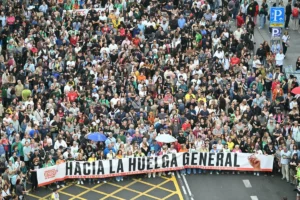
Protests in Rome, Athens and Paris gathered thousands of people this weekend, asking for the release of activists and international actions against what they call Israeli aggression in international waters.
Israel maintains that blockade is a security measure to prevent smuggling of weapons, but critics and experts define it as collective punishment against the civilian population, in violation of the rules of international law.
Source: vermelho.org.br