Published 09/22/2025 08:59 | Edited 09/24/2025 08:07
On the eve of the opening of the UN General Assembly, United Kingdom, Canada, Australia and Portugal officially recognized the state of Palestine on Sunday, in a coordinated gesture that broke the historical position of Israel’s main allies in the West. This is the first time that members of the G7 have adopted this measure.
The announcement was interpreted as a diplomatic divider in the transatlantic relationship, by putting London, Ottawa and Canberra on a collision route with Washington, who reiterated his support to Benjamin Netanyahu amid the War in the Gaza Strip.
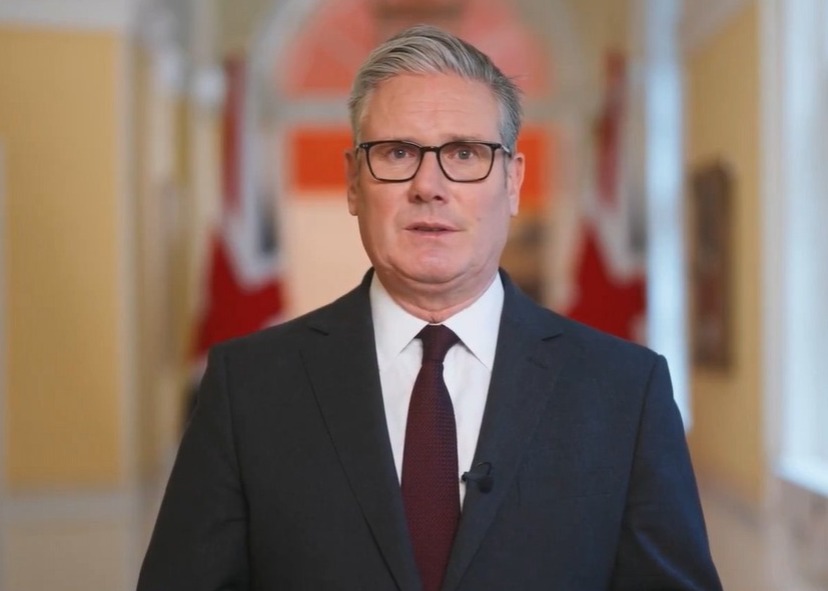
In London, prime minister Keir Stmerer said in video that the gesture sought to keep alive the prospect of a negotiated solution.
“Given the growing horrors in the Middle East, we are acting to keep the possibility of peace and a solution of two states alive. This means a safe and protected Israel, alongside a viable Palestinian state. At the moment, we have none of both,” he said.
He added that the decision “is not a reward to Hamas,” because “Hamas will have no future, no role in government, no role in security.” Strmer also qualified as “absolutely intolerable” hunger and devastation in Gaza.
The British Foreign Ministry detailed that the country “recognizes the condition of Palestinian state on provisional borders, based on the 1967 lines with equivalent land exchanges, to be completed as part of future negotiations.”
Deputy Breed and Chancellor David Lammy admitted that the gesture would not immediately change reality on the ground, but justified that “now is the time to defend the solution of two states.”
“Is this going to feed children? No, don’t you. It depends on humanitarian aid. Will you release hostages? This depends on a ceasefire,” Lammy told BBC.
In Canada, Prime Minister Mark Carnery issued a statement in which he accused Israel of trying to permanently make the creation of a Palestinian state permanently unfeasible.
“Canada recognizes the state of Palestine and offers our partnership in building the promise of a peaceful future for both Palestine and Israel,” he wrote on a social network.
“The Israeli government has been working methodically to prevent the perspective that a Palestinian state is never established,” said Carry.
Australian prime Minor Anthony Albanese stated that Canberra’s decision “recognizes the legitimate and old aspirations of the Palestinian people to their own state” and stressed that the solution of two states “has always been the only way to a lasting peace and security for Israeli and Palestinian peoples.”
With the announcements, UK and Canada became the first G7 countries to formally grant recognition to the Palestinian state, in a movement that reinforces diplomatic pressure against Israel and paves the way for new adhesions.
The coordinated gesture was described by diplomats such as the beginning of a “wave” of recognition, which should extend in the coming days. France, Belgium, Luxembourg, Malta and other European countries have already signaled that they will go the same way, while New Zealand and Liechtenstein also evaluate the announcement.
This second block is expected to officialize its positions during UN General Assembly Week.
The Portugal delegation, already in New York to the UN General Assembly, made the announcement on Sunday and linked the gesture to the diplomatic tradition of the country of defense of multilateralism
Chancellor Paulo Rangel stated that recognition is “the realization of a fundamental and constant line of Portuguese foreign policy” and repeated that the formula of two states is “the only way to just and lasting peace.”
He added that “a ceasefire is urgent” and stressed that “Hamas cannot have any form of control in Gaza or out of it.”
The coordinated decision of the countries immediately encourages the expectation of a “second wave” of recognition. Belgium, France, Luxembourg, Malta and possibly New Zealand and Liechtenstein should formalize the gesture on Monday (22), during a special conference on Palestine organized on the margins of the general assembly and covered by France and Saudi Arabia.
In July, French President Emmanuel Macron had already announced Paris’s willingness to vote in favor of Palestinian admission as a full state.
According to the UN, more than 140 countries already recognize Palestine. The difference is that this time the ads came from some of Israel’s most traditional allies.
For the secretary general, António Guterres, the gesture is symbolic but important. He has asked “states not to be intimidated by Israel’s threats to attach parts of the West Bank,” referring to statements by Netanyahu government ministers about new settlements.
The Palestinian Authority received the ads as a milestone. President Mahmoud Abbas has stated that the British gesture is “an important and necessary step to achieve just and lasting peace.”
In London, Palestinian ambassador Husam Zomlot stated that recognition is an “inalienable right” and represents “the end of the denial of our existence”.
“The question has never been why the United Kingdom should recognize the state of Palestine. The question is why the United Kingdom has not recognized the state of Palestine forever,” he added in an interview with the BBC.
Hamas, in turn, called the recognition “important step in affirming the right of our Palestinian people to their land and sacred places.”
One of its leaders, Husam Badran, told the New York Times That the measure “is a step in the right direction, even if late,” but rejected the British demands that the group has no role in a future Palestinian government.
Source: vermelho.org.br