Published 09/22/2025 09:56 | Edited 09/22/2025 11:44
The Palestinians of the West Bank live under the constant pressure of military occupation and fear that the situation worsens after the annexation threats made by the Irsalense Prime Minister, Benjamin Netanyahu, in a reaction to the wave of recognition of the Palestinian State started by United Kingdom, Canada, Australia and Portugal on Sunday (21).
The apprehension is due to the fact that the threats of the Israeli government, unlike pressure from the international community against Zionists, are not restricted to diplomatic discourse.
Since October 2023, they have been translated into destruction of houses, forced displacements and expansion of illegal settlements.
In Jenin, Mayor Mohammed Jarra said BBC This Sunday that about 40% of the city was transformed into Israeli military area and that a quarter of the population is displaced.
“From the beginning it was clear that it was a great political plan, not a security operation,” he said.
For him, Netanyahu’s declared goal is to prepare the attachment of the West Bank and neutralize any form of resistance.
In the same city this month, Abdel Aziz Majarmeh buried his 13 -year -old son Islam shot dead by Israeli soldiers. “Why shoot children? I was by his side. Throw me. Why shoot children?” He asked BBC.
Palestinian fear in West Bank began to grow after the hostile reaction of the Israeli government to the coordinated recognition of the Palestinian State by the United Kingdom, Canada, Australia and Portugal.
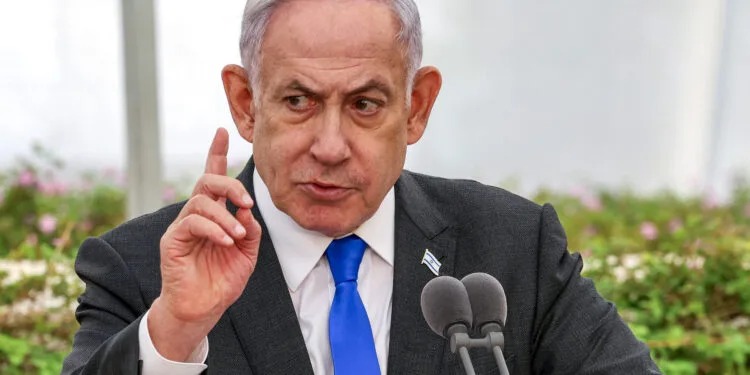
Prime Minister Benjamin Netanyahu hardened the speech, rejected the viability of any negotiated solution and announced that he intends to retaliate with attachments in the West Bank.
“I have a clear message for those leaders who recognize a Palestinian state after the horrible massacre of October 7: you are giving a huge reward to terrorism,” he said.
“This will not happen. A Palestinian state will not be established west of the Jordan River,” added the sociopath.
The reaction was accompanied by threats of territorial expansion. Netanyahu said he will announce a response after his return from the United States and classified a eventual Palestinian condition as a “terrorist”, highlighting the racist and supremacist view that guides his government.
“The answer to the latest effort to impose us a terrorist state on the heart of our land will be given after my return from the United States. Wait for that,” he threatened.
He made the statement in a ceremony to announce the expansion of the E1 project, which connects Jerusalem to the settlement of Ma’ale Adumim in East Jerusalem.
The project, criticized by the UN for years, has a practical effect of cutting the West Bank in two and makes it unfeasible the contiguity of a future Palestinian state. Finance Minister Bezalel Smotrich celebrated the expansion by saying that he believes it will serve to “bury” the idea of an independent Palestine once and for all.
Inside the Israeli cabinet, the ultra -decreitists press for an even larger climb.
The Minister of National Security, Itamar Ben-Gvir, stated that international recognition “requires immediate countermeasures” and promised to present a proposal of “sovereignty throughout Judea and Samaria”, a biblical term used to refer to the West Bank.
Members of the most radical block discuss a maximalist plan to attach up to 82% of the territory, isolating Palestinian cities in disconnected pockets and making the creation of a state impossible.
Even if this proposal does not advance, analysts point out that Netanyahu can adopt a “symbolic” annexation already during his speech at the UN General Assembly as a way of demonstrating strength.
Compliance and complication
The Israeli climbing occurs under the complacency of the United States. The Donald Trump government had warned its allies, even before the announcements, which would retaliate in a “symbolic” way.
So far it is unclear if Washington will openly support an annexation, but reports indicate that the White House “will not stop Netanyahu.”
In an open letter, Republican parliamentarians warned the premiers Keir Stmerer, Mark Carney and Anthony Albanse that the gesture of recognition “will put their countries in disagreement with US politics and historical interests and could attract punitive measures in response.”
Trump himself, during a recent visit to London, endorsed Israel’s speech by stating that “a jihadist state on the Israeli border today will threaten Britain tomorrow.”
Annexation threats, however, are not restricted to the relationship with Europe and the shock with G7 countries.
They also endanger Abraham’s agreements, signed by 2020 between Israel and Arab countries. The United Arab Emirates, who led the process of diplomatic standardization, have already warned that the attachment of the West Bank is a “red line.”
The breakup of this understanding would end one of the few foreign policy victories of Trump’s first term and weaken Israeli narrative of regional integration.
Netanyahu’s radicalization deepens the isolation of the country. The European Union already discusses the adoption of new sanctions and rates in response to the expansion of settlements.
In parallel, the distance between the US and its own traditional allies grow, which see the unconditional support of the White House to Israel a factor of global instability. For diplomats heard in New York, the risk is that a unilateral attachment push Israel to an unprecedented degree of isolation since its foundation – with the possibility of suspension of rights within the UN.
Source: vermelho.org.br